


A little local perspective
Worth knowing.
Worth going.
- Destination
- Comporta and the Alentejo, Portugal
- The selection
- 7 hotels
- Your kind of trip
- beach · wine · dark skies · couples
$$$ to $$$$ — roughly 250-900 euros a night, peaking in summer
Comporta was owned by one family. The Espírito Santo banking dynasty bought something in the order of 12,500 hectares of pine, dune and rice field south of Lisbon in the 1950s, farmed it, and built almost nothing on it for sixty years. A stretch of Atlantic coast an hour from a European capital stayed empty because a single owner had no reason to develop it.
The bank collapsed in 2014 in one of Portugal's largest corporate failures, and the land was sold. That is why building is happening on this coast now, after decades of nothing, and why the conversation locally is about how much and how fast.
For the moment it remains low, sandy, and made of wooden fishermen's houses with blue trim and thatched roofs — an idiom that the new construction has largely followed, so far.
The cork
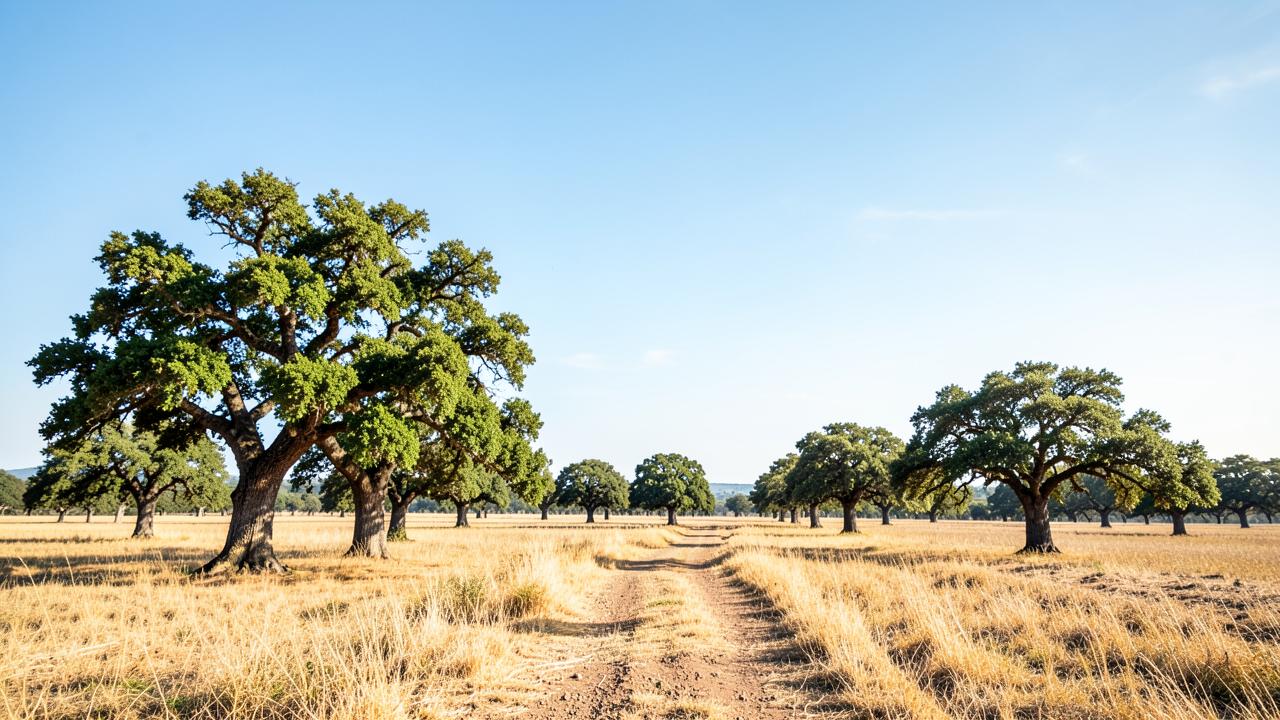
Inland, the Alentejo is cork. Portugal produces roughly half the world's supply and the trees here are the source: Quercus suber, stripped by hand with an axe every nine years, never more often, and the year of the last harvest is painted on the trunk so nobody takes it early.
A tree is about twenty-five years old before its first strip and the first two harvests produce cork too coarse for stoppers. The bark then regrows. Trees are worked for a century and a half and the groves are grazed by pigs eating acorns, which is the same system that produces the black-footed ham.
It is one of the few agricultural landscapes where the economic logic and the ecological one point the same way, and it is why the Alentejo looks as it does.
The region
The Alentejo is about a third of Portugal with something under five percent of its population. Wheat, cork, olives, wine and empty roads.
Comporta and Melides, on the coast, have the beaches — sixty kilometres of them, backed by dune and pine, with almost no buildings visible from the sand.
Évora, inland, is a walled UNESCO town with a Roman temple in the middle and a chapel lined with the bones of five thousand monks.
Monsaraz and the Alqueva, east, sit above the largest artificial lake in western Europe, in an area certified as a dark sky reserve.
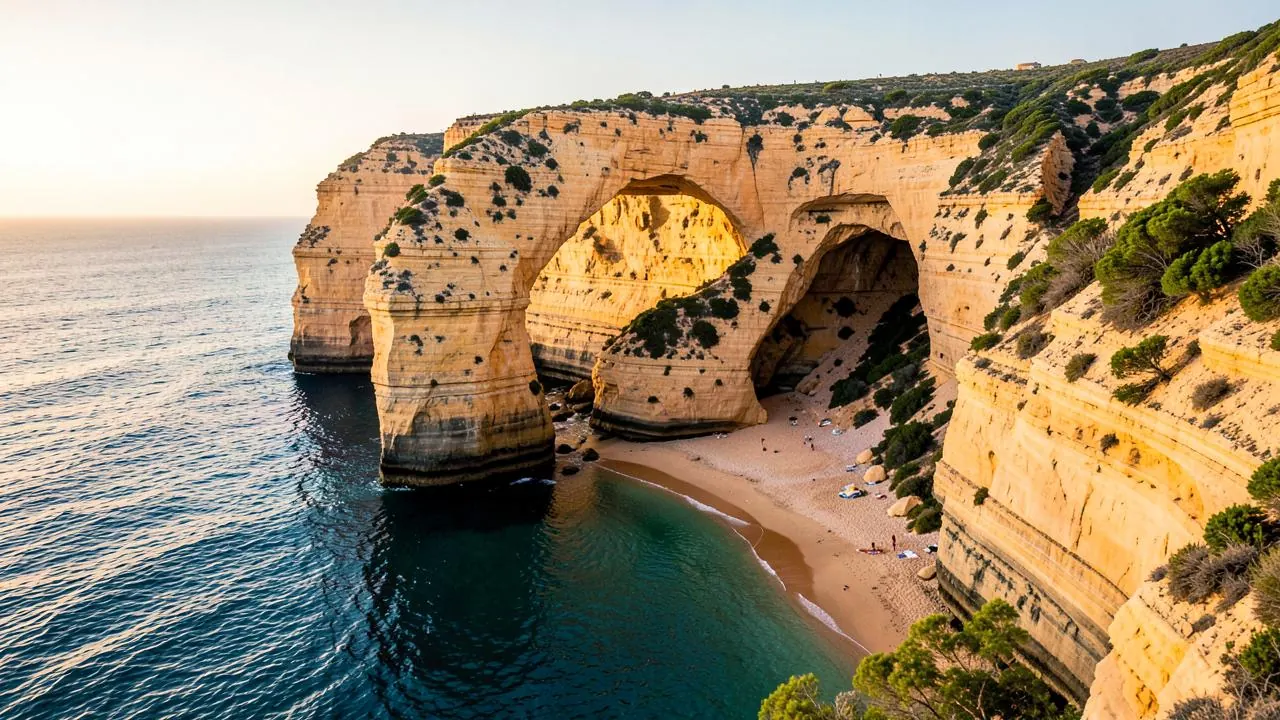
The Vicentine coast, south, is wilder, windier and protected as a natural park.
The seven below are grouped that way.
Comporta and the coast
The rice fields and the dunes.
Sublime Comporta occupies a pine estate near Comporta with cabanas among the trees, two pools, a spa and a beach club on the sand. It is the best hotel on this coast.
Quinta da Comporta sits among the rice paddies outside Comporta in a low white building with a pool, a spa and the fields worked around it.
Craveiral Farmhouse occupies a farmhouse property near Odemira on the Vicentine coast with a pool, a farm and a deliberately rustic tone.
Évora and the interior
The walled town and the plains.
Pousada Convento de Évora occupies a fifteenth-century convent inside the Évora walls, with the cloister as a courtyard and the Roman temple a few minutes away.
L'AND Vineyards sits on an estate at Montemor-o-Novo with rooms whose roofs slide open over the bed so you can sleep under the sky, on a vineyard with a dark sky designation.
Monsaraz and the south
The lake and the wine estates.
São Lourenço do Barrocal occupies a nineteenth-century farm estate near Monsaraz, restored, with a pool, a kitchen garden and a working farm around it. It is the most complete estate in the Alentejo.
Herdade da Malhadinha Nova sits on a wine estate at Albernoa with a spa, a pool, a cellar and horses, in country with almost nothing else in it.
What we have left off
The montes and rural guest houses across the Alentejo are excluded, and on the plains they are the traditional way to stay — a whitewashed farmhouse with a fig tree and six rooms. They are guest houses rather than hotels.
What to do
Swim at Comporta, Pego and Carvalhal, and note that the Atlantic here is cold and the surf is real.
See Évora properly: the Roman temple, the cathedral, and the Capela dos Ossos, whose entrance carries an inscription telling the living that the bones inside await theirs.
Go to the Great Dolmen of Zambujeiro and the Almendres stone circle outside Évora, which predates Stonehenge by around two thousand years and which you will very likely have to yourself.
Look up at Alqueva. The lake area is a certified dark sky reserve with observatories and night-sky tours, and the seeing is exceptional.
Eat and drink. Alentejo wine is the region's own and largely drunk in Portugal; the food is bread-based, pork-based and unhurried, and lunch is not a light meal.
Practical notes
Lisbon is about an hour to Comporta by road, ninety minutes to Évora and two and a half hours to Monsaraz. A car is essential.
April, May, September and October are best. July and August are very hot inland and the coast fills with Lisbon. Winter is mild, green and empty.
The Alentejo has almost no public transport and long distances between towns. Fill up.
Every hotel bookable in the Alentejo
Why was Comporta undeveloped?
One banking family owned about 12,500 hectares from the 1950s and built almost nothing. The bank failed in 2014 and the land was sold.
How does cork harvesting work?
Stripped by hand every nine years, first harvest at about twenty-five years, the year painted on the trunk. The tree lives and regrows.
Coast or interior?
Comporta for beaches and pine, Évora and Monsaraz for walled towns, dolmens and dark skies. Ninety minutes apart.
How many nights?
Five. Three on the coast and two inland.