Passeig de Gracia
Mandarin Oriental, Barcelona
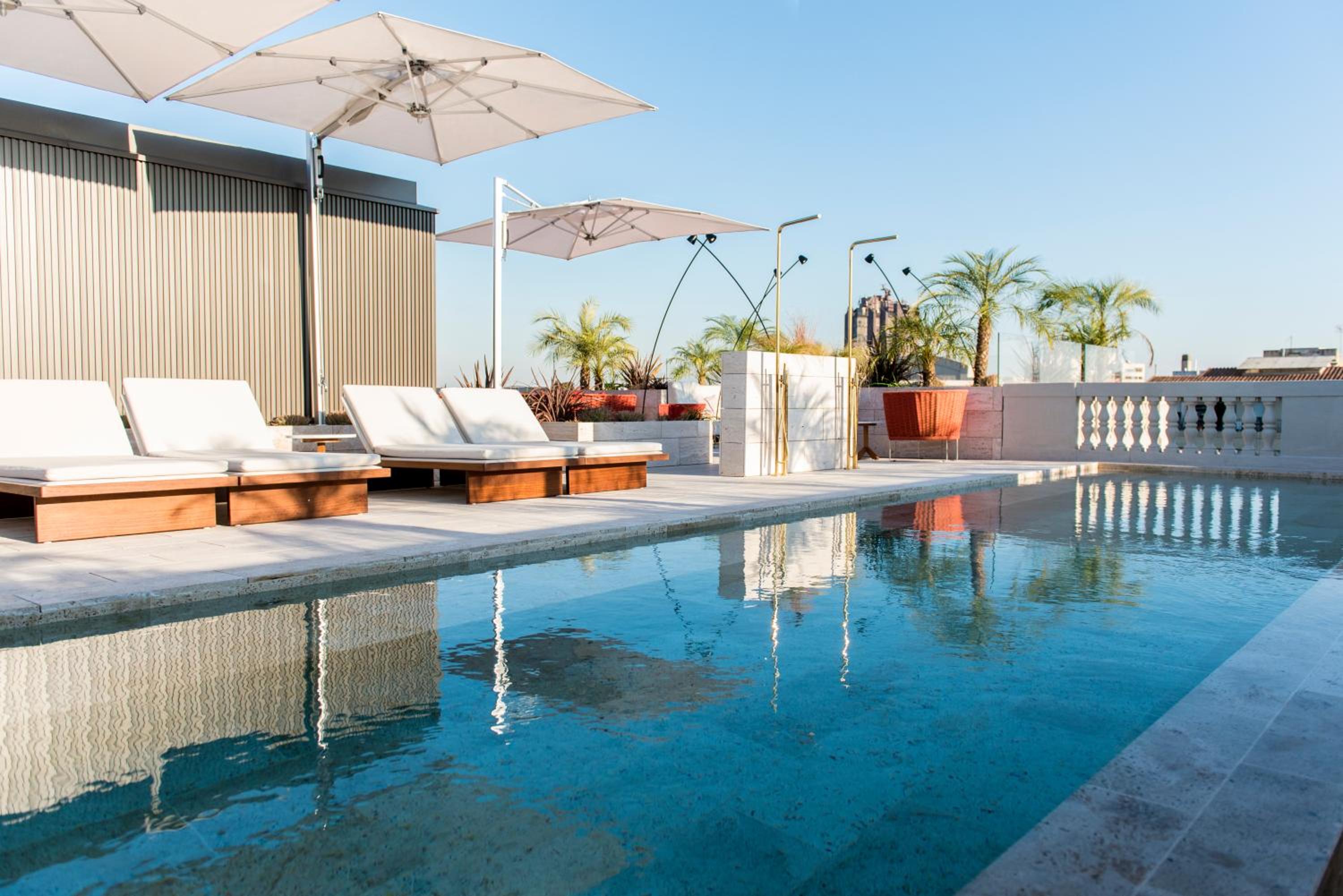
Rooftop pool straight down the boulevard to the sea
Explore Hotel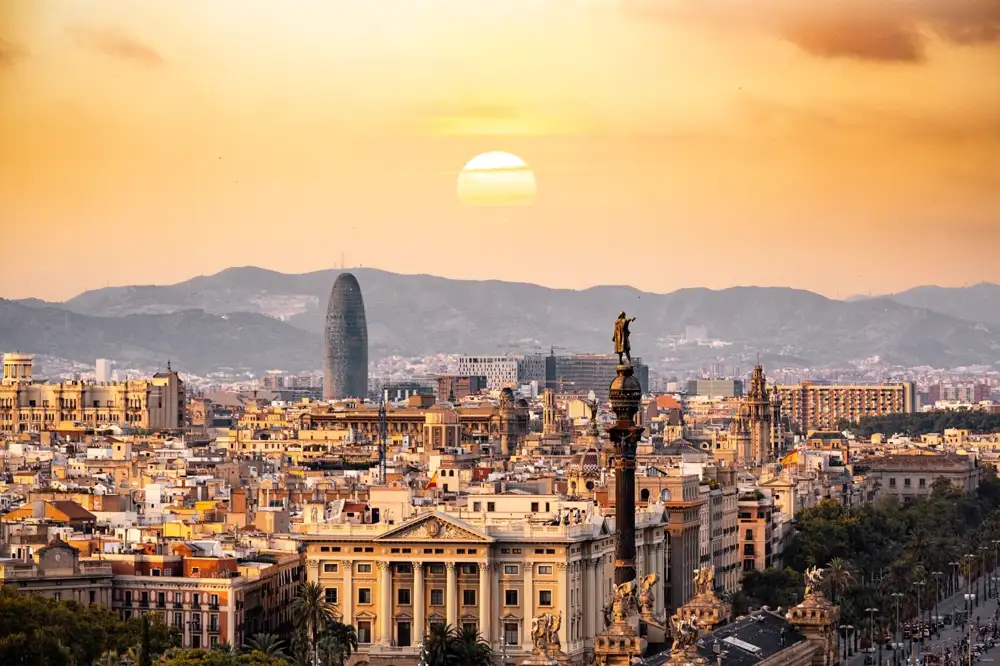

Barcelona, Spain
At street level every block looks like the last. From a roof the grid resolves, and between June and September the pool is not optional.
The places to stay
Passeig de Gracia
Rooftop pool straight down the boulevard to the sea
Explore Hotel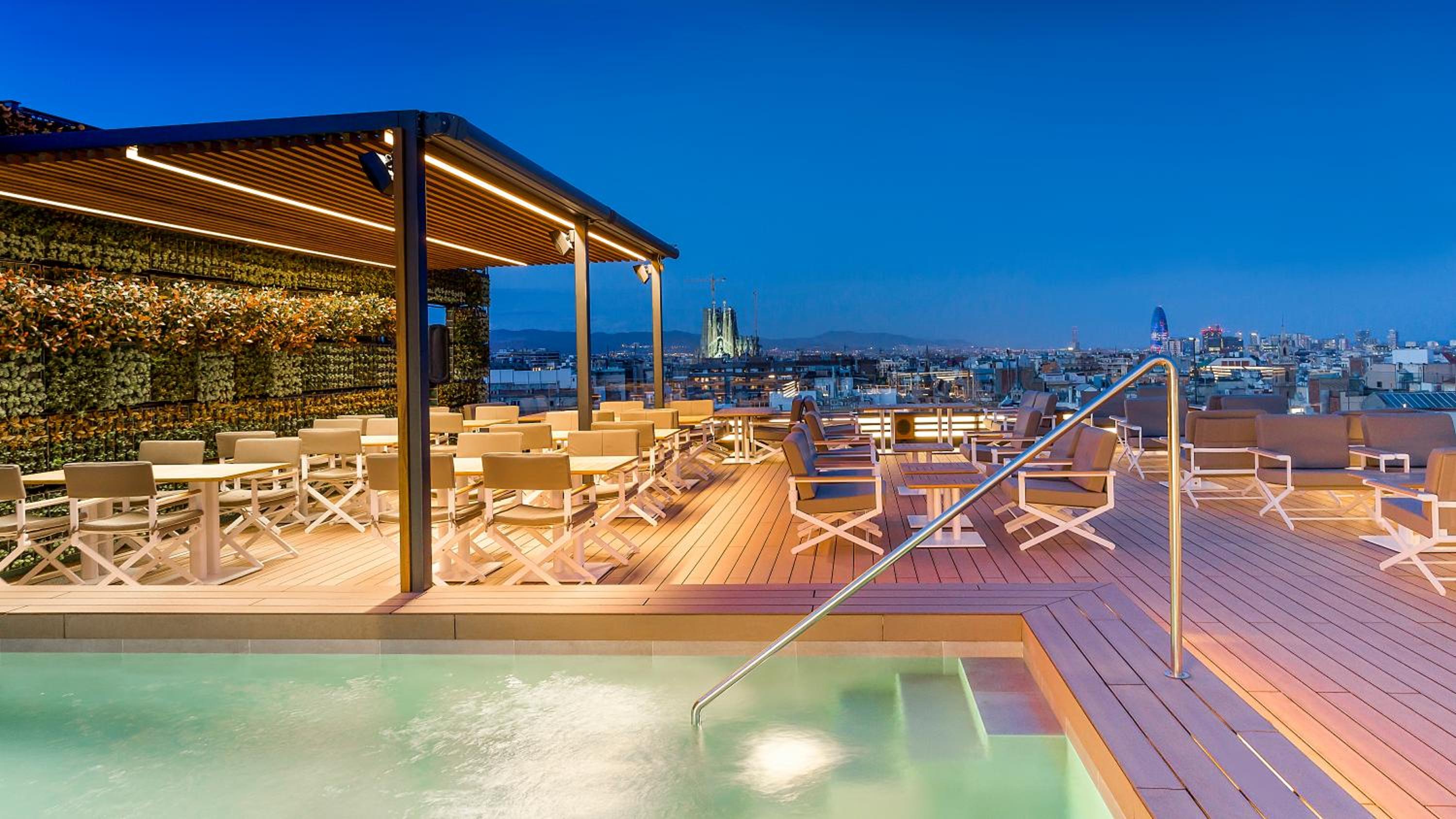




By Happi · Last updated September 2026
A little local perspective
$$ to $$$$ — roughly 250-800 euros a night, peaking June and September
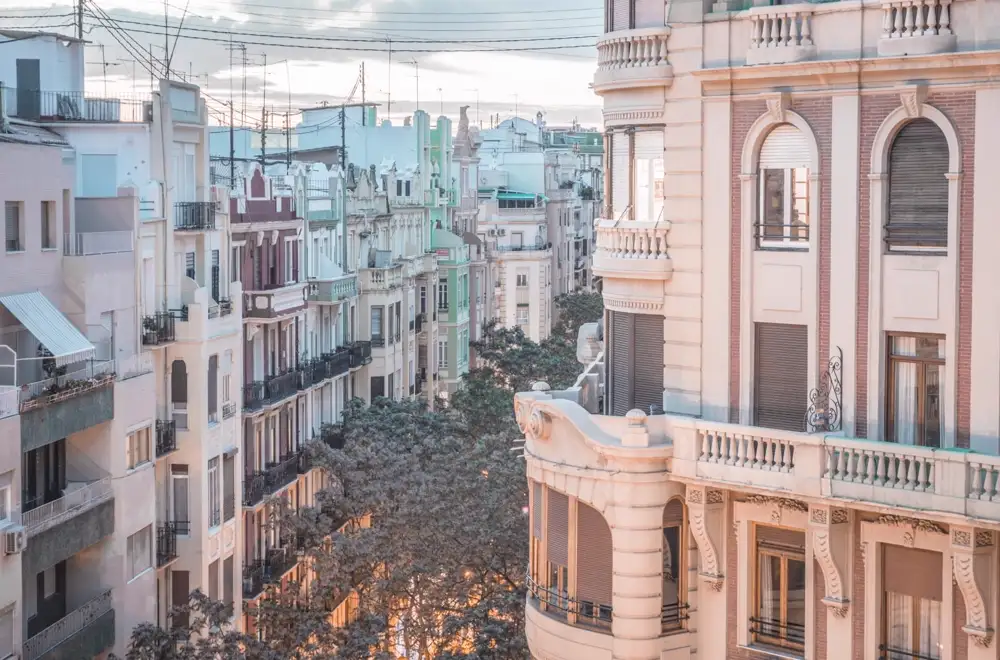
Barcelona's Eixample is one of the most deliberate pieces of city planning ever built: a grid of identical blocks with the corners cut off at 45 degrees, laid out in the 1860s to give light and air to a city that had been strangled inside medieval walls. It works beautifully at the level of the street plan and less well at the level of the pedestrian, because at street level every block looks like the last one and the sightlines end after two hundred metres.
Go up six storeys and it resolves. From a rooftop the grid becomes legible, the cut corners form a pattern of octagons, and Gaudi's roofline and the hills behind and the sea in front all appear at once. That view does not exist from the pavement, and it is the single best reason to care which hotel you book here.
There is a practical reason as well as an aesthetic one. Barcelona is hot and humid from June to September, its beaches are crowded and a long way from the centre, and its blocks trap warm air. A rooftop pool is not a luxury add-on in this city; between June and September it is the difference between a good trip and a series of showers.
It is also where the city goes in the evening. Rooftop bars in Barcelona are not tourist appendages, they are where locals drink from May onward, which means the good ones need booking.
The thirteen below all have a usable roof. They are grouped by where in the city that roof sits, because the view changes completely.
The grid itself, on and around the main boulevard, with the Gaudi buildings on the doorstep.
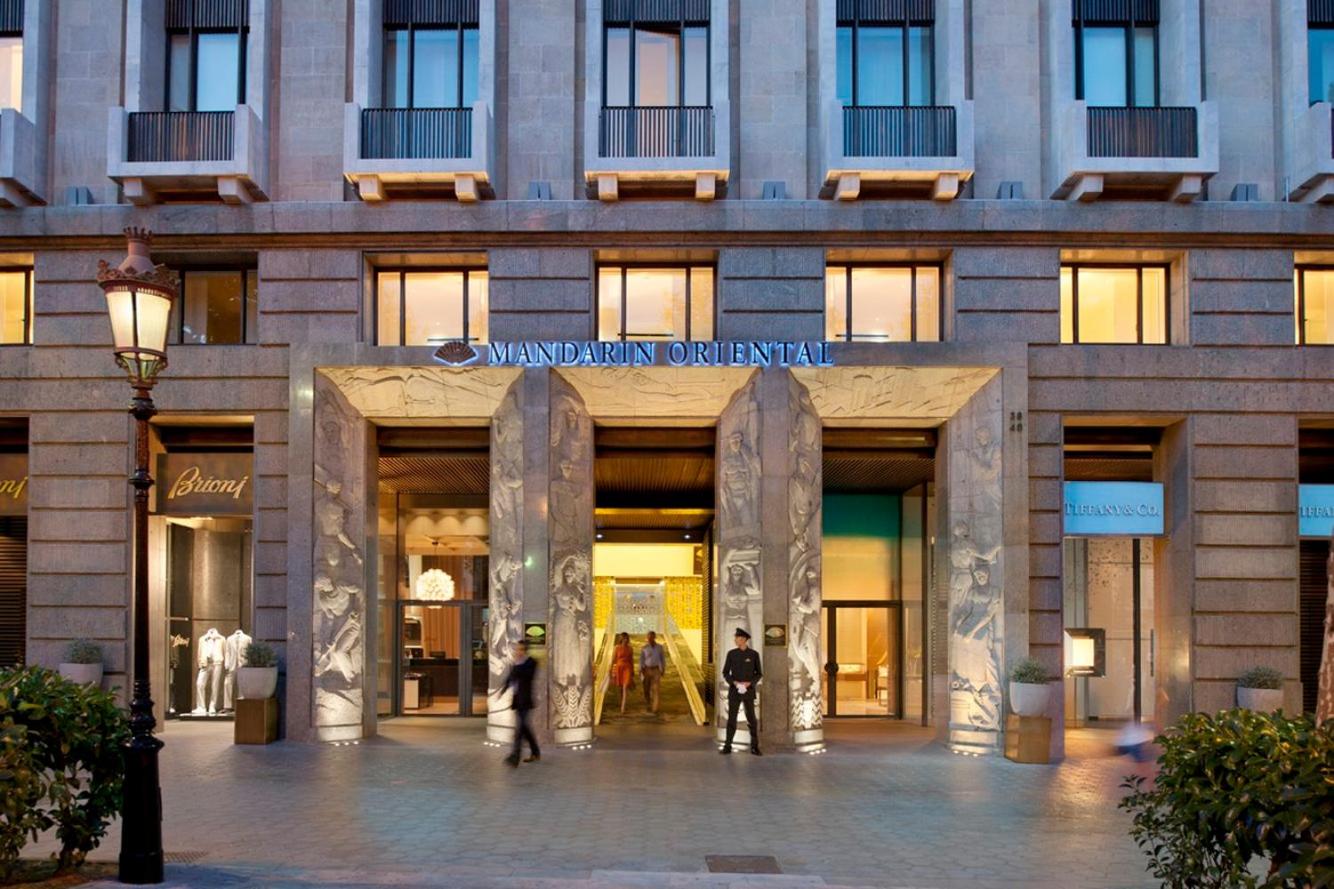
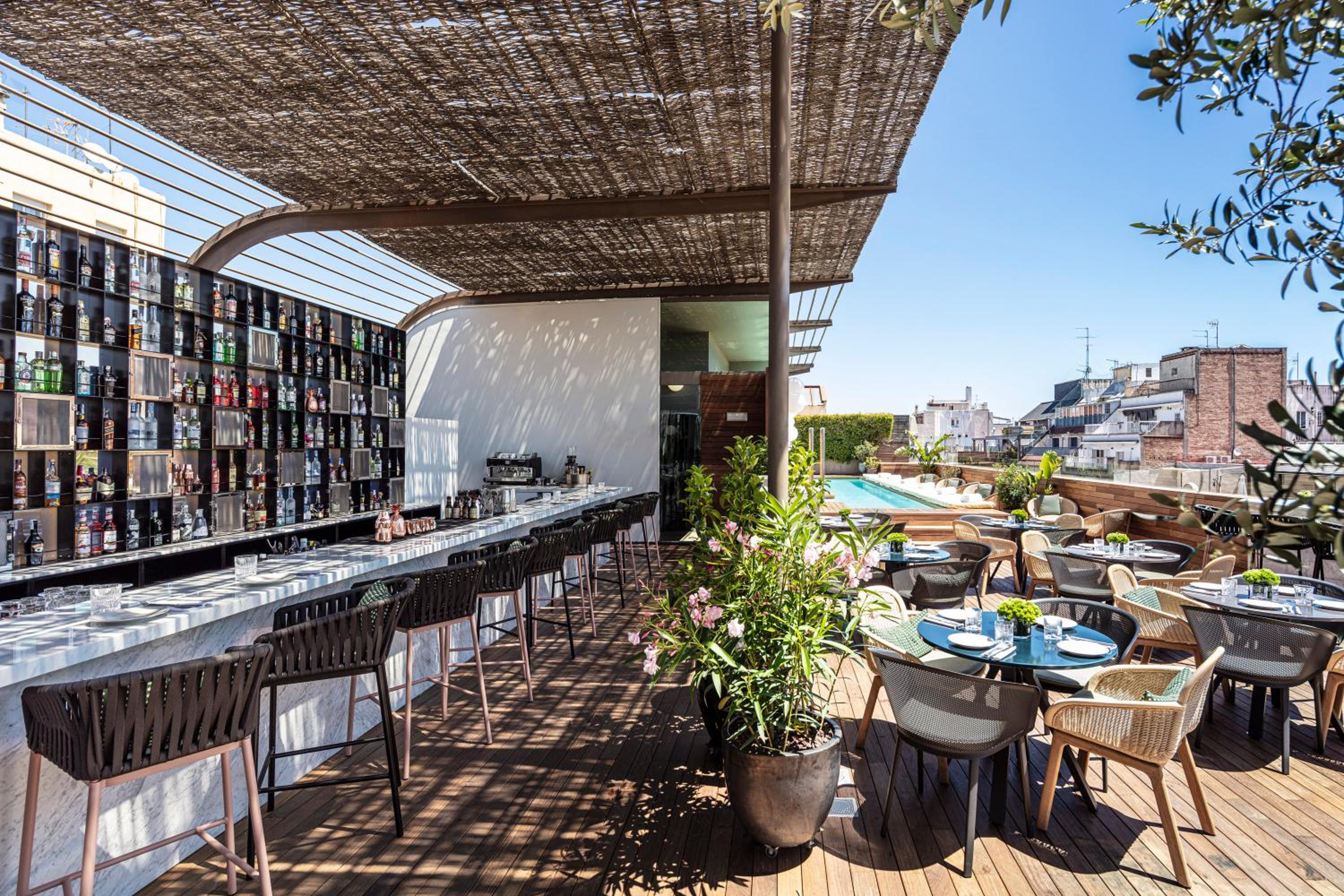
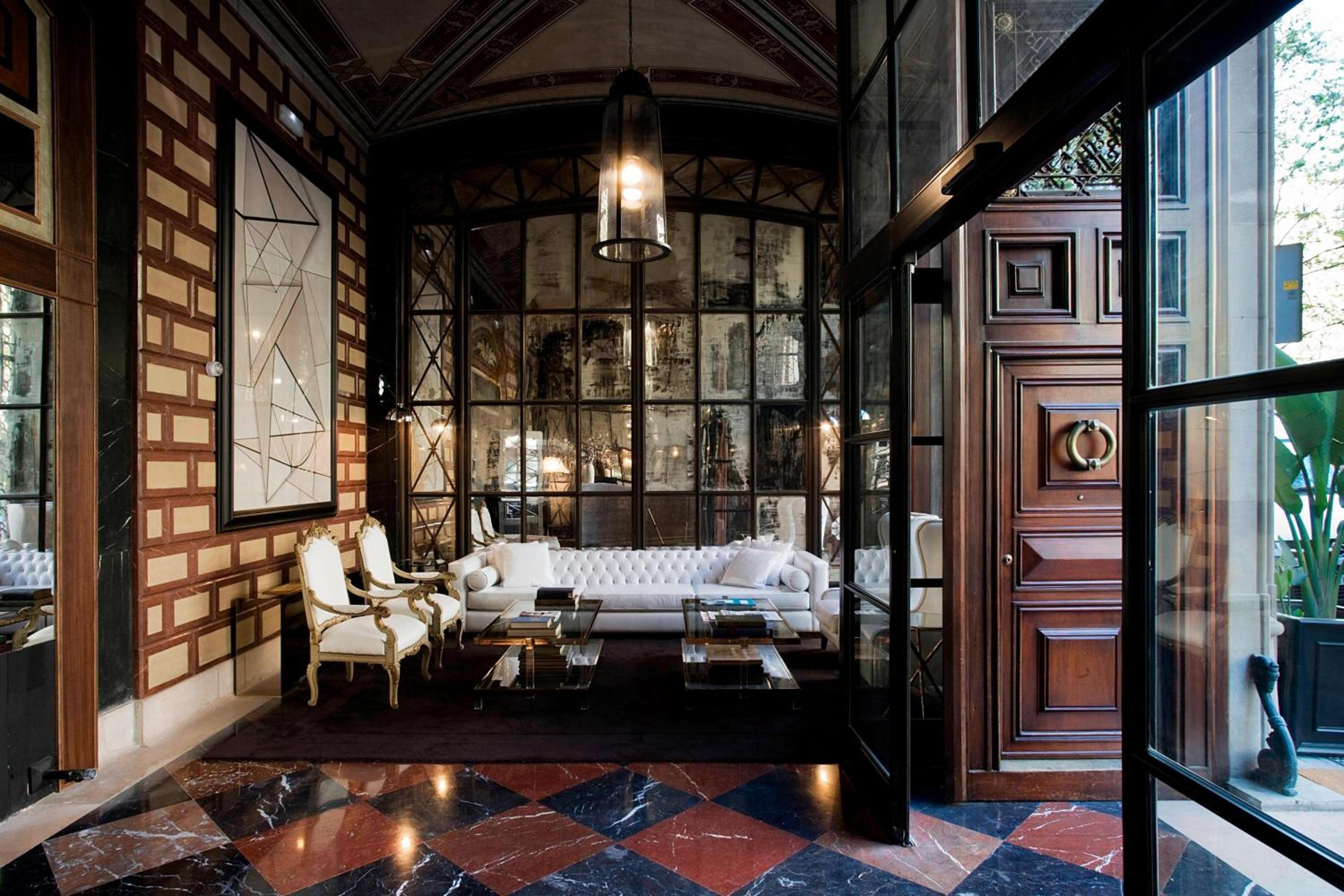
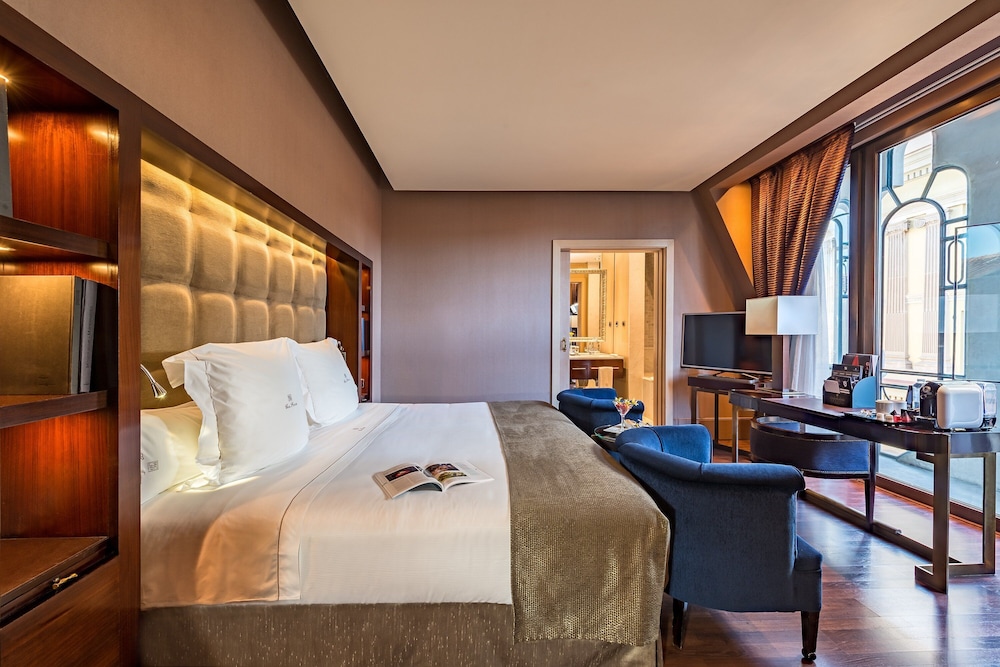
Mandarin Oriental, Barcelona sits on Passeig de Gracia in a converted bank with a rooftop pool and terrace looking straight down the boulevard toward the sea. The interiors are the most refined in the city and the service is the most consistent. Book a terrace room if you can.
Majestic Hotel & Spa Barcelona occupies a 1918 building on the same boulevard with a rooftop pool that faces the Sagrada Familia across the grid, which is the specific view to want here. It is the most classically grand of the group.
El Palace Barcelona sits on Gran Via with a rooftop pool and one of the oldest luxury operations in the city behind it. Rooms are large and traditional, and the roof takes in the whole Eixample.
Sir Victor Hotel is the design-forward option on Passeig de Gracia, with a rooftop pool and bar that fills with locals from May. It is the best value on the boulevard by some margin.
Cotton House Hotel occupies a former textile headquarters on Gran Via with a courtyard, a marble staircase and a small rooftop pool. It is the most architecturally interesting conversion in the Eixample.
Almanac Barcelona sits on Gran Via with the largest rooms of this group and a rooftop pool over the grid. It is quieter than the Passeig de Gracia hotels and a five-minute walk from them.
Monument Hotel is a small palace conversion just off Passeig de Gracia with a rooftop terrace and a restrained, residential feel. It suits travellers who want the address without the scene.
Above the Eixample, where the grid ends and the streets narrow again.
Hotel Casa Fuster occupies a modernista building at the top of Passeig de Gracia by the architect of the Palau de la Musica, with a rooftop terrace looking back down over the whole grid to the sea. It is the best rooftop view in Barcelona and the building is a monument in its own right.
The medieval city below the grid. Narrower, older, louder at night, and closer to the water.
Ohla Barcelona sits on the edge of the Gothic Quarter with a rooftop pool and restaurant that look across the cathedral roofs, which is a different and older view than the Eixample gives. The rooms are contemporary and the restaurant is a serious one.
Grand Hotel Central occupies a corner on Via Laietana with a small infinity pool on the roof looking over El Born and the cathedral towers. It is the most romantic rooftop in the city and the pool is genuinely small.
Kimpton Vividora Barcelona sits inside the Gothic Quarter with a rooftop pool above the lanes, a well-judged modern interior and one of the better hotel restaurants in the old city.
Hotel 1898 occupies a former tobacco company building on La Rambla with a garden, two rooftop pools and considerably more space than the old city usually allows. It is the practical family choice down here.
The Barcelona EDITION sits beside the Santa Caterina market in El Born with a rooftop pool and the most current design of the group. It is the choice for a trip built around eating and drinking rather than sightseeing.
The beachfront towers at Port Olimpic are excluded, and they have the best sea views in the city. They are also twenty-five minutes from the Gaudi houses and the Gothic Quarter, which is the trip most people are actually taking.
Book the Sagrada Familia and Park Guell online weeks ahead with timed entry. Casa Batllo and La Pedrera are both on Passeig de Gracia and both worth doing; if you only do one, Casa Batllo.
The Gothic Quarter is best early in the morning before the tour groups, and the Picasso Museum in El Born is free on certain evenings, which means a queue.
Get out of the centre once. Montjuic has the Miro Foundation, the castle and a cable car. Bunkers del Carmel above Gracia has the best free view in the city and is where Barcelona goes at sunset.
Eat late. Barcelona dinner starts at nine and restaurants fill at ten. The Boqueria is worth walking through and not worth eating in; Santa Caterina and the Sant Antoni market are where the city shops.
El Prat airport connects by Aerobus to Placa Catalunya in 35 minutes, or a taxi runs around 35 euros and takes 25. Both are straightforward.
May, June, September and early October are ideal. July and August are hot, humid and extremely crowded. Winter is mild and the city is at its most liveable.
Pickpocketing on La Rambla, in the metro and around the Sagrada Familia is persistent and organised. Nothing in a back pocket, nothing on a cafe table.
Prices shown are sample rates from upcoming dates — not quotes for specific dates. Open a hotel and choose your own dates and guests to see the exact price.
Eixample for space, quiet and the Gaudi buildings. Gothic for atmosphere, food and nightlife, at the cost of noise and narrow rooms. They are ten minutes apart.
From June to September, unquestionably. Outside those months the roof is still where the view is, but the pool matters less.
Only if the beach is the trip. Barceloneta is twenty minutes from the centre and the sand is crowded and mediocre by Spanish standards.
Four. Three covers the Gaudi buildings and the old city. The fourth gets you Montjuic or a day out to Sitges or the Penedes.