




A little local perspective
Worth knowing.
Worth going.
- Destination
- Mexico City, Mexico
- The selection
- 11 hotels
- Your kind of trip
- food · design · couples · city break
$$ to $$$$ — roughly $150-600 a night, fairly steady year round
Mexico City is one of the two or three best places to eat on earth and it is also 1,500 square kilometres of it. The restaurants that people travel for are not spread evenly: they cluster in Roma, Condesa, Polanco and Juarez, and those four neighbourhoods are close enough to each other to walk between some of them and far enough from everywhere else that the rest of the city is a car ride.
Traffic here is genuinely bad. A five-kilometre journey at seven in the evening can take fifty minutes. If you are staying somewhere that requires a car for every meal, you will eat two good meals a day instead of four, and eating is the reason to come.
Why Roma and Condesa are the answer
They are two adjoining neighbourhoods of tree-lined streets and 1920s architecture, built on the bed of a drained lake, and between them they hold the highest concentration of good eating in Latin America: tasting menus, market stalls, taquerias, bakeries and coffee within a few blocks of each other.
More importantly they are walkable, which almost nowhere else in Mexico City is. You can have breakfast at a bakery, lunch at a market, an early drink in a park and a nine o'clock tasting menu without getting into a vehicle once.
Polanco, twenty minutes north, has the highest-rated formal restaurants and the luxury hotels, and it is grander, quieter and more spread out. Juarez and the Reforma corridor sit between the two and offer the compromise.
The twelve below are grouped by neighbourhood.
Condesa and Roma
The walkable core, where the eating is densest.
Downtown Mexico sits on the edge of Parque Espana in Condesa with a rooftop pool and terrace over the treeline, and it is the most comfortable hotel in the neighbourhood by a distance. The park side rooms are the ones to ask for.
Condesa DF is the design hotel that started the Condesa revival, a restored 1928 triangular building around a courtyard, with a rooftop that is still one of the better places to drink in the city. Rooms are compact.
Brick Hotel Mexico City occupies a restored building in Roma Norte with a courtyard, a good restaurant and the most personal service of this group. It sits in the middle of the Roma restaurant streets.
Hotel Carlota is a converted 1930s house in Roma with a rooftop pool, a garden and a young, sociable tone. It is the best value in the neighbourhood.
Circulo Mexicano sits in Roma Norte with a small courtyard and simple, well-judged rooms, and it is the smallest and quietest of the four.
Juarez and Reforma
Between Roma and Polanco, on and around the main avenue, with the widest hotel choice and good transport in both directions.
Four Seasons Hotel Mexico City occupies a tower on Reforma with the largest rooms in the city, a very good spa and views over Chapultepec park. It is the most comfortable hotel in Mexico City.
The St. Regis Mexico City sits on Reforma with a rooftop pool and terrace, contemporary rooms and a lively bar. It is fifteen minutes on foot from Roma.
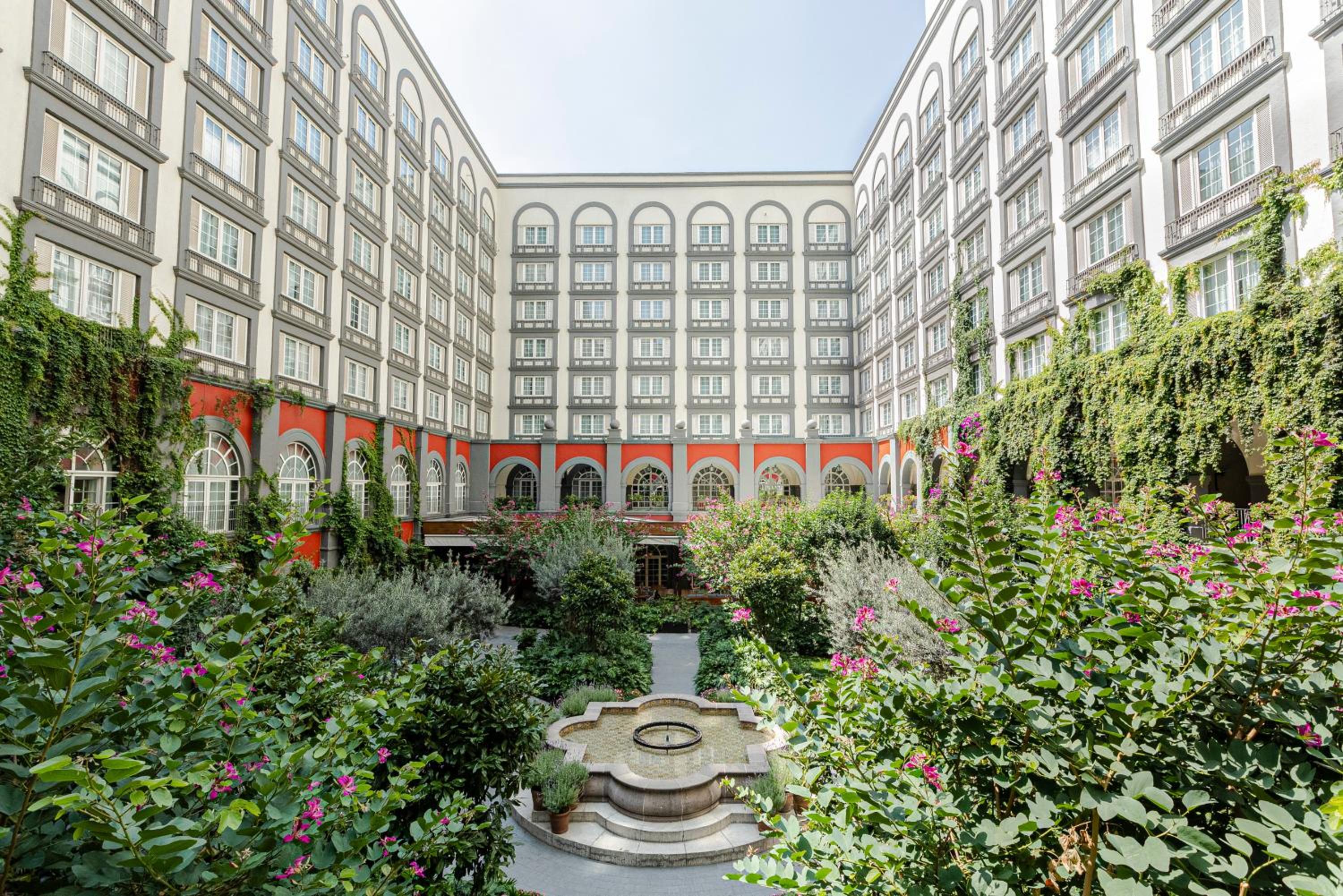
Sofitel Mexico City Reforma is a 1930s building near the Angel de la Independencia, restored with a leafy courtyard restaurant that locals use for lunch. It is the most atmospheric mid-range choice.
Polanco
Formal, expensive and quiet, with the highest-rated restaurants and the museums of Chapultepec nearby.
Las Alcobas occupies a low colonial-style building on a residential street with a garden and a pool, and it is the most discreet luxury address in the city.
W Mexico City sits on Masaryk, the main Polanco avenue, with a rooftop terrace and a strong restaurant, minutes from the neighbourhood's famous kitchens.
Casa Polanco is a converted 1940s mansion turned small hotel, with a walled garden and a level of quiet that Polanco does well.
The historic centre
Andaz Mexico City Condesa occupies a converted building facing the Zocalo side of the historic centre, with a rooftop looking directly at the cathedral. The centre empties in the evening and is a car ride from the restaurants, which is the trade for the best view in the city.
What we have left off
The Santa Fe towers are excluded. They have the newest rooms in Mexico and they are forty-five minutes from everything worth eating, in a city where that journey can take an hour at the wrong time.
What to do between meals
Eat at a market. Mercado de Medellin in Roma, Mercado San Juan for ingredients, and any of the neighbourhood tianguis on their day. Then eat tacos al pastor standing up, late.
Do the anthropology museum in Chapultepec properly; it is the best museum in the Americas and it takes half a day. The Frida Kahlo house in Coyoacan needs a booked ticket weeks ahead.
Take a boat at Xochimilco early on a weekend morning before it becomes a party. Go to Teotihuacan at opening, an hour north, and climb what is climbable.
Walk Roma and Condesa without a plan. The architecture, the bookshops, the parks and the bakeries are the point, and it is the most pleasant urban walking in North America.
Practical notes
The airport is 30 to 60 minutes from these neighbourhoods depending entirely on traffic. Use an app rather than a street taxi. Uber is standard and cheap.
March to May is warm and dry, and the best window. June to September is the rainy season, which usually means a heavy afternoon downpour rather than a lost day. November to February is cool, dry and pleasant.
The altitude is 2,240 metres, which is enough to affect sleep and alcohol tolerance for the first day or two. Tap water is not for drinking.
Explore 4 & 5 Star Mexico City Hotels
Prices shown are sample rates from upcoming dates — not quotes for specific dates. Open a hotel and choose your own dates and guests to see the exact price.
Questions people actually ask
Is Roma or Condesa safer?
Both are among the safest parts of the city and heavily walked at night. Ordinary urban caution applies, and there is no reason to avoid either after dark.
Polanco or Roma?
Polanco for the formal restaurants, the museums and quiet. Roma for walkability, atmosphere and the food you will actually remember. Roma for a first visit.
Do you need reservations?
For the well-known tasting menus, months ahead. For everything else, no, and the best meals are frequently the unreserved ones.
How many nights?
Five. Mexico City is enormous and the food alone justifies the time.