Levernois, near Beaune
Hostellerie de Levernois
Parkland and a long-starred kitchen outside the walls
Explore Hotel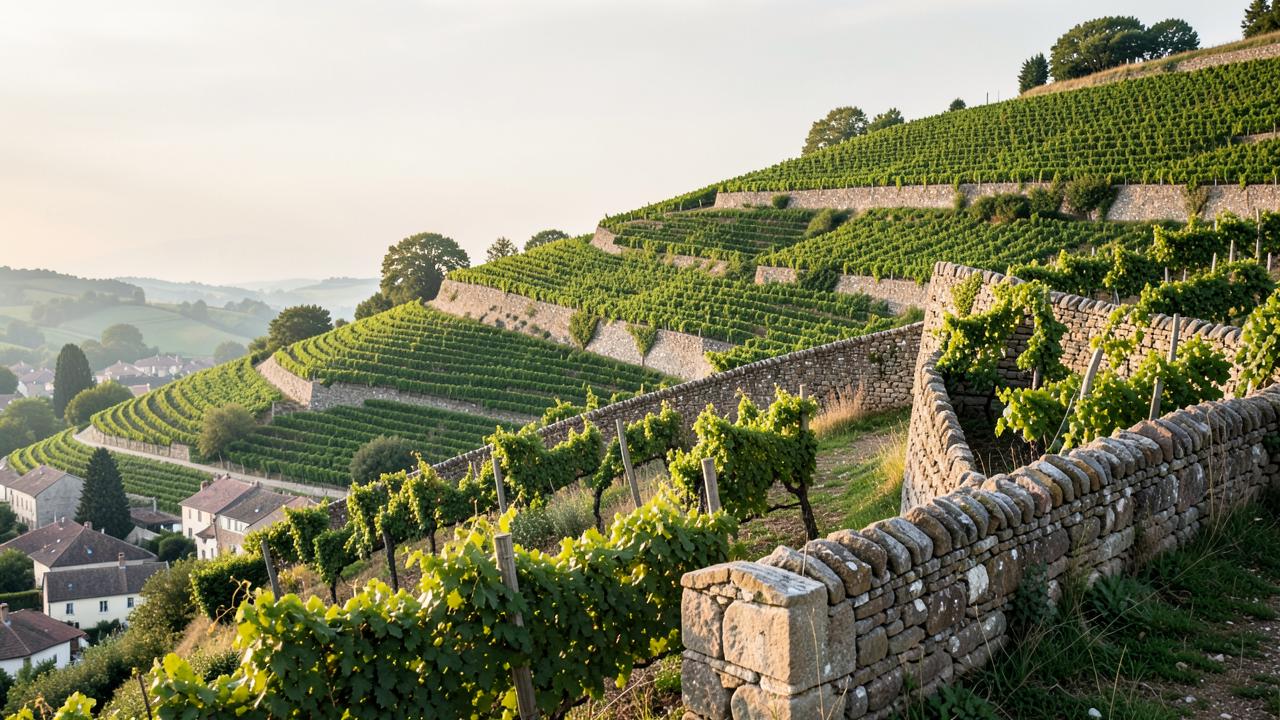

Burgundy, France
Monks worked out over generations that fifty metres changes the wine, walled the plots they judged distinct, and some of those walls still stand.
The places to stay
Levernois, near Beaune
Parkland and a long-starred kitchen outside the walls
Explore Hotel

Beaune
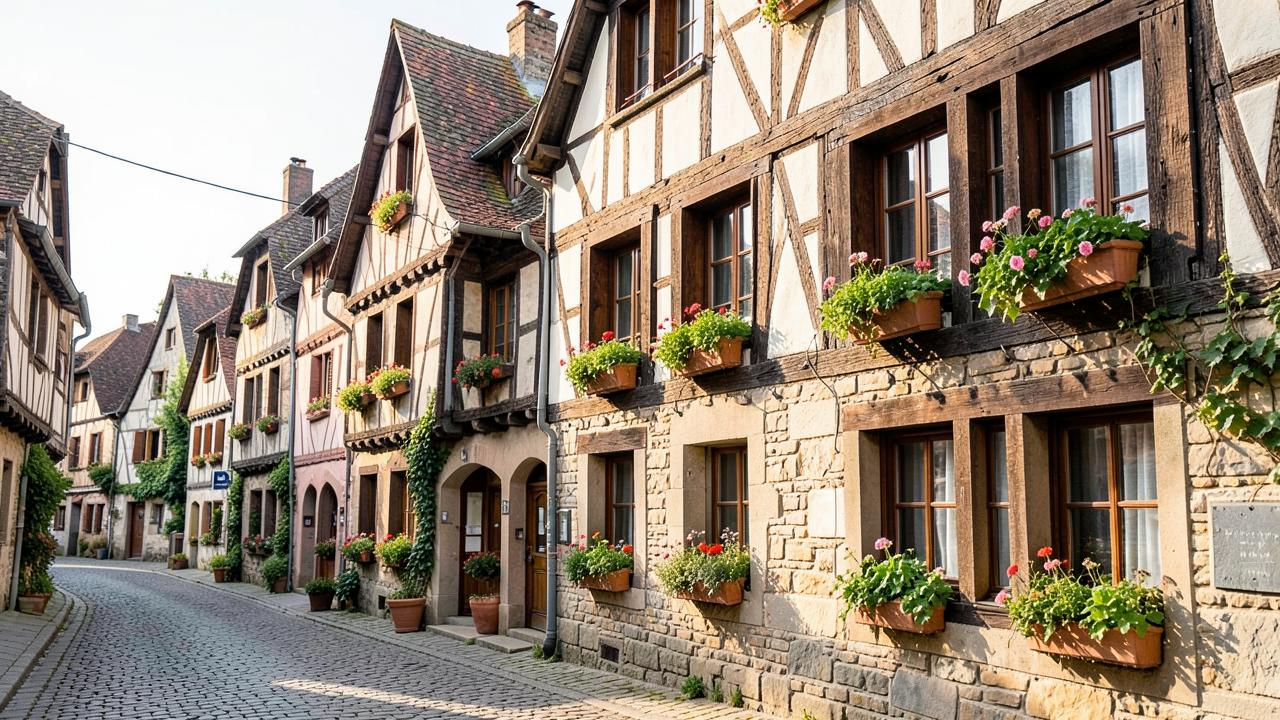
A nineteenth-century house with a garden near the Hospices
Check availability
Gilly-lès-Cîteaux, Côte de Nuits
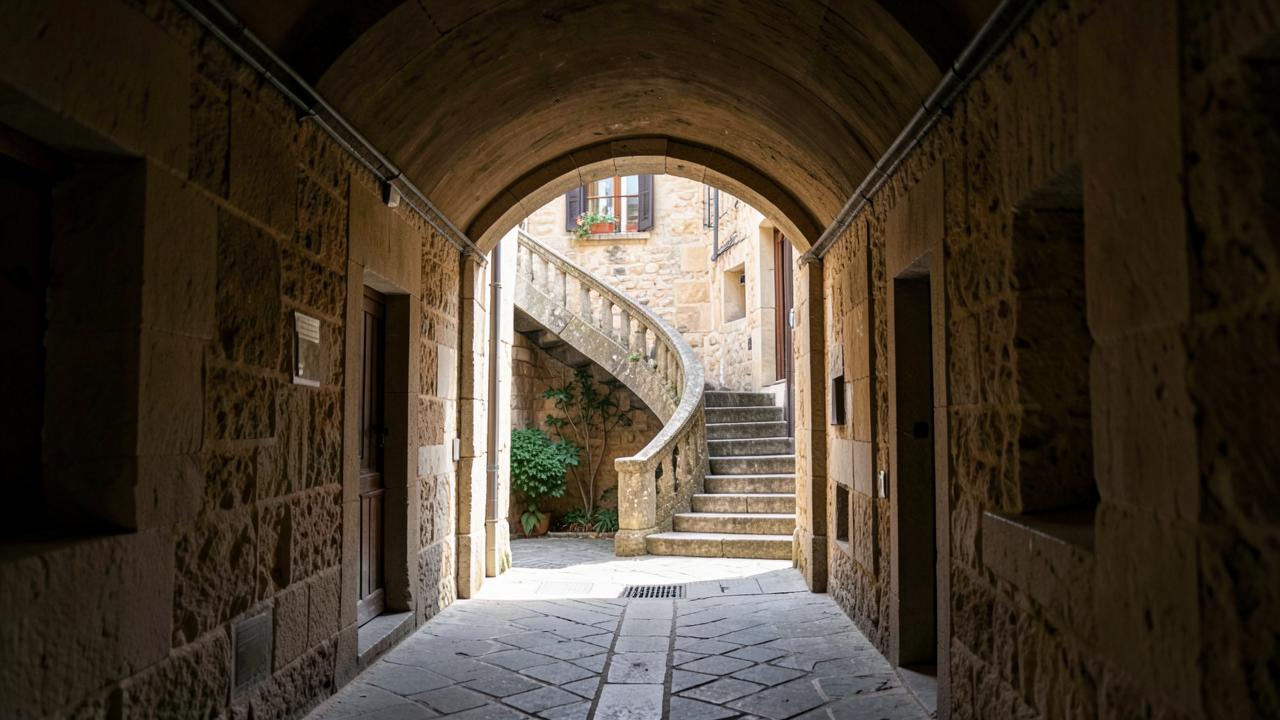
A fourteenth-century château with vaulted cellars
Explore Hotel

La Bussière-sur-Ouche
A twelfth-century abbey with a starred chapter house
Explore Hotel

By Happi · Last updated September 2026
A little local perspective
$$ to $$$$ — roughly 200-700 euros a night, peaking at the November auction
The Côte d'Or is divided into 1,247 named parcels called climats, and in 2015 UNESCO listed the parcels themselves rather than any building on them. The boundaries are the heritage.
Most were drawn by Cistercian monks from the twelfth century onward. They worked the slope, tasted the results, and established over generations that wine from one strip of land differed consistently from wine made identically fifty metres away — different soil depth, different drainage, different angle to the sun. They built low stone walls, the clos, around the plots they judged distinct, and several of those walls are still standing.
This is where the idea of terroir was worked out empirically, centuries before anyone could explain the chemistry. A Burgundy label names the parcel because the parcel is the point.
It runs roughly north to south for about fifty kilometres and it is narrow — in places the whole classified strip is a few hundred metres wide.
The Côte de Nuits, from Dijon down to Nuits-Saint-Georges, is almost entirely pinot noir and holds most of the grand crus.
The Côte de Beaune, continuing south, has the great whites — Meursault, Puligny-Montrachet, Chassagne — alongside reds.
Beaune sits in the middle and is the wine capital: a walled town with cellars running under it, the négociant houses and most of the restaurants.
The Hospices de Beaune is the other thing to understand. A charity hospital founded in 1443, funded then and now by wine from vineyards donated over the centuries, and the annual November auction of its barrels sets the tone for the vintage and raises money for the hospital still.
The eight below are grouped by position on the slope.
The wine capital, walled, with the cellars beneath.
Hostellerie de Levernois occupies a property at Levernois five minutes outside Beaune, in parkland with a stream, a pool and a restaurant that has held a star for many years.
Le Cep sits inside Beaune's walls in a set of linked sixteenth-century houses around courtyards, with a spa and the market square outside.
Hostellerie Le Cèdre & Spa occupies a nineteenth-century house in Beaune with a spa, a pool and a garden, a short walk from the Hospices.
North, the grand cru strip.
Château de Gilly occupies a fourteenth-century château at Gilly-lès-Cîteaux with vaulted cellars, formal gardens and Cistercian origins, in the middle of the Côte de Nuits.
Ermitage de Corton sits at Aloxe-Corton on the hill of Corton with a small room count, a restaurant and grand cru vineyards on three sides.
Off the slope, quieter and cheaper.
Abbaye de la Bussière occupies a twelfth-century Cistercian abbey at La Bussière with a lake, formal gardens and a starred restaurant in the former chapter house.
Château de Sainte Sabine sits in a medieval château at Sainte-Sabine with a park, a pool and views across the Auxois countryside.
Toward the Mâconnais and Charolais.
Maison Doucet occupies a house in Charolles with a starred kitchen, a garden and cattle country around it, at rates well below the Côte d'Or.
The chambres d'hôtes among the wine villages are excluded, and in a region of very small domaines they are often run by the growers themselves. They are guest houses rather than hotels.
Book domaine visits well ahead and be realistic: many of the famous names produce a few hundred cases and do not receive visitors at all. The négociant houses in Beaune have large cellars and take walk-ins.
Walk or cycle the Route des Grands Crus, which runs the length of the slope through the villages, on flat ground below the vineyards.
See the Hôtel-Dieu at Beaune, the 1443 hospital with the glazed polychrome roof, which functioned as a hospital until 1971.
Eat Burgundian: œufs en meurette, jambon persillé, boeuf bourguignon made properly, and Époisses if you can stand it.
Go to the Saturday market in Beaune, which fills the square and is the best in the region.
Dijon is two hours from Paris by TGV and Beaune is twenty minutes further. Lyon is ninety minutes south, Geneva two and a half hours.
May, June and September are ideal. The Hospices auction in the third week of November fills every room for fifty kilometres. Harvest is late September. Winter is cold, quiet and several hotels close.
Distances are short and the villages are close together. A driver is sensible for tasting days.
A named vineyard parcel with boundaries established over centuries. There are 1,247 on the Côte d'Or and UNESCO listed the parcels themselves.
Often not. Many are tiny and closed to visitors. The Beaune négociant cellars are the accessible alternative.
The third weekend of November, and it books out the whole region.
Three. Beaune as a base covers both halves of the slope.