



A little local perspective
Worth knowing.
Worth going.
- Destination
- Jeju Island, South Korea
- The selection
- 8 hotels
- Your kind of trip
- volcanoes · walking · families · culture
$$ to $$$$ — roughly $200-600 a night, peaking in summer
The haenyeo of Jeju are women who free-dive for shellfish without breathing apparatus. They work in water down to about twenty metres, hold their breath for two minutes or more, and surface with a whistling exhalation called the sumbisori that carries across the water. Most of those still diving are over sixty and a significant number are over eighty.
The tradition goes back centuries and became women's work for reasons that are argued about — one account is that a tax on male divers made it economic for women to take it on, another that the work suited a matrifocal island economy where men fished offshore or were conscripted. By the 1960s there were around 26,000 of them. There are now well under 4,000 and the average age keeps rising.
UNESCO listed the culture as intangible heritage in 2016. You can watch them come ashore at several villages, and a handful of restaurants are run by former divers who cook what they used to bring up.
A volcano with a hole in the middle
Jeju is a shield volcano rising to 1,947 metres at Hallasan, the highest point in South Korea, with a crater lake at the top and something like 360 smaller parasitic cones — oreum — scattered across the island like green pimples.
Underneath it is the Geomunoreum lava tube system, listed by UNESCO in 2007. Manjanggul is the accessible one: a tube around seven kilometres long, one kilometre of it open, with lava stalactites, wall markings showing the flow levels and a seven-metre lava column at the end.
Seongsan Ilchulbong, the sunrise peak, is a tuff cone that erupted underwater about five thousand years ago, now a bowl with a rim you can walk in twenty minutes.
The eight below are grouped by coast.
The south coast and Jungmun
The resort coast, warmest and most developed.
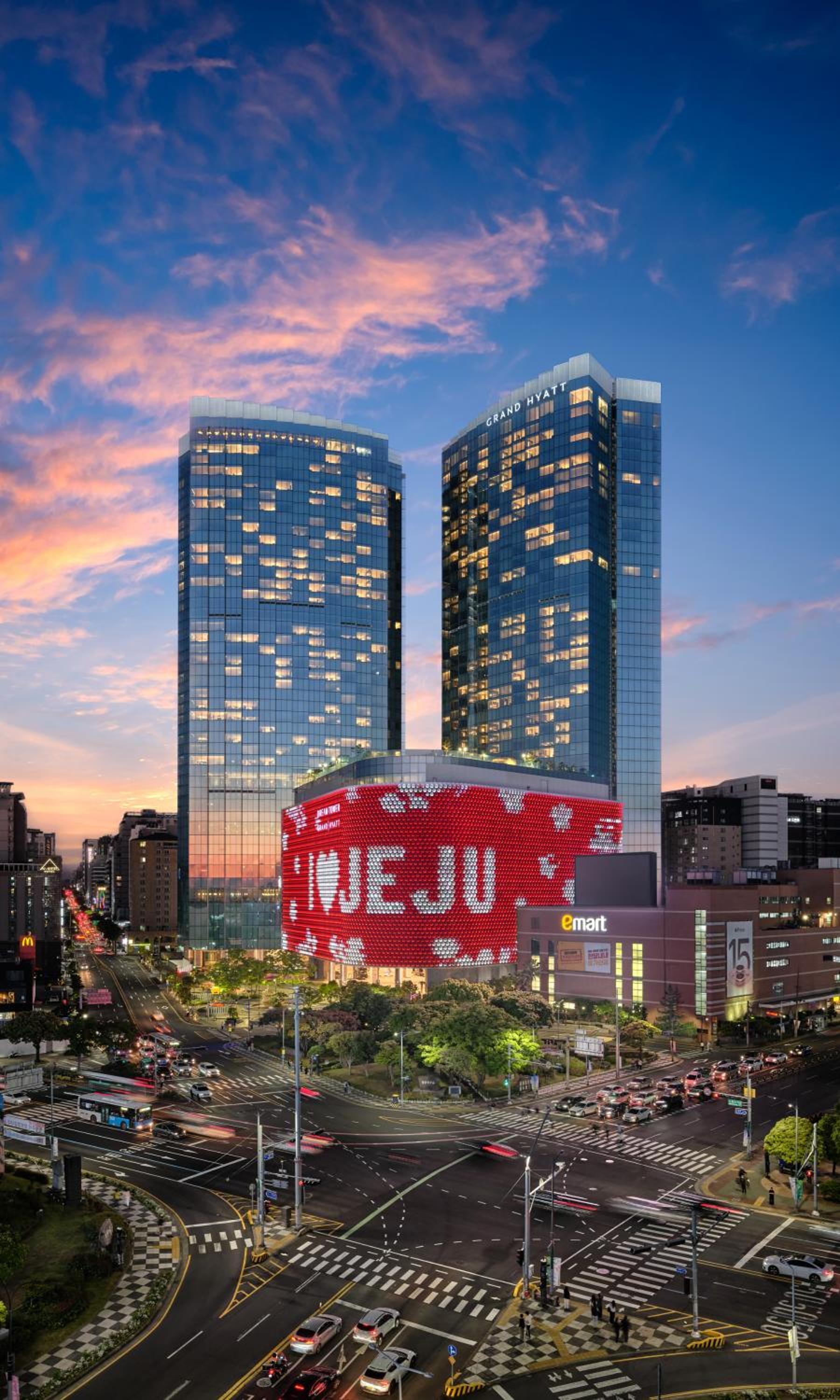
Grand Hyatt Jeju occupies a clifftop in the Jungmun resort area with a spa, several pools and a Korean design language rather than an imported one. It is the best hotel on the island.
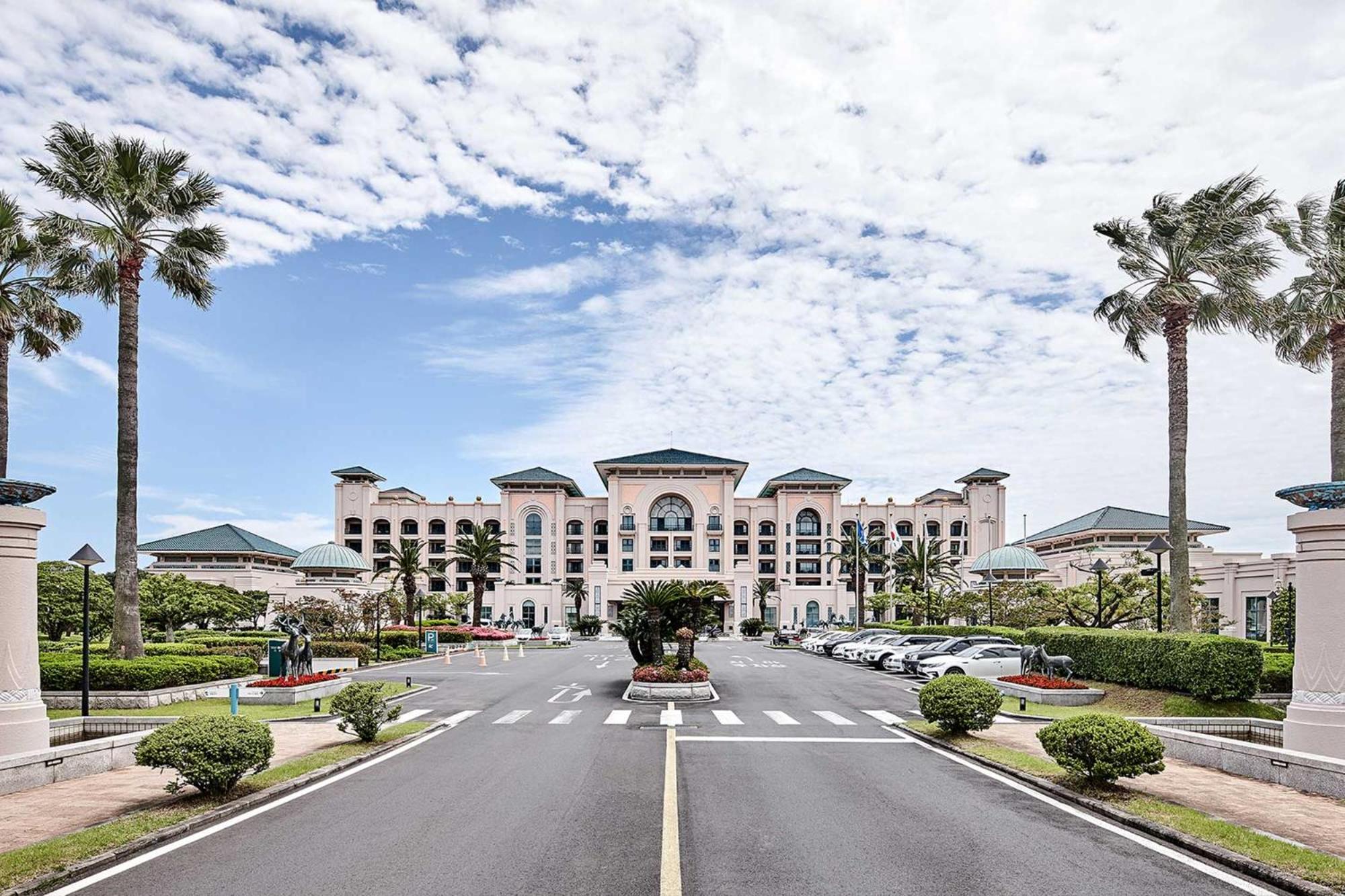
The Shilla Jeju sits in Jungmun with gardens designed around Jeju's volcanic rock, an indoor and outdoor pool and a long-standing family clientele.
Parnas Hotel Jeju occupies a clifftop position with an outdoor infinity pool over the sea and full family facilities.
Lotte Hotel Jeju sits on the southern coast with a very large spa, several restaurants and a casino.
Seogwipo and the southwest
Quieter, with the waterfalls.
Podo Hotel occupies a hillside property by the architect Itami Jun, built as a cluster of curved forms among trees with a small room count and a spring-fed spa. It is the most architecturally serious building on Jeju.
WE Hotel Jeju sits above Seogwipo with a spa built around Jeju's carbonated spring water and views to the sea.
The east and Jeju City
Near the airport and the sunrise peak.
Haevichi Hotel & Resort Jeju occupies a beachfront position on the eastern coast with a pool, a spa and Seongsan within reach for sunrise.
Grand Josun Jeju sits in Jeju City with contemporary rooms, a pool and the shortest transfer from the airport.
What we have left off
The guest houses and pensions across the island are excluded, and on Jeju they are how most Korean visitors stay, often in converted stone houses. They are guest houses rather than hotels.
What to do
Watch the haenyeo. Several villages have posted diving times and there is a museum at Hado. Buy from them directly if the chance arises.
Walk part of the Olle Trail, a waymarked coastal path in 27 routes totalling over 400 kilometres, created from 2007 and modelled on the Camino. Route 7 along the southern cliffs is the best known.
Climb Seongsan Ilchulbong for sunrise, which takes about twenty minutes up, and go into Manjanggul lava tube afterwards.
Climb Hallasan if you are fit — the Seongpanak route is about nine kilometres each way and permits are required on some routes with fixed cut-off times for the summit.
Eat black pork, which comes from a native Jeju breed and is grilled at the table, and the raw seafood the divers land.
Practical notes
Jeju's airport is one of the busiest routes in the world — the Seoul to Jeju corridor regularly tops global passenger-route rankings — with flights every few minutes from Gimpo.
April, May, October and November are best. Summer is hot, humid and brings typhoons. Winter is mild at sea level with snow on Hallasan. The rape flowers in April and the silver grass in autumn are the two seasonal set pieces.
A car is useful; the island ring road is straightforward and public transport is slow.
Every hotel bookable on Jeju
Who are the haenyeo?
Women free-divers, most now over sixty, who work without breathing apparatus. Numbers have fallen from around 26,000 in the 1960s to under 4,000.
Can you go inside the lava tubes?
Manjanggul has about a kilometre open to visitors, with lava stalactites and a seven-metre column at the end.
Which coast?
South for resorts and warmth, east for the sunrise peak and the lava tubes, west for quiet.
How many nights?
Four. Three on one coast with a day for Hallasan or the Olle trail.