High Street, Oxford
Old Bank Hotel
A terrace facing four colleges, minutes from the Bodleian
Explore Hotel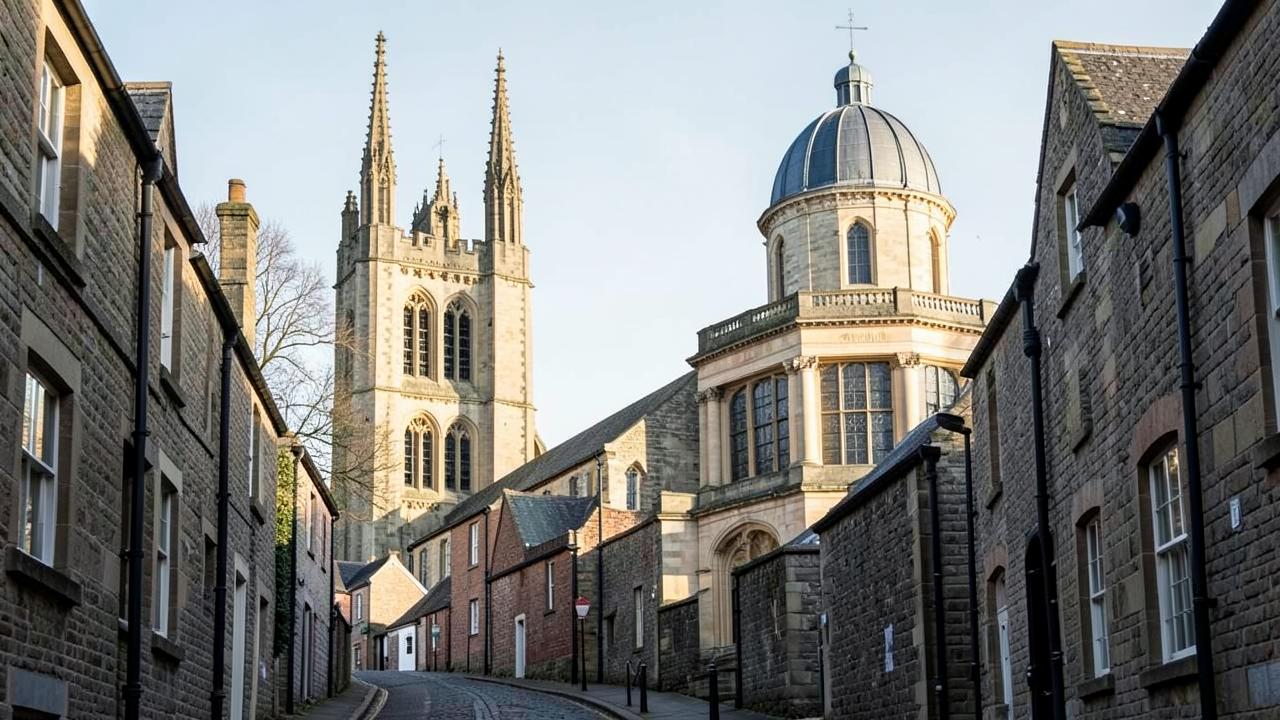

Oxford and Cambridge, England
Thirty-nine self-governing colleges in one city and thirty-one in the other, owning the ground a developer would want. Hence the short list.
The places to stay
High Street, Oxford
A terrace facing four colleges, minutes from the Bodleian
Explore Hotel


Great Milton
Two Michelin stars held continuously since 1984
Explore Hotel
Parker's Piece, Cambridge
The city's only five-star, restored and garden-facing
Explore Hotel
By Happi · Last updated September 2026
A little local perspective
$$$ to $$$$ — roughly 250-800 pounds a night, peaking in graduation weeks
Neither Oxford nor Cambridge has a campus. The universities are federations of colleges — thirty-nine at Oxford, thirty-one at Cambridge — each a self-governing institution with its own buildings, its own endowment and, crucially, its own land.
Between them the colleges own most of both city centres. That is why there is no hotel district in either place: the ground a developer would want has belonged to a college since the fifteenth century and is not for sale. What exists instead is a handful of conversions in buildings that came onto the market for other reasons, which keeps the list short and makes the good ones book out.
The colleges themselves let rooms during vacations, which is genuinely the cheapest way to sleep inside a quadrangle. They are student rooms with a porter rather than hotels, and this guide does not cover them, but they exist and they are worth knowing about.
Oxford is a working city that a university happens to sit inside. It has industry, a ring road, traffic and a life independent of the colleges. The buildings are stone, the skyline is the one Matthew Arnold called dreaming spires, and the Bodleian, the Radcliffe Camera and Christ Church are the set pieces.
Cambridge is smaller, flatter and more dominated by the university. The Backs — the meadows and lawns where seven colleges run down to the river Cam — have no equivalent in Oxford, and punting on the Cam past King's College Chapel is the thing people picture.
They are about two and a half hours apart by road with no direct fast train, which is inconvenient enough that most visitors pick one.
Woodstock, eight miles north of Oxford, has Blenheim Palace, a UNESCO site and the only non-royal house in England called a palace.
The seven below are grouped by city.
The colleges and the High.
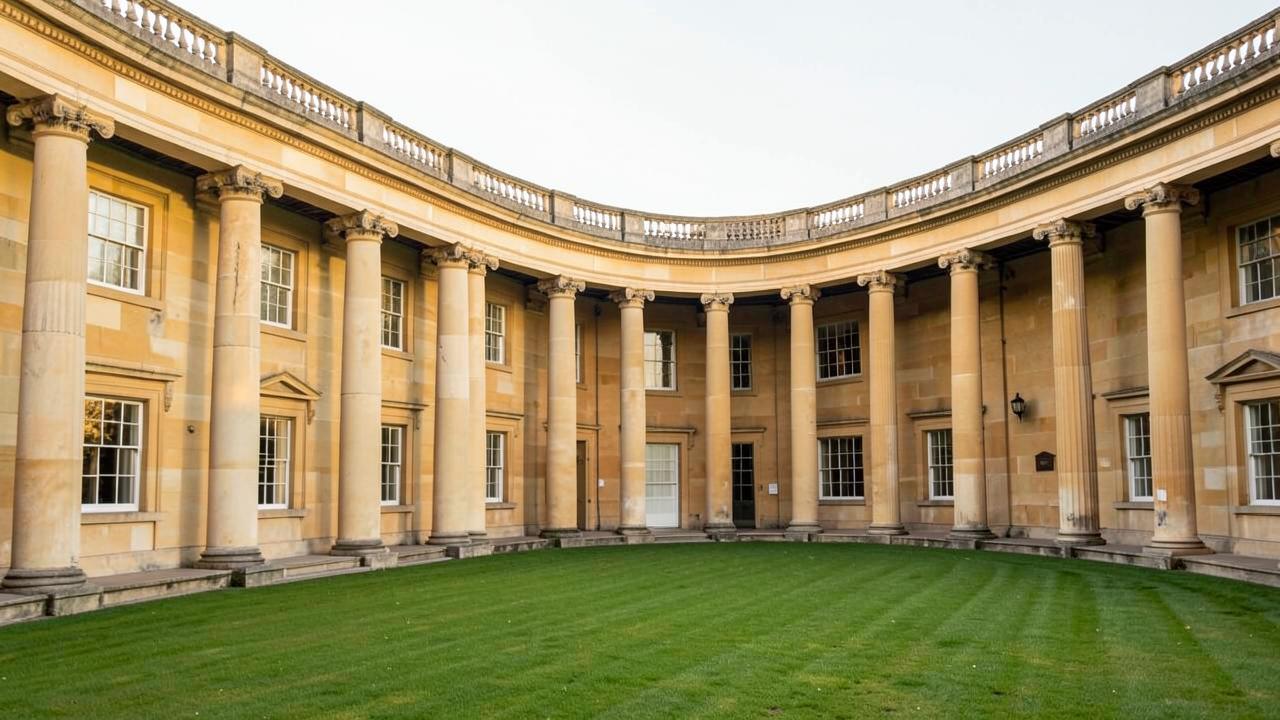
Old Bank Hotel occupies a Georgian building on the High Street with a gallery of modern art through the public rooms, a terrace looking at four colleges and the Bodleian a two-minute walk away.
Old Parsonage Hotel sits north of the centre in a seventeenth-century parsonage with a walled garden, a roof terrace and a library bar.
The Randolph Hotel occupies the 1866 landmark opposite the Ashmolean Museum, recently reworked, with a bar that has been an Oxford institution for over a century.
Malmaison Oxford sits inside the former Oxford Prison, a Victorian wing where the cells have been knocked together into rooms with the original doors and landings left in place. It is the strangest place to sleep in either city.
Seven miles southeast of Oxford.
Belmond Le Manoir aux Quat'Saisons occupies a fifteenth-century manor in gardens outside Oxford, with a kitchen that has held two Michelin stars continuously since 1984 and a cookery school attached. People come to England for it.
The Backs and the river.
University Arms occupies a 1834 building facing Parker's Piece, restored with a garden-facing brasserie, and it is the only five-star hotel in the city.
Hotel du Vin Cambridge sits in a converted university building in the centre with a wine-led cellar bar and the colleges on foot.
College vacation rooms are excluded. They are the cheap way to sleep inside a quadrangle and they are student accommodation with a porters' lodge rather than hotels.
Book a college. Several charge a few pounds for entry and some close to visitors entirely during exams — check before walking up. Christ Church, Magdalen and New College in Oxford; King's, Trinity and St John's in Cambridge.
Go to evensong. Most college chapels sing it during term, it is free, it is open to anyone, and King's College Cambridge and New College Oxford have choirs of international standard.
Punt the Cam past the Backs, ideally early. Chauffeured punts remove the humiliation; self-hire provides the entertainment for everyone else.
See the Bodleian and the Radcliffe Camera in Oxford, and the Fitzwilliam Museum in Cambridge, which is free and considerably better than most people expect.
Visit Blenheim Palace from Oxford, which takes half a day and has a Capability Brown landscape as good as the house.
Oxford is an hour from London Paddington and Cambridge an hour from King's Cross. Neither needs a car and both are difficult to drive in; park and ride is the sensible option.
Term dates matter. The cities are busiest and most alive in term, quieter and more accessible in vacation, and graduation weeks in summer fill every room. Exam periods close some college access.
May and June are the best months, with the Backs and the college gardens at their peak.
The colleges own most of both city centres and have done for centuries. There is very little land for anything else.
Oxford for a bigger city with more going on. Cambridge for the Backs, the river and a more concentrated university town.
Many charge a small entry fee and open at set hours. Some close during exams. Check the day before.
Two in one city. Combining both properly takes four.