Casco antiguo
Hotel Sant Francesc Singular
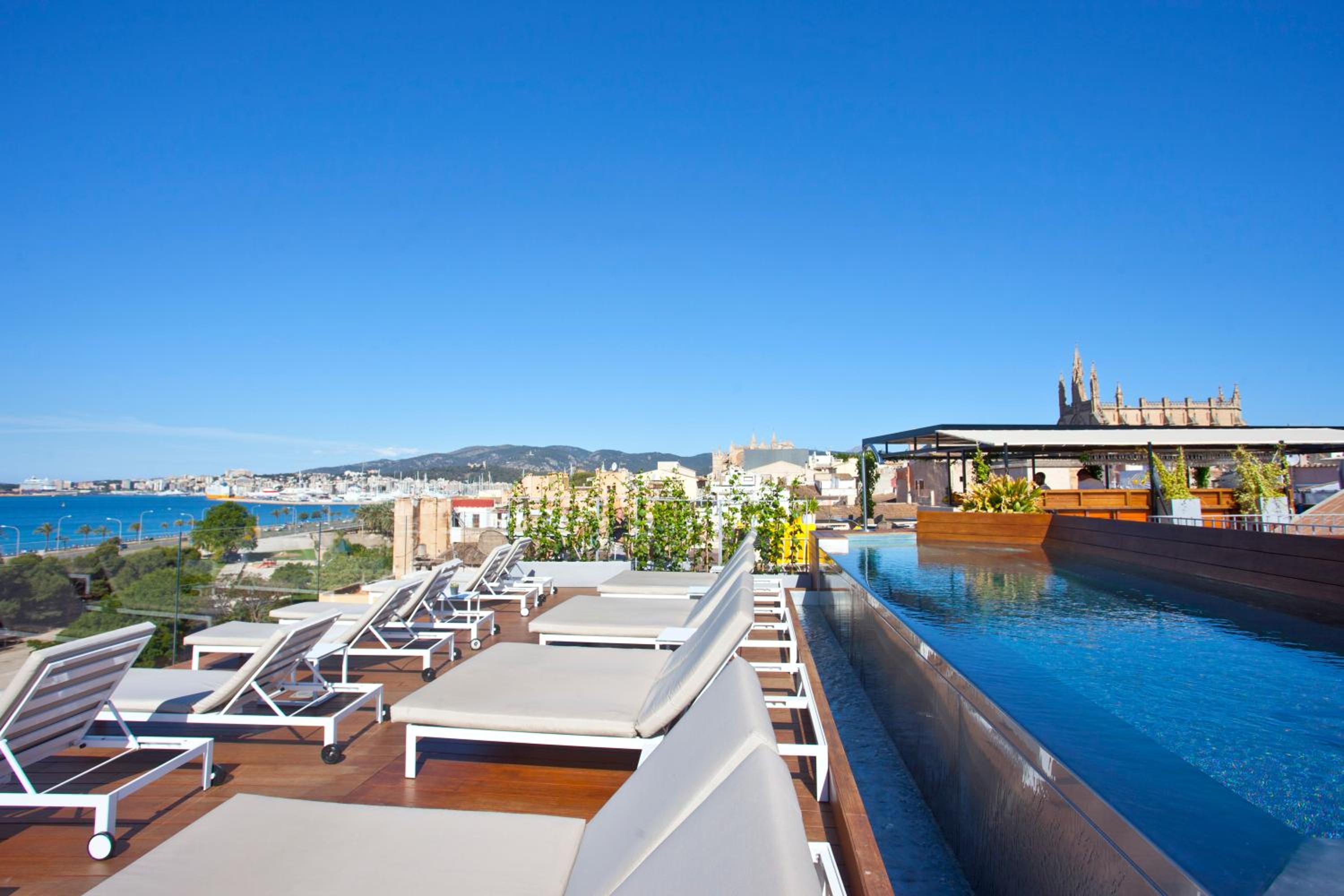
Cloistered palace with a rooftop pool at the cathedral
Explore Hotel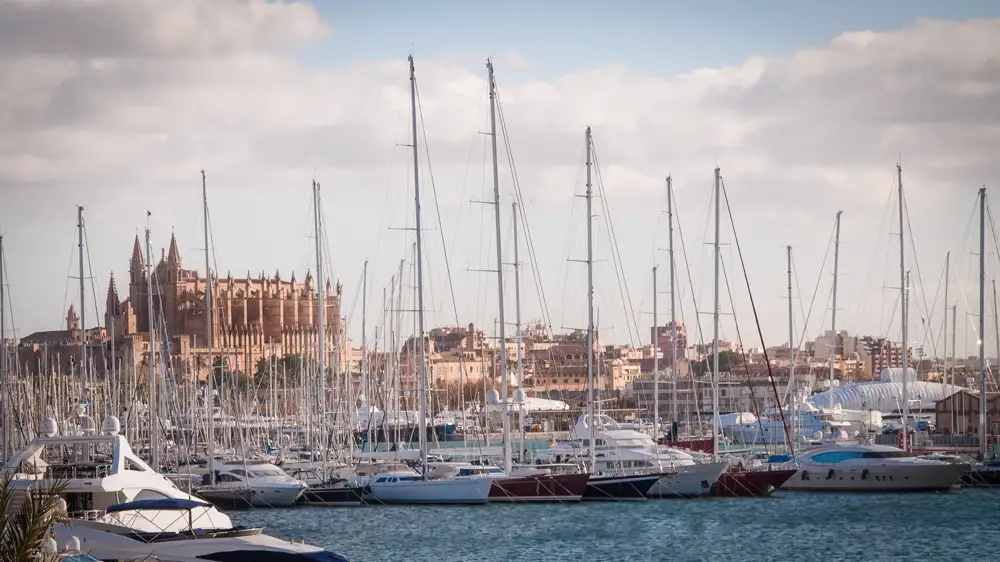

Palma de Mallorca, Spain
A plain stone facade on a lane, a heavy door, and a patio with a well and orange trees behind it. Most visitors to the island never see this.
The places to stay
Casco antiguo
Cloistered palace with a rooftop pool at the cathedral
Explore Hotel



By Happi · Last updated September 2026
A little local perspective
$$ to $$$$ — roughly 180-600 euros a night, peaking July and August
Mallorca has two entirely separate tourist economies and they barely touch. One runs along the bay west and east of the airport: Magaluf, Palmanova, S'Arenal, high-rise, package, and busy from May to October. The other is Palma itself, a working Mediterranean city of 400,000 with a gothic cathedral, a medieval Arab quarter, an art scene and some of the best eating in Spain.
They are twenty minutes apart and most visitors to the island never see the second one. Which is fortunate, because the casco antiguo, Palma's old town, is one of the more pleasant places to spend three days in Europe, and it has almost nothing to do with the Mallorca of the brochures.
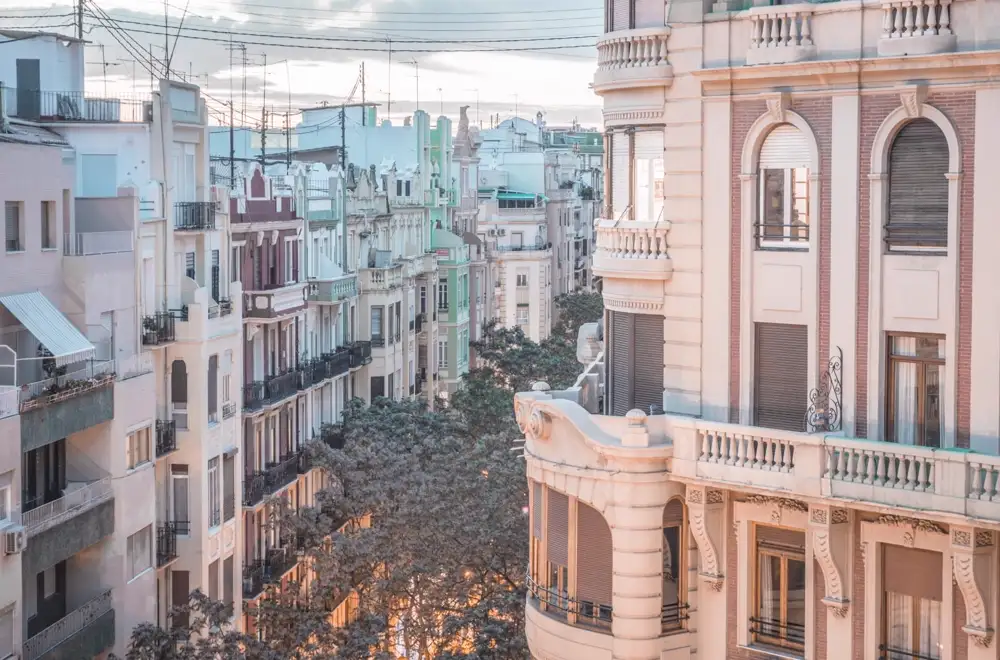
The casco antiguo is a compact grid of narrow streets between the cathedral and the Plaza Mayor, built around Arab foundations and filled with courtyard palaces, most of which are private and a few of which are now hotels. The pattern is consistent: a plain stone facade on a lane, a heavy door, and behind it a patio with a staircase, a well and orange trees.
Staying inside it means you walk to the cathedral, the Bellver castle bus, the markets, the tapas streets around Santa Catalina and the port. You are also in a real neighbourhood rather than a resort strip, which means the restaurants are priced for residents.
The alternative worth considering is Portixol, a converted fishing village fifteen minutes east along the seafront, which has the water without the resort development.
The nine below are grouped accordingly.
Courtyard palace conversions on the medieval lanes, mostly small.
Hotel Sant Francesc Singular occupies a seventeenth-century palace with a cloistered courtyard, a rooftop pool looking at the cathedral and a garden with a five-hundred-year-old olive tree. It is the best hotel on the island and the most complete expression of what these buildings can be.
Can Cera Hotel is a restored noble house near the cathedral with a courtyard, a small rooftop pool and twelve rooms. It is the most personal of the palace conversions.
Palacio Ca Sa Galesa sits in a fifteenth-century building with a private garden, a hammam in the cellar and rooms furnished with antiques rather than design pieces. It is the most traditional stay in the old town.
Es Princep occupies a palace close to the cathedral with a rooftop pool, a spa and the largest rooms inside the walls. It is the pick if the palace conversions feel too small.
Hotel Can Alomar sits on the Passeig del Born, the main boulevard, above the shops, with a rooftop terrace and a very good restaurant. It is the most convenient position in the old town.
Boutique Hotel Calatrava is a design-led conversion on a quiet lane with a courtyard and a small pool, and it is the best value inside the casco antiguo.
Hotel Cort occupies a corner on the Plaza Cort facing the town hall and its thousand-year-old olive tree, with a terrace that is the best people-watching in Palma.
Nakar Hotel sits at the edge of the old town with a rooftop pool and bar looking over the cathedral and the bay, and it is the tallest hotel down here, which is the whole point.
Portixol Hotel occupies the seafront in the old fishing village east of the centre, with a pool, a good restaurant and the sea across the road. It is fifteen minutes from the cathedral by taxi or a pleasant forty-minute walk along the water.
The Tramuntana village hotels are excluded, and one of them is the most beautiful property on Mallorca. They are forty minutes over the mountains, which makes them a destination rather than a base for Palma.
The cathedral is the reason. La Seu sits above the water with the largest gothic rose window in the world, and Gaudi worked on the interior. Go in the morning when the light comes through the eastern window.
Walk the Arab baths, the Bellver castle for the view, and the Miro foundation west of the centre, which is the artist's studio kept as it was.
Eat in Santa Catalina, the neighbourhood immediately west of the old town, around the market. Then take the wooden train to Soller through the mountains, which is an hour each way and the best thing on the island.
Drive the Serra de Tramuntana coast road to Deia and Valldemossa. Swim at Cala Deia. Both are within an hour of Palma and neither resembles the southern bays.
Palma airport is 15 minutes from the old town and is very busy in summer, with long queues at peak times.
May, June, September and October are ideal. July and August are hot and the island is at capacity. Winter is mild, quiet and the city is at its best for a weekend, with many coastal restaurants closed.
The old town is pedestrianised in parts and parking is difficult; take a taxi in and hire a car only for the days you leave the city.
Prices shown are sample rates from upcoming dates — not quotes for specific dates. Open a hotel and choose your own dates and guests to see the exact price.
Substantially. It is a working Spanish city with a serious food scene, and it is twenty minutes from resort strips that have nothing to do with it.
Old town for the city, Portixol for the water with the city still close. The southern resort bays are a different holiday entirely.
Three in Palma, or use it as a base for a week with drives into the Tramuntana.
For a city weekend, yes; it is mild and empty. For the coast and swimming, no.