


A little local perspective
Worth knowing.
Worth going.
- Destination
- La Rioja, Spain
- The selection
- 6 hotels
- Your kind of trip
- wine · architecture · food · couples
$$ to $$$$ — roughly 150-600 euros a night, peaking at harvest
The Barrio de la Estación in Haro is a few streets beside a railway station, and it holds the highest concentration of century-old wineries anywhere in the world. Seven of them sit within walking distance of each other, most founded between 1877 and 1890.
The reason is phylloxera. The aphid destroyed French vineyards from the 1860s, Bordeaux merchants came south looking for wine to buy, and the railway reached Haro in 1880. Producers built their cellars beside the platform so barrels could go straight onto trains bound for France. The wine style changed too — Rioja learned barrel ageing from the Bordelais who arrived, which is why it tastes the way it does.
The three Riojas, and the architecture
Rioja Alta, around Haro and Briones, is the cool western end with the classic long-aged wines and the historic bodegas.
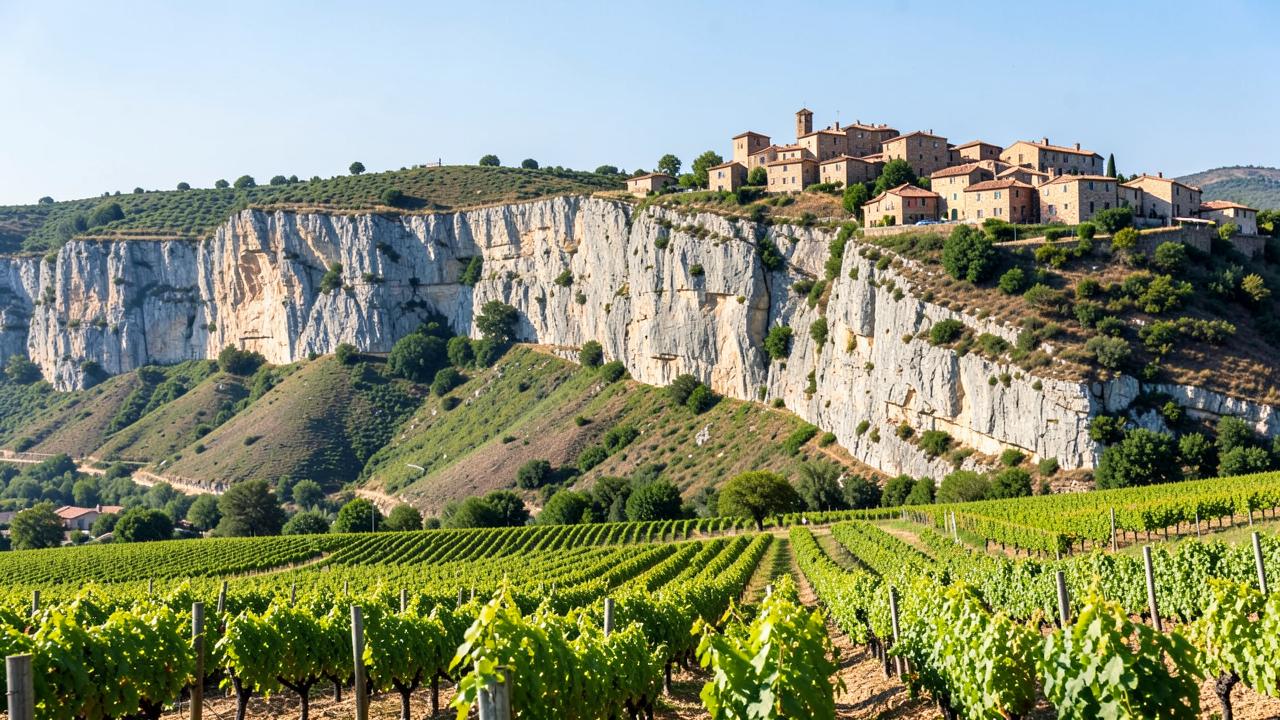
Rioja Alavesa, north of the Ebro in Basque country, has the steepest vineyards, the walled hill town of Laguardia and most of the architectural statements.
Rioja Oriental, east toward Alfaro, is warmer, flatter and where garnacha does best.
The architecture is worth planning around. From the late 1990s several producers commissioned international architects — a titanium-ribboned hotel over an 1858 winery at Elciego, a Zaha Hadid pavilion, a Calatrava cellar — and the results sit in vineyards that have been worked the same way for centuries. It is a strange and rewarding combination.
Laguardia sits on a hill that is honeycombed underneath with hand-dug cellars, some medieval, still used by families in the town.
The six below run west to east.
Haro and Rioja Alta
The station quarter and the old houses.
Hotel Los Agustinos occupies a fourteenth-century Augustinian convent in the middle of Haro, with a glass-roofed cloister as the dining room and the station wineries a fifteen-minute walk away.
Hotel Echaurren sits at Ezcaray in the hills southwest, run by the same family since 1798, with a kitchen that has held stars across generations and a spa. It is a drive from the vineyards and the food is why people come.
Rioja Alavesa
North of the Ebro, in Basque country.
Hotel Marqués de Riscal, a Luxury Collection Hotel occupies a building at Elciego wrapped in curving titanium ribbons above a working winery founded in 1858, with a spa using grape extracts and a restaurant looking across the vines to the medieval village. It is the most photographed building in Spanish wine.
Hotel Viura sits at Villabuena de Álava as a stack of offset cubes in a village of small producers, with fifteen rooms and a wine list drawn from the neighbours.
Hotel Eguren Ugarte occupies a position at Páganos with rooms directly above working cellars cut into the hillside, and vines running to the door.
Rioja Oriental
The warmer eastern end.
Finca de los Arandinos sits at Entrena on a working estate with a contemporary interior, a spa and a vineyard around the building.
What we have left off
The casas rurales across the wine villages are excluded, and in a region of small family producers they are often the most enjoyable way to stay. They are guest houses rather than hotels.
What to do
Walk the Barrio de la Estación at Haro and book two of the historic bodegas. Several have cellars running under the streets with bottles going back to the nineteenth century.
Go underground at Laguardia, where families still keep hand-dug cellars beneath their houses and some open to visitors.
Understand the ageing terms, because they are the whole point here: crianza, reserva and gran reserva are legal minimums for time in barrel and bottle, and a gran reserva has spent at least five years ageing before release.
Drive the Sierra de Cantabria road above Laguardia for the view down over the whole of Alavesa, and eat pintxos in Logroño's Calle Laurel, where each bar does one thing.
Visit in late September or early October for harvest, which in Rioja is still substantially hand-picked on the steep parcels.
Practical notes
Bilbao is an hour and a quarter by road and has the best flight connections; Logroño has a small airport. A car is essential and a driver is sensible on tasting days.
May, June, September and October are ideal, with harvest in late September. Haro's wine battle is on 29 June and involves several thousand litres of wine thrown over the participants. Winter is cold and quiet.
Book bodega visits ahead. Most require appointments and the famous ones fill.
Every hotel bookable in Rioja
Questions people actually ask
Why are all the old wineries in one place?
They clustered beside Haro's railway station from 1880 so barrels could go straight to France after phylloxera destroyed the French vineyards.
Alta or Alavesa?
Alta for the historic bodegas and long-aged wines, Alavesa for steep vineyards, Laguardia and the modern architecture. Twenty minutes apart.
What does gran reserva mean?
A legal minimum ageing period before release, at least five years between barrel and bottle.
How many nights?
Three. Two bases with four or five bodegas between them.