Forsyth Park
Hotel Bardo Savannah
An 1888 mansion with a courtyard pool and the city's best food
Explore Hotel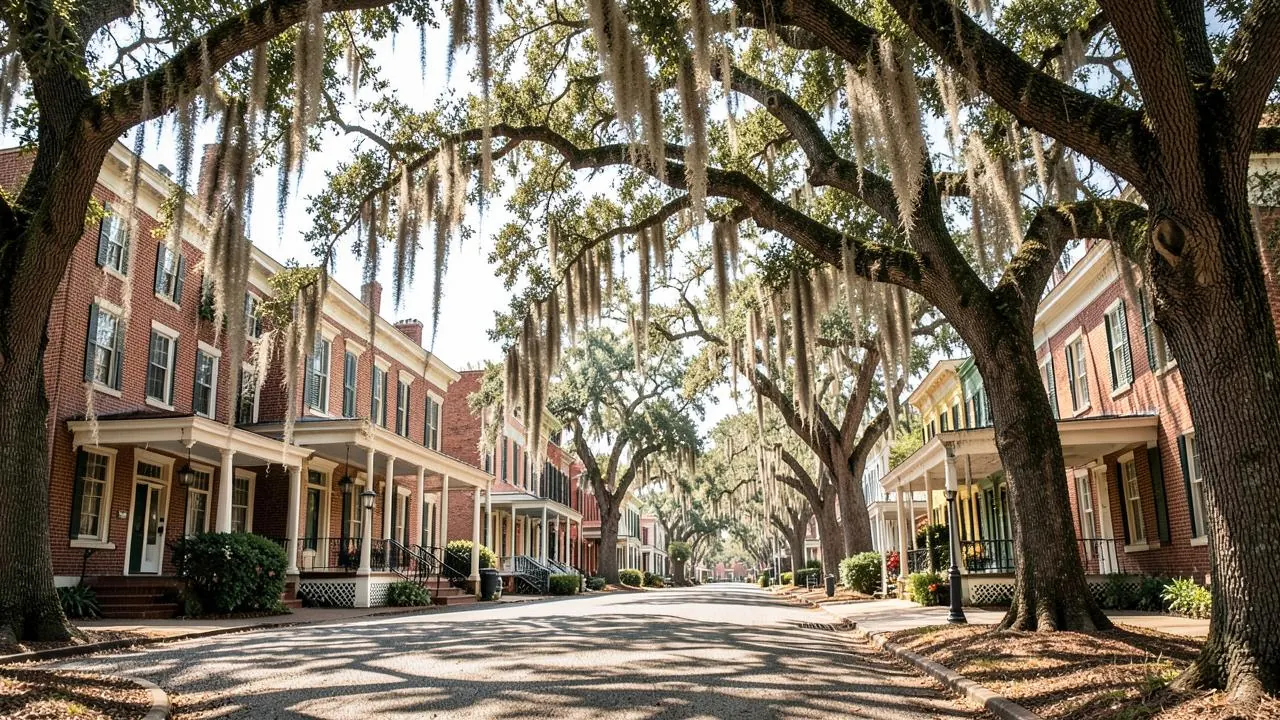

Savannah, Georgia, USA
You cannot walk two blocks in the historic district without arriving at a park. That is the 1733 plan and it is why the city works.
The places to stay
Forsyth Park
An 1888 mansion with a courtyard pool and the city's best food
Explore Hotel
Near Forsyth Park
Rooftop pool with the most contemporary rooms in the district
Explore Hotel


Riverfront
A converted power plant with a museum inside it
Explore Hotel
By Happi · Last updated September 2026
A little local perspective
$$ to $$$$ — roughly $250-700 a night, peaking in spring
James Oglethorpe laid out Savannah in 1733 around a repeating unit: a public square with residential lots on two sides and civic lots on the other two, repeated across a grid. Twenty-four squares were built. Twenty-two survive, each about a third of a hectare, planted with live oaks hung with Spanish moss, most with a monument in the middle.
It is the oldest planned city in the United States and the plan is why the historic district works. You cannot walk more than two blocks in it without arriving at a park.
The squares are not interchangeable, and the difference is traffic.
Bull Street runs north to south through five of the grandest — Johnson, Wright, Chippewa, Madison and Monterey — and it is the spine of the district. Hotels on it are central and busier.
The riverfront, at the northern edge, is a lower level along the Savannah River: cobbles, converted cotton warehouses, and the most tourist-facing part of town. It is also where the cruise and party traffic concentrates and it is loud at weekends.
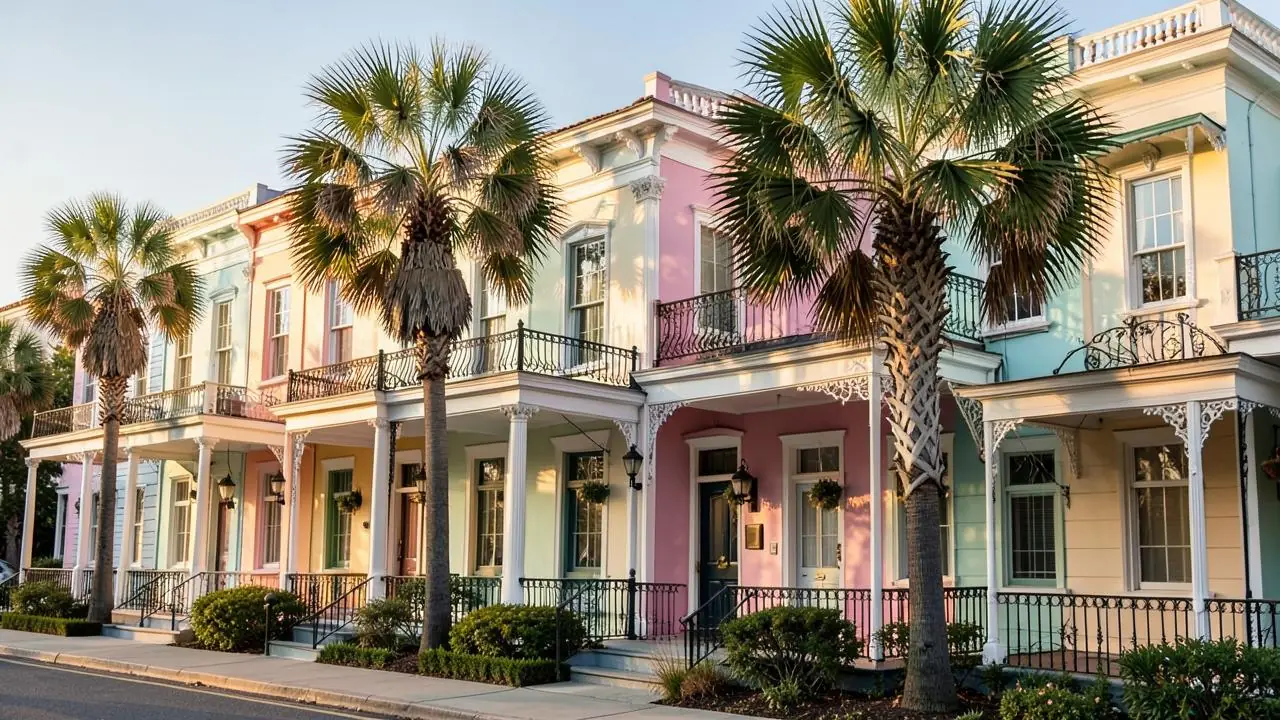
The eastern and southern squares, toward Forsyth Park and the Victorian district, are residential, quieter and where the town actually lives.
Forsyth Park itself, at the southern end, is not a square but a twelve-hectare park with the fountain everyone photographs.
The eleven below are grouped that way.
The quiet end. Residential, shaded and a ten-minute walk to the centre.
Hotel Bardo Savannah occupies an 1888 mansion on Forsyth Park, reworked recently, with a courtyard pool, a bar in the old carriage house and the most ambitious food in the city. It is the best hotel in Savannah.
Perry Lane Hotel sits a block from the park with a rooftop pool, a good restaurant and a design-led interior. It is the most contemporary hotel in the district.
The Gastonian occupies a pair of 1868 townhouses near the park with a garden, a small room count and the most personal service in town.
Eliza Thompson House sits in an 1847 building on a residential square with a courtyard and the quietest nights on this list.
Central, on or near the main spine, and busier.
Thompson Savannah occupies a building on the edge of the historic district with a rooftop pool, an art programme and rooms that are among the largest downtown.
The Alida sits on Bay Street with a rooftop bar over the river, contemporary rooms and a short walk down to the waterfront.
The Marshall House occupies an 1851 building on Broughton Street with a rooftop bar, a good position for the shopping and the most character of the mid-range options.
The DeSoto sits on Johnson Square in a large historic property with a spa, a pool and full facilities. It is the family choice in the centre.
Andaz Savannah occupies a building on Broughton with a courtyard, a pool and rates below the newer hotels.
On the water at the northern edge. Convenient, atmospheric and loud at weekends.
JW Marriott Savannah Plant Riverside District occupies a former power plant on the river with a large site, several restaurants, a museum in the building and the most facilities in the city.
Kimpton Brice Hotel sits on a square a block up from the river in a Federal-style mansion with a garden, and it is the best compromise between the waterfront and the quiet.
The chain hotels across the river on Hutchinson Island and out along the highway are excluded. They have parking and lower rates, and they put a bridge or a drive between you and a district whose entire value is that you can walk it.
Walk the squares. Not a tour, just a walk, ideally early in the morning when the light comes through the moss. Chippewa, Monterey and Lafayette are the ones to see if you only do a few.
Do one house museum: the Owens-Thomas House, which includes one of the earliest intact urban slave quarters in the South and does not soften what it shows. Savannah's beauty and its history of slavery are inseparable and the better museums say so.
Eat properly. Savannah's food is Lowcountry rather than generic Southern, and the good rooms book ahead.
Drive out to Bonaventure Cemetery, which is the most photographed cemetery in America, and to Tybee Island, twenty minutes east, for the beach.
Wormsloe's avenue of oaks is fifteen minutes south and takes half an hour.
Savannah's airport is fifteen minutes from the historic district. Charleston is two hours north by road.
March to May and October to November are ideal, and the spring azaleas are the peak. Summer is very hot and humid. St Patrick's Day in March is one of the largest celebrations in the country and fills the city entirely.
The historic district is flat and walkable. Parking is difficult and largely unnecessary.
Prices shown are sample rates from upcoming dates — not quotes for specific dates. Open a hotel and choose your own dates and guests to see the exact price.
The squares, comfortably. The riverfront is atmospheric by day and loud at night, and it is five minutes downhill from most of the district.
Savannah is smaller, shadier and more relaxed. Charleston has the better restaurants and more hotels. They are two hours apart and pair well.
Mid-March, and it is enormous. Book a year ahead or avoid the dates.
Three. Two for the district and a third for Bonaventure and Tybee.