




A little local perspective
Worth knowing.
Worth going.
- Destination
- Seville, Spain
- The selection
- 10 hotels
- Your kind of trip
- architecture · couples · food · history
$$ to $$$$ — roughly 150-600 euros a night, peaking in April and at the Feria
Seville regularly exceeds 40 degrees in July and August and has recorded temperatures well above that. It is the hottest major city in western Europe, and the heat is not a footnote to a visit; between about two and six in the afternoon in high summer, being outside is genuinely unpleasant.
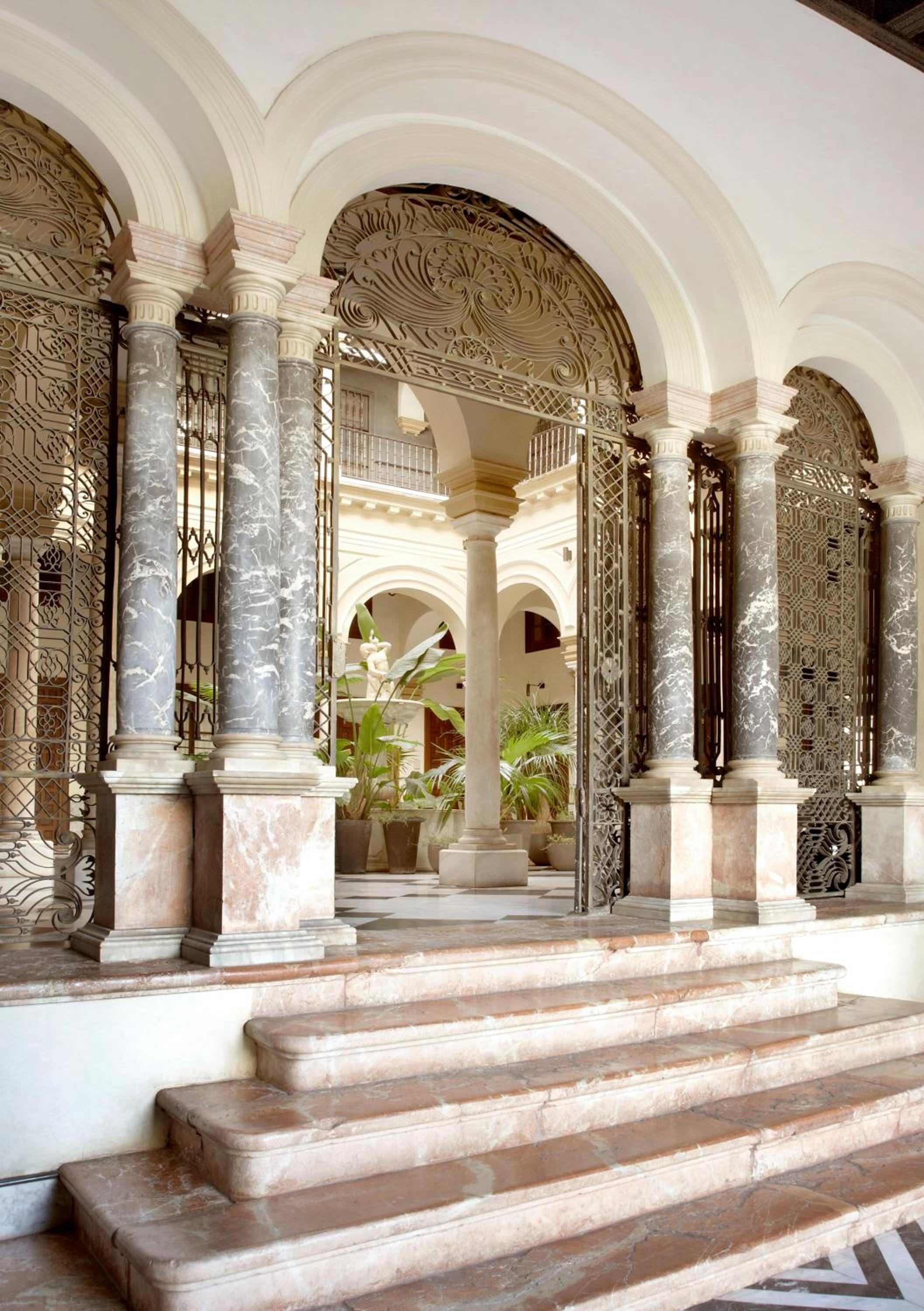
The city was built by people who knew this. The Moorish and later Andalusian houses turn inward around a patio: a courtyard open to the sky, usually with a fountain or a well, tiled, planted, and shaded by the building itself for most of the day. Air cools as it passes over the water, sinks into the courtyard and draws through the surrounding rooms. It is a passive cooling system that predates the air conditioner by roughly a thousand years and it still works.
Why the patio is the thing to book
The practical value is the middle of the day. Seville's rhythm is built around it: shops close, the streets empty, and the sensible response is to be somewhere shaded with cold water and a book from two until six, then come out at seven when the city restarts and runs until well past midnight.
A hotel with a real patio means that happens where you are staying. A hotel with a lobby and a corridor means it happens in your room with the curtains shut.
The other thing the patio houses give you is location. Almost all of them are conversions inside the Santa Cruz, Alfalfa and San Bartolomé quarters, which are the old walled city: narrow, shaded lanes, and everything from the cathedral to the Alcázar within ten minutes.
The ten below are grouped by quarter.
Santa Cruz and around the Alcázar
The old Jewish quarter, immediately beside the cathedral and the Alcázar. The most atmospheric lanes in the city and the shadiest.
Las Casas de la Juderia occupies a group of houses around a series of linked courtyards, with a small pool and rooms looking onto the patios. It is the most complete expression of the form in the city.
Hotel Casa 1800 Sevilla sits in a restored house with a patio, a rooftop pool and a view of the Giralda from the terrace. It is minutes from the cathedral doors.
Casa del Poeta occupies an eighteenth-century house with a courtyard, a handful of rooms and a personal operation. It is the quietest stay in Santa Cruz.
EME Catedral Mercer sits beside the cathedral with a rooftop pool and terrace looking directly at the Giralda, which is the best hotel view in Seville.
Alfalfa and San Bartolomé
North and east of the cathedral. Slightly less touristed, with the tapas bars.
Hotel Palacio de Villapanes occupies an eighteenth-century palace with a marble courtyard, a rooftop pool and a spa in the cellars. It is the best hotel in the old city.
Corral del Rey sits in a converted seventeenth-century house with a columned patio and a roof terrace, and it is the most architecturally intact of the small conversions.
Hospes Las Casas del Rey de Baeza occupies a set of linked houses around courtyards with a spa and a garden, and it is the best value of the patio conversions.
Mercer Sevilla sits in a restored family house with a patio, a plunge pool and rooms that are simple rather than grand. It is the smallest on this list.
Outside the old walls
Hotel Alfonso XIII, a Luxury Collection Hotel is the 1928 Mudéjar-revival palace built for the Ibero-American Exposition, with an enormous tiled central courtyard, a garden and a pool. It is the grand hotel of Andalusia and the courtyard is the largest in the city.
Querencia de Sevilla, Autograph Collection occupies a modern building near the Alameda with a rooftop pool over the rooftops, contemporary rooms and considerably more space than the old-city conversions.
What we have left off
The hotels along the Isla de la Cartuja and the ring road are excluded. They have parking, larger rooms and lower rates, and they sit outside the shaded lanes in an area with no shelter from the sun at all, which in this city is the whole question.
What to do, and when
Reverse the day. Alcázar and cathedral at opening, lunch late, disappear from two until six, and come out for the evening.
The Real Alcázar needs a pre-booked timed ticket and deserves two hours; the gardens are the best part and are shaded. The cathedral and the Giralda climb are next door.
Cross to Triana in the evening for the ceramics, the market and the bars along the river. Walk the Plaza de España in the Parque de María Luisa, which is a semicircular tiled folly and the most photographed place in the city.
See flamenco somewhere small. The tablaos in Santa Cruz are competent and the peñas are the real thing.
Eat late and eat standing. Tapas here are ordered at a bar and paid for at the end, and the good places are loud and crowded.
Practical notes
Seville's airport is 20 minutes from the centre. The high-speed train from Madrid takes about two and a half hours.
March to May and October to November are ideal. April holds both Semana Santa and the Feria de Abril, which are extraordinary and fill the city at multiples of normal rates. July and August are extremely hot. Winter is mild, cheap and pleasant.
The old city is pedestrianised in most parts. Do not attempt to drive into it.
Explore 4 & 5 Star Seville Hotels
Prices shown are sample rates from upcoming dates — not quotes for specific dates. Open a hotel and choose your own dates and guests to see the exact price.
Questions people actually ask
Is August genuinely too hot?
For walking, yes, between two and six. If you accept the local rhythm and have a patio and a pool, it is manageable and much cheaper.
Is Santa Cruz too touristy to stay in?
The main lanes are busy by day and empty by night. Staying there gives you the quarter in the hours when nobody else is in it.
Semana Santa or the Feria?
Both are remarkable and both make an ordinary visit impossible. Book a year out or avoid the dates deliberately.
How many nights?
Three, four with a day in Córdoba, which is 45 minutes by train.