Above Portofino
Splendido, A Belmond Hotel
A sixteenth-century monastery in gardens over the harbour
Explore Hotel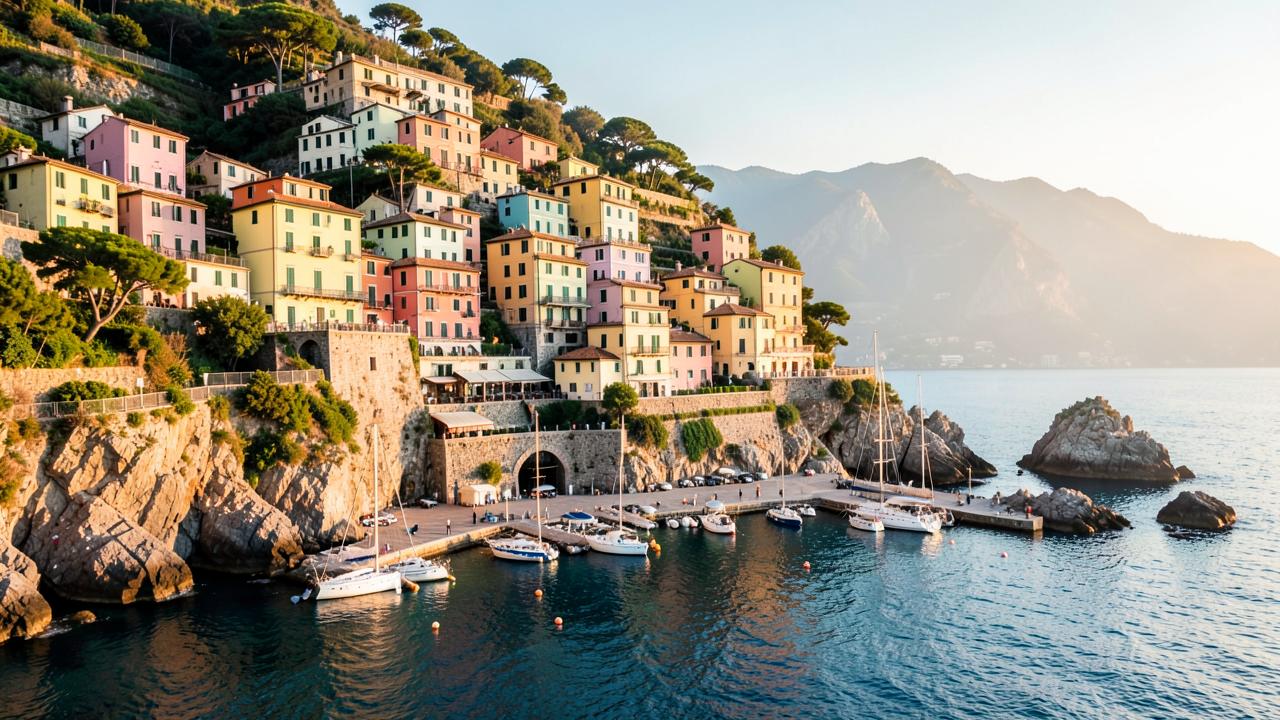

Cinque Terre and Portofino, Italy
A national park on a vertical coast with no flat ground and no permission to build. You stay outside the villages and come in by train.
The places to stay
Above Portofino
A sixteenth-century monastery in gardens over the harbour
Explore Hotel
Portofino harbour
Restored painted houses on the piazzetta
Explore Hotel
Santa Margherita Ligure
A belle époque seafront with a private bathing platform
Explore Hotel


Portovenere
A Genoese monastery facing the Cinque Terre across the gulf
Explore HotelBy Happi · Last updated September 2026
A little local perspective
$$$ to $$$$ — roughly 300-2,000 euros a night, quiet in winter
The Cinque Terre are five villages on a near-vertical stretch of Ligurian coast, and almost none of them have a hotel worth booking.
That is not an oversight. The whole coastline is a national park and a World Heritage site, the villages are built into ravines with no flat ground, cars cannot enter most of them, and the building stock is fishermen's houses stacked eight storeys up a cliff. There is nowhere to put a hotel and no permission to build one. One four-star property sits in the five villages. Everything else at that standard is outside them.
Which turns the usual question inside out. You do not stay in the Cinque Terre and visit the coast. You stay on the coast and visit the Cinque Terre, by train or by boat, and the good news is that the places you stay are considerably better than the villages anyway.
The five villages — Monterosso, Vernazza, Corniglia, Manarola and Riomaggiore — are strung along about eleven kilometres. A railway runs between them almost entirely in tunnel, with a station in each, and trains every fifteen to twenty minutes. Boats run in season except to Corniglia, which sits on a clifftop with no harbour.
The coastal footpath linking the villages is the famous walk. Sections close regularly after landslides and some require a park card; check what is open on the day rather than the month.
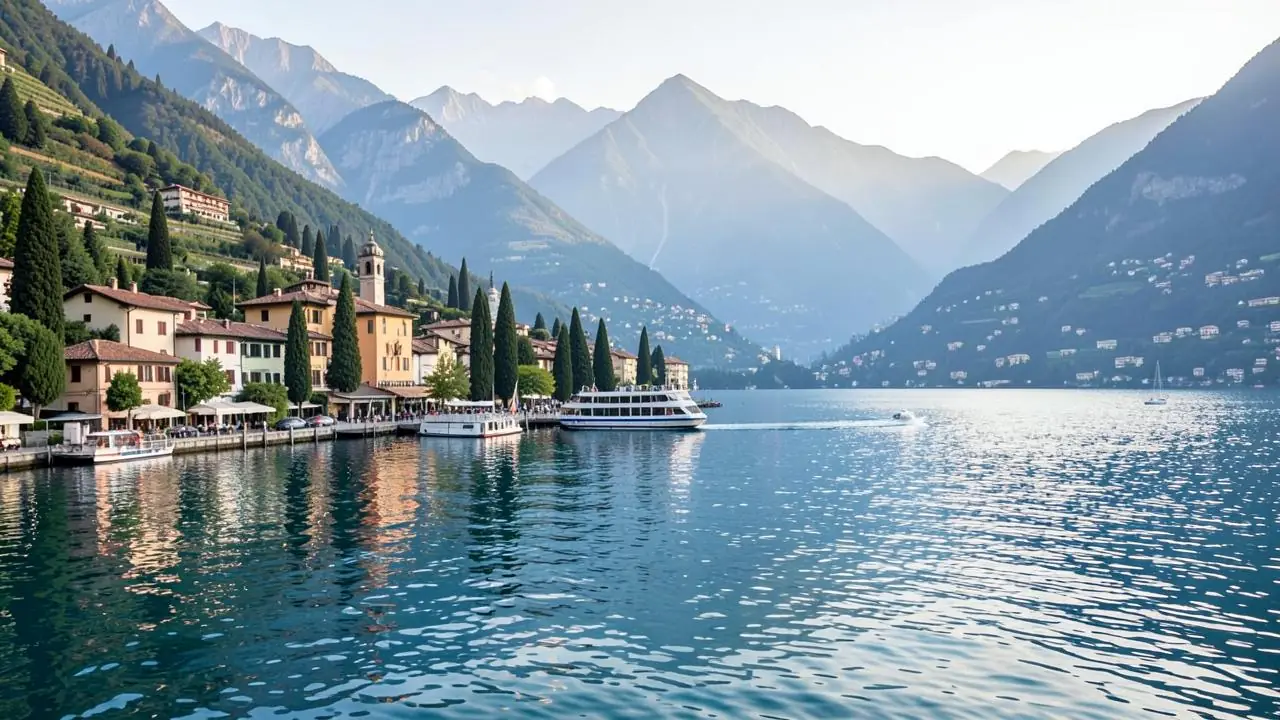
Portofino, half an hour north, is the opposite proposition: a tiny harbour of painted houses in a sheltered inlet, a protected headland behind it, and the most expensive real estate on the Italian coast.
Santa Margherita Ligure, next door, has the belle époque hotels and a proper town.
Portovenere, at the southern end, is a Genoese fortified village facing the Cinque Terre from the other side of the gulf.
Levanto and Monterosso are the northern access points and the only places on this coast with real beaches.
The seven below run north to south.
The sheltered harbours, half an hour north.
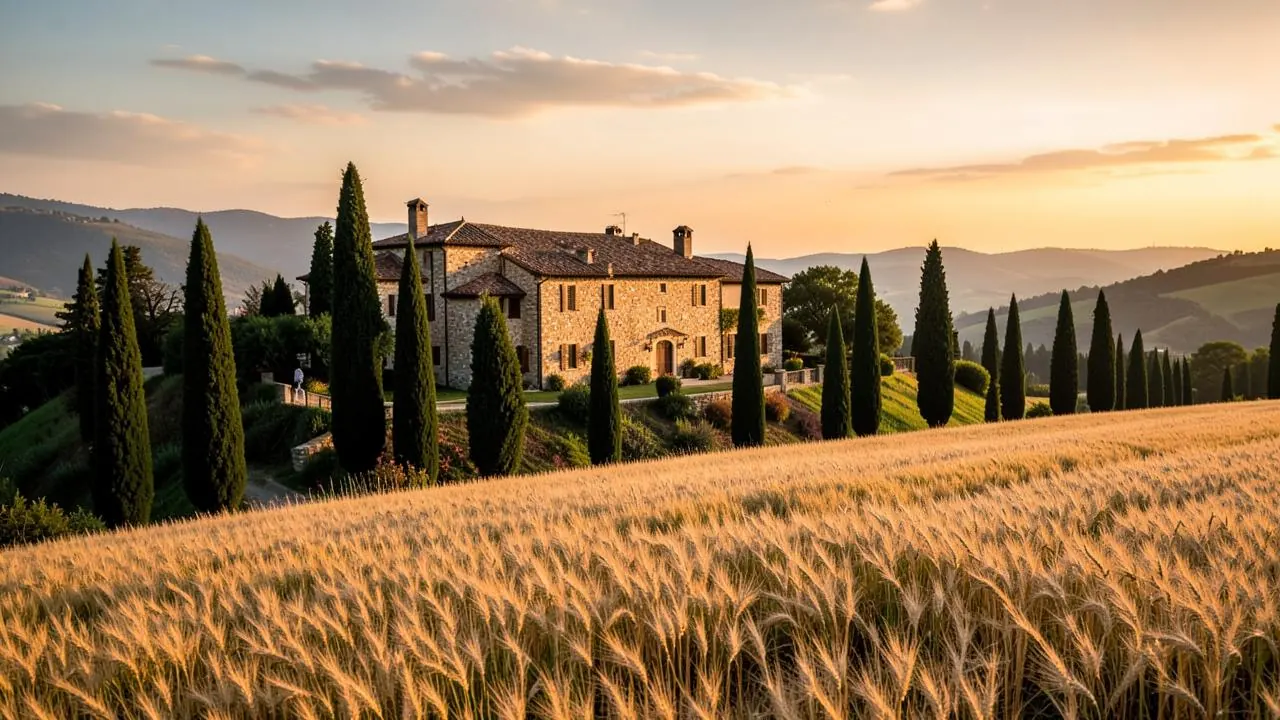
Splendido, A Belmond Hotel occupies a sixteenth-century monastery on the hillside above Portofino, in gardens dropping to the sea, with a pool cut into the terraces and the harbour below. It has been the address on this coast since the 1950s.
Splendido Mare, A Belmond Hotel sits on the Portofino harbour itself in a restored row of painted houses, with rooms over the water and the piazzetta outside.
Imperiale Palace Hotel occupies a belle époque building on the Santa Margherita seafront with a garden, a pool and a private bathing platform.
Grand Hotel Miramare sits above Santa Margherita with terraced gardens, a pool and a quieter position than the harbour.
Portofino Kulm occupies a hillside above Portofino with a pool, a garden and a view down onto the headland.
The one property at this standard in the five villages.
Hotel Porto Roca occupies a clifftop above Monterosso, the only village with a beach, with a terrace over the water and the coastal path starting outside. It is the sole four-star in the Cinque Terre and it books far ahead for that reason alone.
The southern end, facing the villages.
Grand Hotel Portovenere sits in a former Genoese monastery on the Portovenere promontory with a pool, gardens and views across the gulf to the Cinque Terre.
The apartments and rooms across the five villages are excluded, and they are how essentially everyone stays inside the Cinque Terre. Many are excellent and they are the reason the villages function as a destination at all. They are apartments rather than hotels.
Take the train, not the car. Roads into the villages are narrow, parking is scarce to nonexistent, and the railway is faster than driving between any two of them.
Go early or late. The villages fill between ten and five with day visitors and cruise passengers from La Spezia, and Vernazza and Manarola at seven in the morning or eight in the evening are different places entirely.
Walk a section of the path, checking which parts are open. The Monterosso to Vernazza leg is the hardest and the best; the Via dell'Amore between Manarola and Riomaggiore has been closed and reopened repeatedly.
Eat the coast's own food: trofie with pesto, anchovies from Monterosso, focaccia di Recco, and the sciacchetrà dessert wine made from grapes grown on the terraces above the villages.
Walk out to San Fruttuoso from Portofino, an abbey on a cove with no road access, reachable on foot in two hours or by boat.
Genoa and Pisa are the closest airports, each about ninety minutes away. La Spezia and Levanto are the rail gateways for the Cinque Terre; Santa Margherita is the stop for Portofino.
May, June, September and early October are ideal. July and August are extremely busy. Winter is quiet, many restaurants close and boat services stop.
Check the footpath status and the Cinque Terre card requirements before you go. They change with the landslides.
National park, World Heritage protection, no flat ground and no permission to build. One four-star exists across all five villages.
Portofino or Santa Margherita for comfort, Levanto or Monterosso for proximity, Portovenere for the southern view. All connect by train or boat.
Sections close after landslides and reopen unpredictably. Check on the day.
Four. Two for the villages and two for Portofino and the headland.