Montalcino, Val d'Orcia
Rosewood Castiglion del Bosco
Eleven hundred hectares around a medieval village
Explore Hotel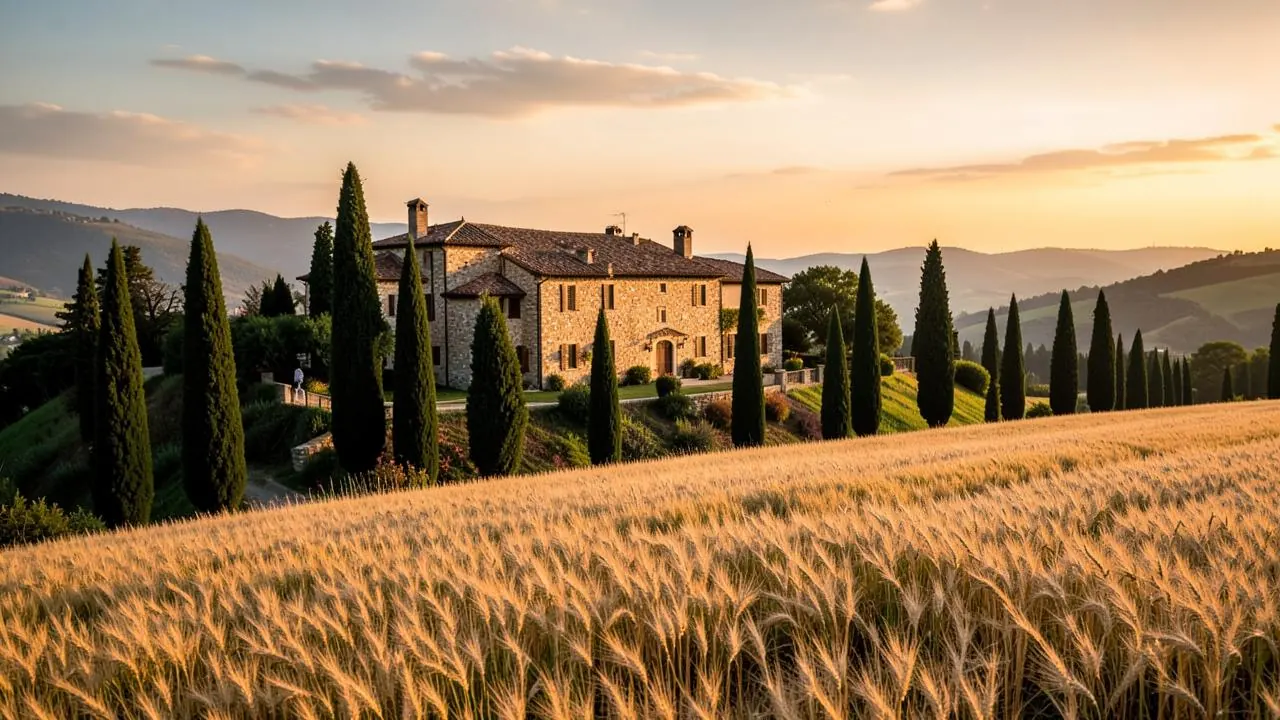

Tuscany, Italy
Sharecropping ended in the 1960s and thousands of farms emptied. The buildings sat derelict for decades before anyone wanted them.
The places to stay
Montalcino, Val d'Orcia
Eleven hundred hectares around a medieval village
Explore Hotel

Tavarnelle, Chianti
A fifteenth-century castle in 300 hectares of vines
Explore Hotel
Castelnuovo Berardenga
A restored monastery estate with a spa and a wine label
Explore Hotel
Castelnuovo Berardenga
Infinity pool over the vines with a strong kitchen
Explore Hotel
Casole d'Elsa
A tenth-century castle on 1,700 hectares
Explore Hotel


Inside Siena's walls
The only five-star inside the walls, minutes from the Campo
Explore Hotel
Outside Siena's walls
A fourteenth-century monastery with a cloister and pool
Explore HotelBy Happi · Last updated September 2026
A little local perspective
$$$ to $$$$ — roughly 400-2,000 euros a night, closed much of the winter
Almost everyone books Florence and Siena. The Tuscany people actually picture — the cypress avenue over a hill, the farmhouse on a ridge, the light going long over a valley of wheat and vines — is not in either. It is the countryside between and south of them, and it is where the estate hotels are.
Those estates are the product of a specific history. The mezzadria sharecropping system, which had organised Tuscan farming for six centuries, was abolished in the 1960s, and thousands of farms emptied as families left for cities. The buildings sat derelict for decades. From the 1980s onward they were bought and restored, first by foreigners and later at enormous scale by hotel groups.
Chianti, between Florence and Siena, is the closest and the most developed: vineyards, stone villages and the shortest drives to both cities.
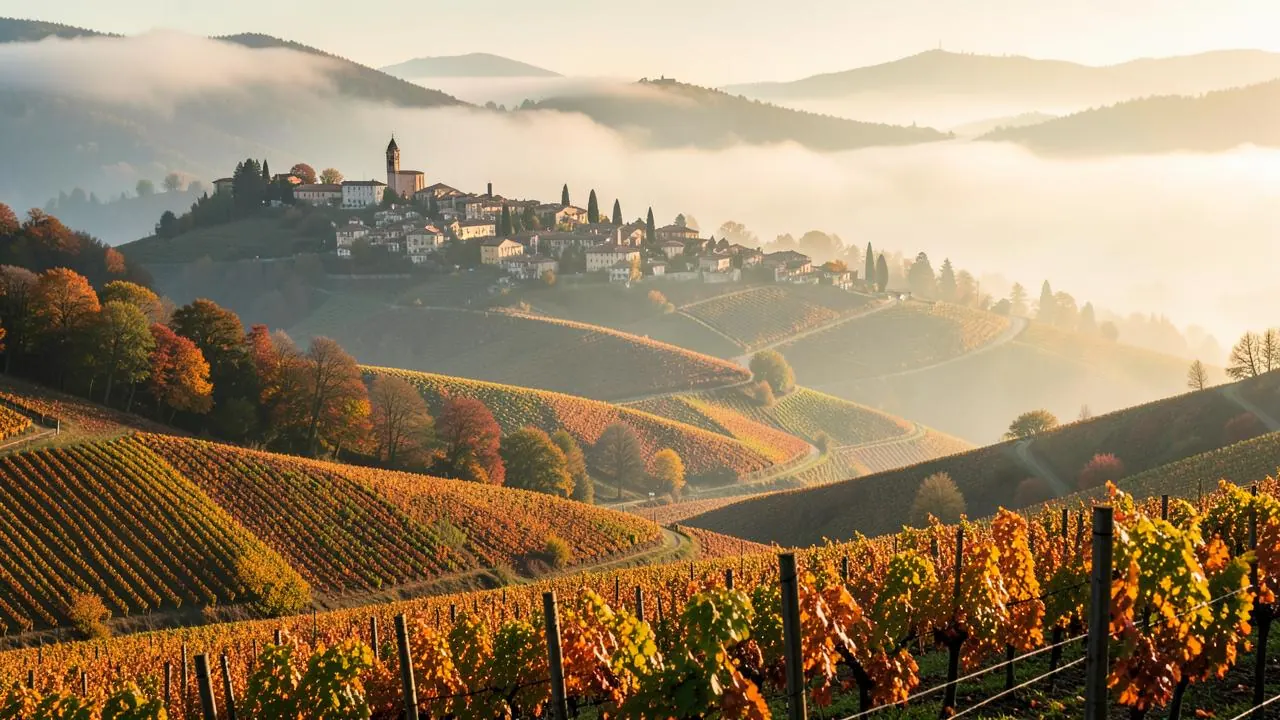
The Val d'Orcia, south of Siena, is the UNESCO landscape and the one on the postcards, around Pienza, Montalcino and San Quirico. It is emptier and about ninety minutes from Florence.
The Maremma and the southwest, toward the coast, are wilder and much less visited.
The thermal belt, around Bagno Vignoni, San Casciano dei Bagni and Saturnia, has hot springs that the Etruscans and Romans used and several serious spa hotels.
The practical constraint is driving. These estates are on unpaved strade bianche, the white gravel roads, often several kilometres from a village. That is the appeal and it means you drive to dinner, or you eat where you are staying.
The thirteen below are grouped by area.
The UNESCO landscape south of Siena.
Rosewood Castiglion del Bosco occupies a 1,100-hectare estate near Montalcino with a medieval village at its centre, a Brunello vineyard, a golf course and a cookery school. It is the largest and most complete estate hotel in Tuscany.
Lupaia sits on a hilltop at Torrita di Siena with a handful of rooms in restored farm buildings, no signage and views across the Val d'Orcia. It is the most personal place to stay in southern Tuscany.
Adler Thermae Spa & Relax Resort occupies a thermal property at Bagno Vignoni with pools fed by the springs the Medici used, a large spa and a medical wellness programme.
Fonteverde sits at San Casciano dei Bagni with thermal pools terraced down a hillside, a spa and views over the Val di Paglia.
Between the two cities. Vineyards and the shortest drives.
COMO Castello Del Nero occupies a fifteenth-century castle at Tavarnelle in 300 hectares with a spa, two restaurants and Chianti vineyards. It is the best-run estate in Chianti.
Castel Monastero sits in a restored monastery near Castelnuovo Berardenga with a spa, a pool and a wine estate, and a level of quiet its size does not suggest.
Hotel Le Fontanelle occupies a hillside estate at Castelnuovo Berardenga with an infinity pool over the vines, a contemporary interior and a strong kitchen.
Toward the coast, emptier and less visited.
Castello di Casole, A Belmond Hotel occupies a tenth-century castle and estate near Casole d'Elsa in 1,700 hectares, restored over years, with a spa, a golf course and a village of farmhouses.
Borgo Santo Pietro sits on a 130-hectare farm at Chiusdino with an organic garden, a serious restaurant, a spa and a cookery school. The food is the reason to come.
Toscana Resort Castelfalfi occupies a 1,100-hectare estate at Montaione with a restored medieval village, two golf courses and several pools. It is the family answer.
East of Florence, toward Arezzo.
Il Borro occupies a hilltop village on a 700-hectare wine and olive estate, with rooms in the restored houses, a spa and a working farm.
For a night in the city.
Grand Hotel Continental Siena occupies a sixteenth-century palace on the Banchi di Sopra with a frescoed hall and rooms minutes from the Campo. It is the only five-star hotel inside Siena's walls.
Hotel Certosa di Maggiano sits in a fourteenth-century monastery just outside the walls with a garden, a pool and a cloister.
The agriturismi and villa rentals across Tuscany are excluded, and they are how the great majority of visitors stay in the countryside, particularly for a week with a family. They are farm stays and houses rather than hotels.
Drive the Val d'Orcia between Pienza, San Quirico and Montalcino at either end of the day, when the light does what it does in the photographs.
Do a Brunello tasting at Montalcino and a Vino Nobile at Montepulciano, both by appointment.
See Siena's Campo and the cathedral, and go early. If you are there on 2 July or 16 August, the Palio fills the city entirely.
Walk part of the Via Francigena, the medieval pilgrim road from Canterbury to Rome, which runs through this landscape and is waymarked.
Eat pici, ribollita, bistecca alla fiorentina if there are two of you, and pecorino from Pienza.
Florence and Pisa both have airports; Rome is two and a half hours from the Val d'Orcia. A car is essential and the gravel roads are slower than the map suggests.
May, June, September and October are ideal. July and August are hot and busy. Winter is quiet and many estates close from November to March.
Book restaurants and cellar doors ahead in the countryside; the good ones are small and often family-run.
Prices shown are sample rates from upcoming dates — not quotes for specific dates. Open a hotel and choose your own dates and guests to see the exact price.
The countryside is the Tuscany people picture. Florence and Siena are day trips from it, not the other way round.
Often several kilometres down gravel roads. You drive to dinner or you eat at the hotel.
Chianti for proximity to both cities, the Val d'Orcia for the landscape. Ninety minutes apart.
Seven. Five in the countryside and two in Florence or Siena.