





A little local perspective
Worth knowing.
Worth going.
- Destination
- Lake Geneva, Switzerland
- The selection
- 11 hotels
- Your kind of trip
- wine · lakes · couples · walking
$$$ to $$$$ — roughly 400-1,500 francs a night, peaking in summer
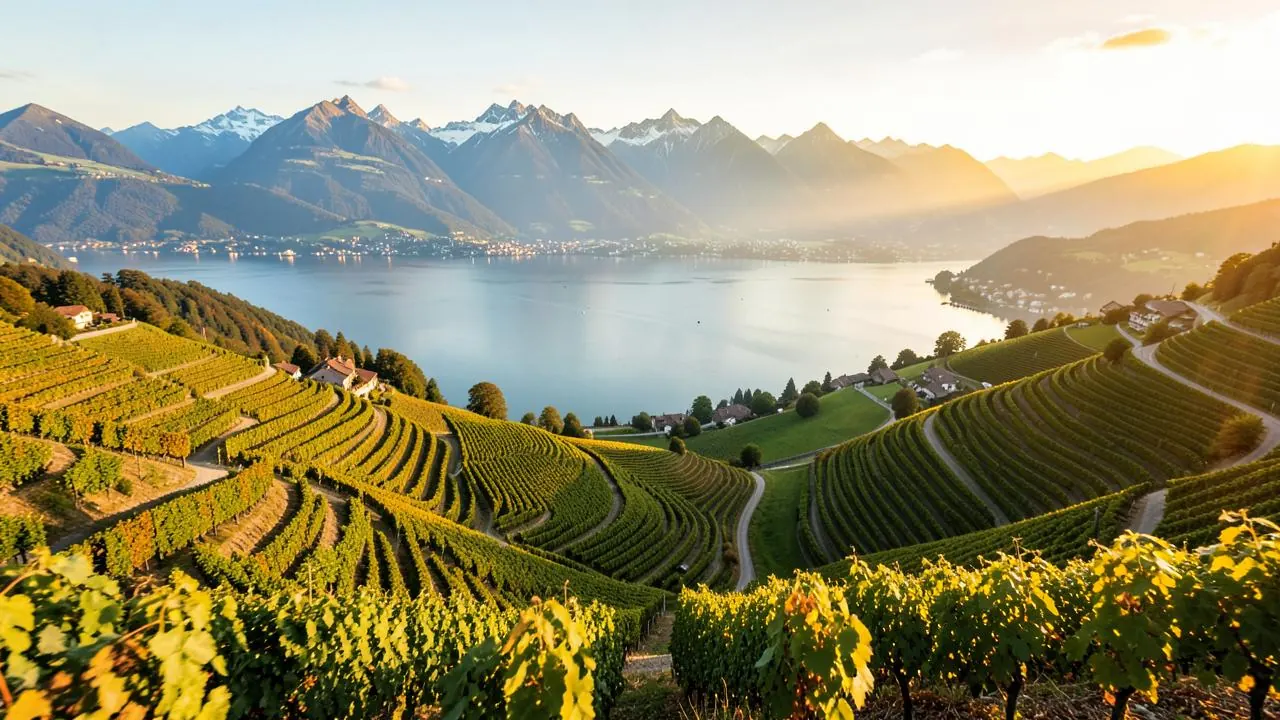
The Lavaux terraces run for about 30 kilometres along the northern shore of Lake Geneva between Lausanne and Montreux. Vines have been grown on them since the eleventh century, when Benedictine and Cistercian monks cut the first walls into the slope, and there are now around 10,000 terraces held up by dry stone.
They became a UNESCO site in 2007, and the reason given was the interaction between people and landscape over a millennium rather than the wine itself. Local growers describe three suns: the one in the sky, the one reflected off the lake, and the one stored in the stone walls and released at night.
The wine is almost all chasselas, it is almost all drunk in Switzerland, and you will not have had it before.
The lake, and the three shores
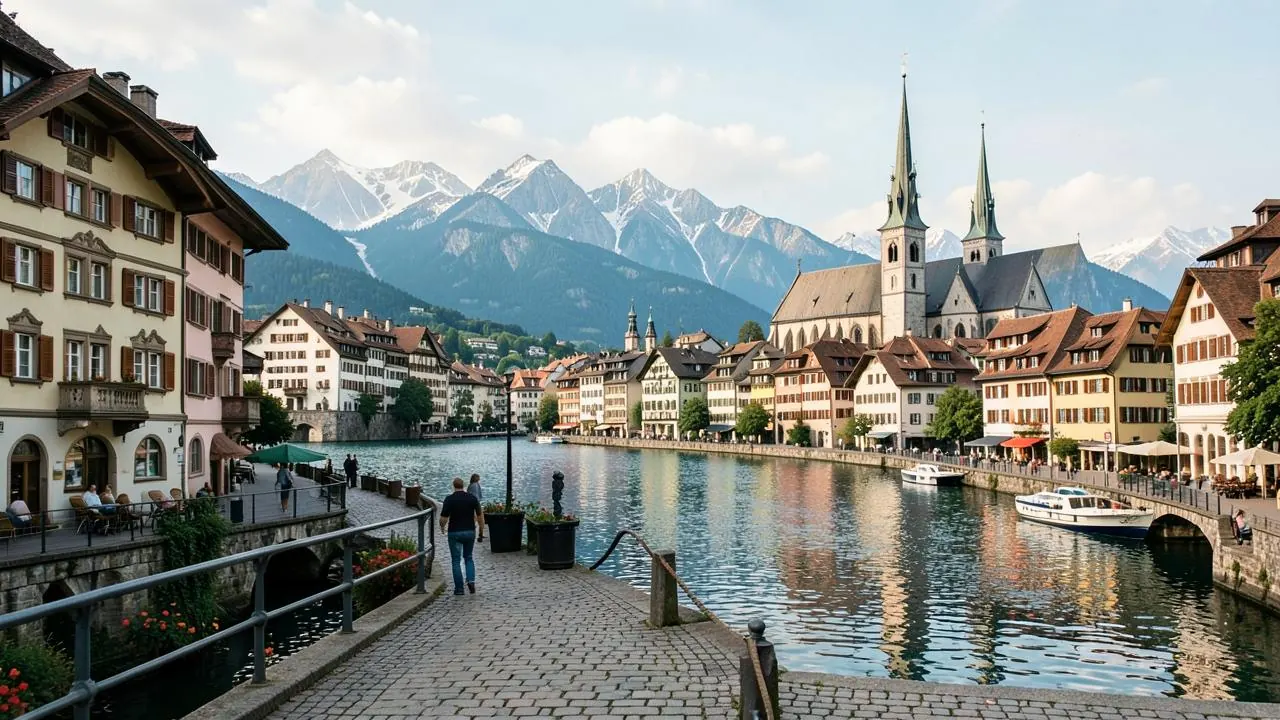
Lake Geneva is the largest lake in western Europe, shaped like a crescent, with Switzerland on the north and east and France on the south.
Geneva sits at the western tip where the Rhône leaves the lake: an international city of banks, the UN and the Jet d'Eau, and the smallest of the three lake cities in feel.
Lausanne, halfway along, is built on three hills with a Gothic cathedral, the Olympic headquarters and a metro that climbs the slope. It is the more interesting city of the two.
Montreux and Vevey, at the eastern end, sit below the Alps where the lake narrows, with the Chillon castle on the water and a mild microclimate that grows palm trees at 47 degrees north.
The French shore, at Évian and Thonon, has the water and the spa tradition.
The eleven below run west to east.
Geneva
The western tip, at the mouth of the Rhône.
Beau-Rivage Palace occupies an 1865 building on the right bank with a five-storey atrium, rooms facing the lake and Mont Blanc beyond, and a level of service that has run for over a century and a half in the same family.
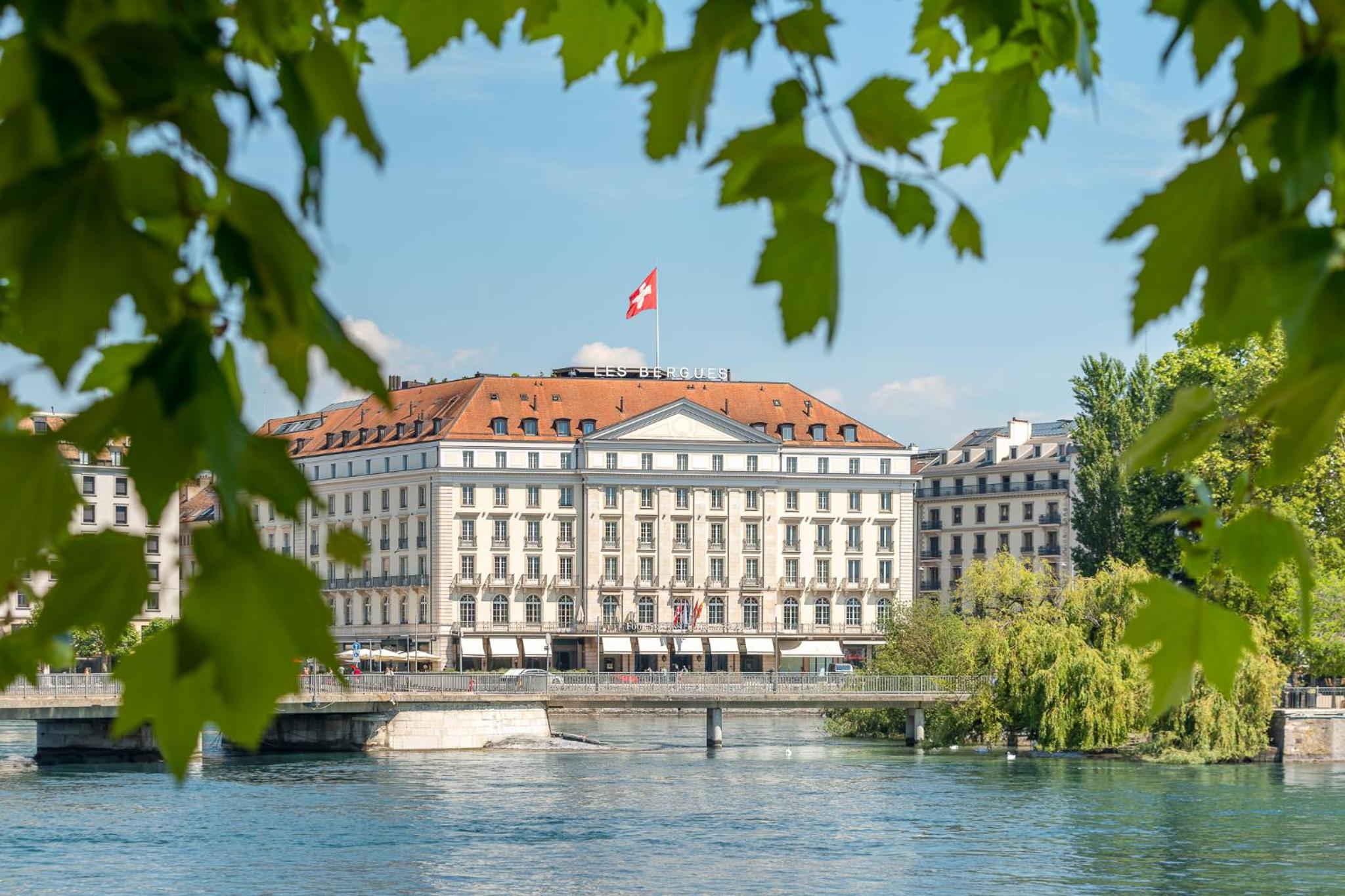
Four Seasons Hôtel des Bergues sits on the water at the Quai des Bergues in a 1834 building, restored, with a rooftop terrace and the best rooms in the city.
La Réserve Genève occupies a lakeside estate outside the centre with a spa of considerable size, gardens and a private jetty, ten minutes from the town.
Hôtel President Wilson sits on the right bank quay with the largest rooms in Geneva, several restaurants and views across to Mont Blanc.
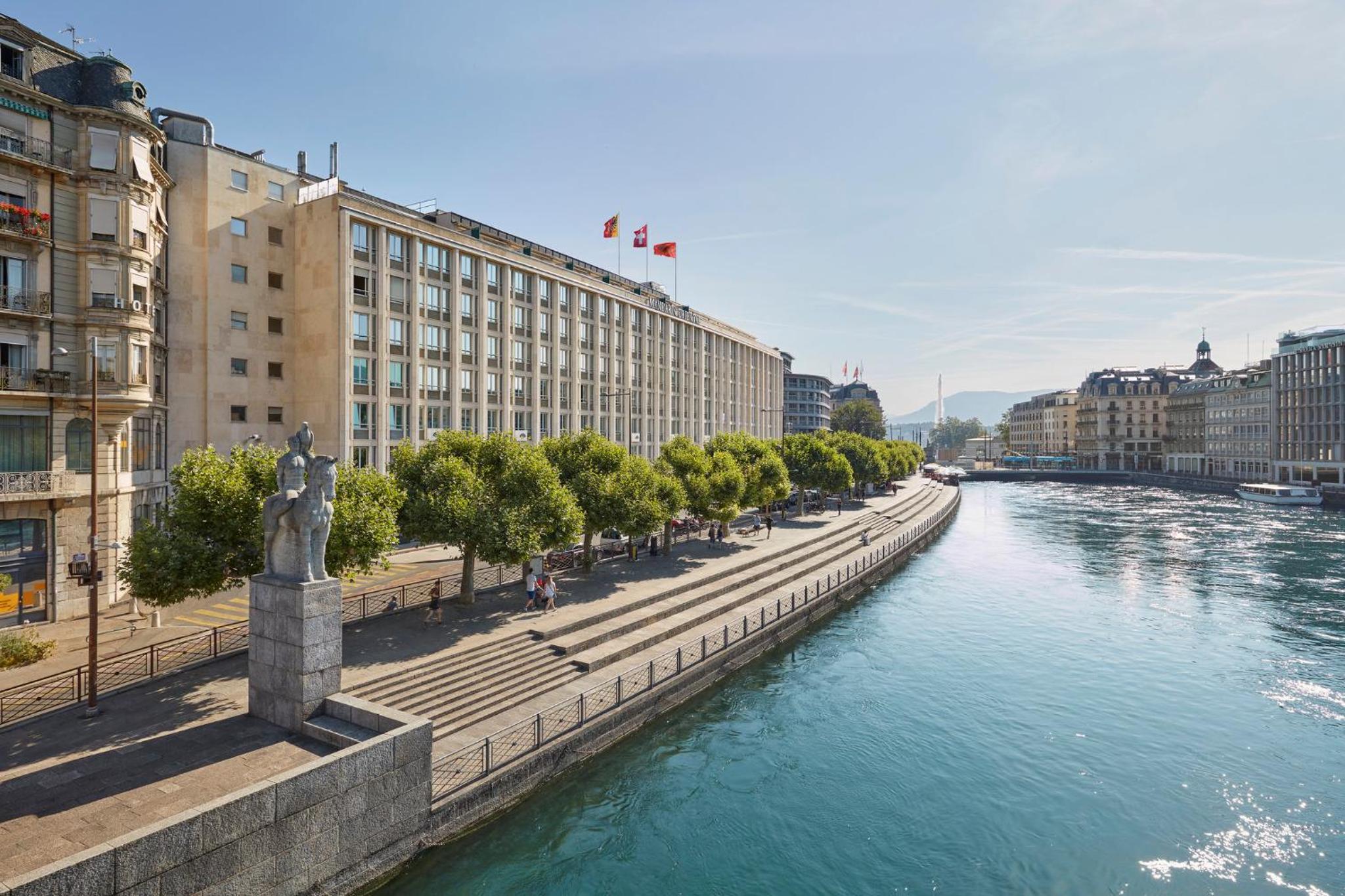
Mandarin Oriental, Geneva occupies a position on the Quai Turrettini with a spa, a pool and a contemporary interior.
Lausanne and Lavaux
Halfway along, below the terraces.
Beau-Rivage Genève occupies a belle époque palace at Ouchy on the Lausanne lakefront, opened in 1861, in four hectares of parkland with two restaurants and a large spa. It is the finest hotel on the lake.
Royal Savoy Lausanne sits above the city with rooms looking down over the lake to the Alps, a rooftop spa and a short funicular ride to the centre.
Lausanne Palace occupies a position on the Lausanne hillside with an art nouveau interior, a spa and views over the water.
Vevey and Montreux
The eastern end, below the Alps.
Fairmont Le Montreux Palace occupies an 1842 building on the Montreux waterfront with a spa, a garden and a terrace where the jazz festival spills out every July.
Hôtel des Trois Couronnes sits on the Vevey lakefront in an 1842 property with a garden to the water and a level of quiet Montreux does not have.
Grand Hôtel du Lac occupies a lakefront position at Vevey with a spa, a pool and rooms over the water toward the Dents du Midi.
What we have left off
The apartment rentals across the Lavaux villages are excluded, and in the wine villages they are the common way to stay. They are apartments rather than hotels.
What to do
Walk the Lavaux terraces. The path from Lutry to Saint-Saphorin takes three to four hours along the vines above the water and it is one of the great walks in Europe. The little train that runs through them is the easy version.
Drink chasselas at a village cellar. The growers open on set days and the wine barely leaves the country.
Take a paddle steamer. The CGN operates a fleet of restored belle époque steamers on the lake and they are the correct way to travel between the towns.
See Chillon castle on its rock in the water below Montreux, which is the most visited historic building in Switzerland and deserves it.
Go up. The cogwheel railway from Montreux to Rochers-de-Naye climbs to 2,000 metres, and the Lavaux slopes are the start of the Alps proper.
Practical notes
Geneva airport is ten minutes from the city centre and Lausanne is forty minutes by train. The train around the northern shore takes about an hour end to end and runs constantly.
May, June and September are ideal. The Montreux Jazz Festival in July fills the eastern end. Winter is grey at lake level and it is the season for the mountains behind.
Switzerland is expensive. The train is the exception and it is excellent.
Explore 4 & 5 Star Lake Geneva Hotels
Prices shown are sample rates from upcoming dates — not quotes for specific dates. Open a hotel and choose your own dates and guests to see the exact price.
Questions people actually ask
What is chasselas?
The white grape that almost all of Lavaux grows. It is light, mineral and barely exported, which is why you will not have had it.
Geneva or Lausanne?
Lausanne is the more interesting city and closer to the terraces. Geneva has the airport and the international institutions.
Is the lake walk hard?
Lutry to Saint-Saphorin is three to four hours on paths and small roads through the vines, with some climbing. It is not technical.
How many nights?
Three. Two on the northern shore and a day on the water.