Bacuit archipelago
Pangulasian Island Resort
Hillside villas above the best beach in the bay
Explore Hotel

Palawan, Philippines
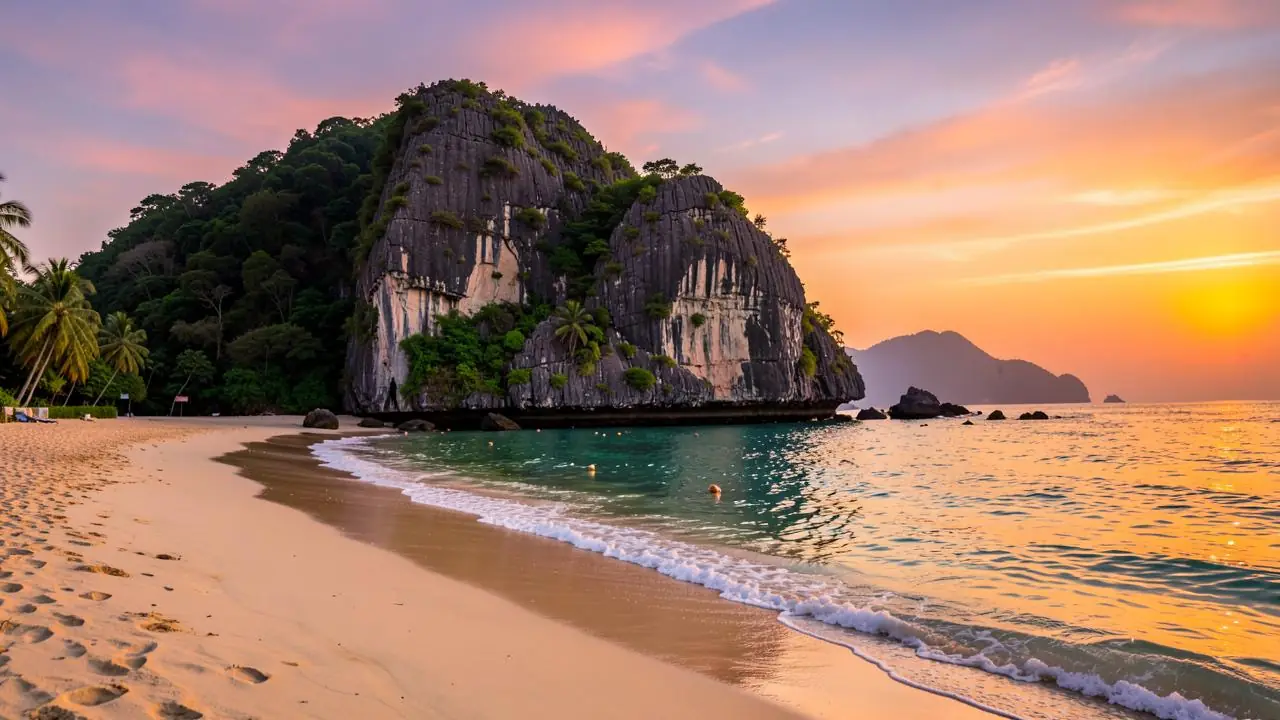
Karst cliffs rising straight out of shallow water, with hidden lagoons reachable only through openings a metre or two high at low tide.
The places to stay
Bacuit archipelago
Hillside villas above the best beach in the bay
Explore Hotel
Bacuit archipelago
Water villas in a cove backed by a limestone cliff
Explore Hotel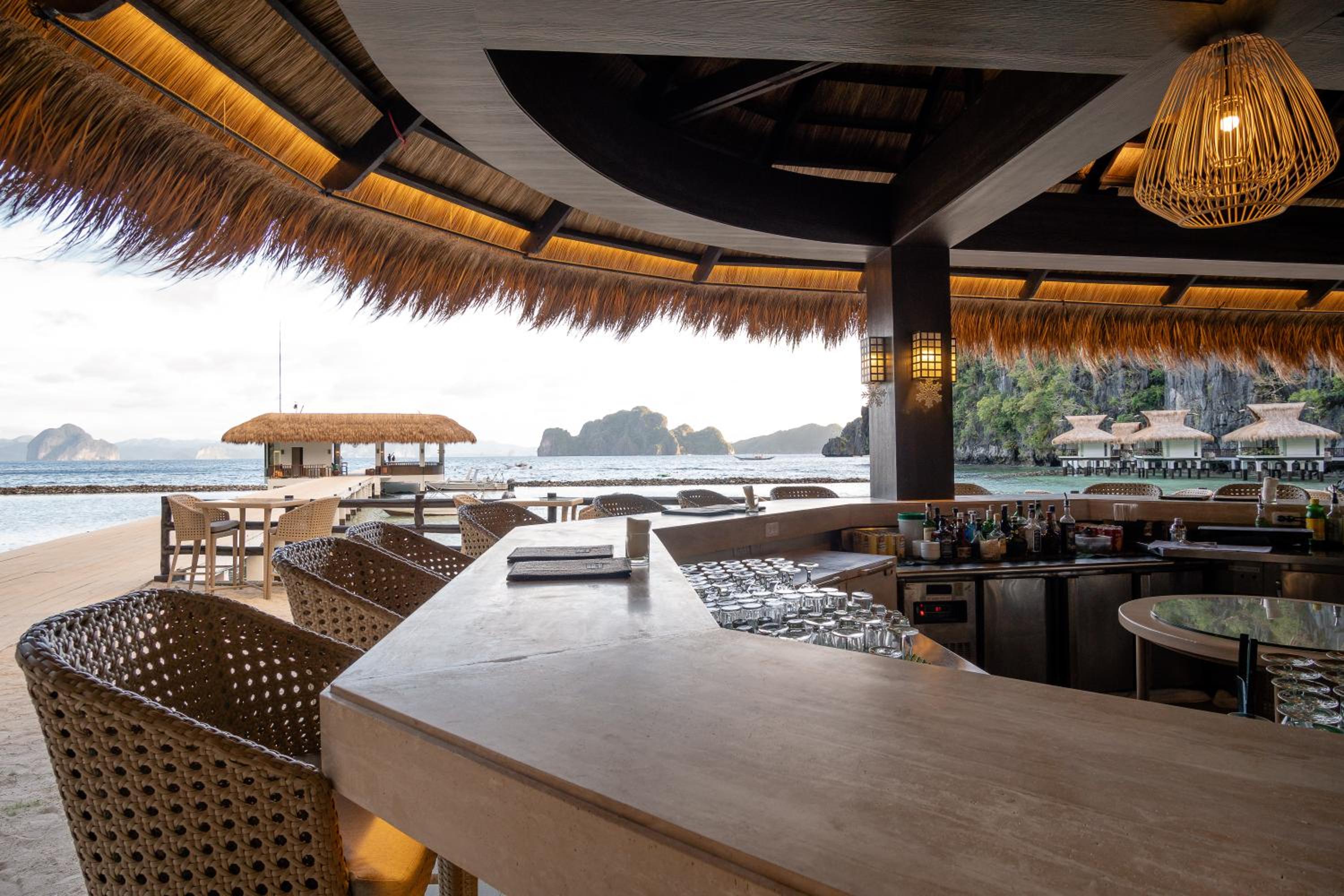

Near El Nido
Its own island with overwater villas and a small room count
Explore Hotel

Dimakya Island, Coron
A private island with a house reef and wreck diving
Explore Hotel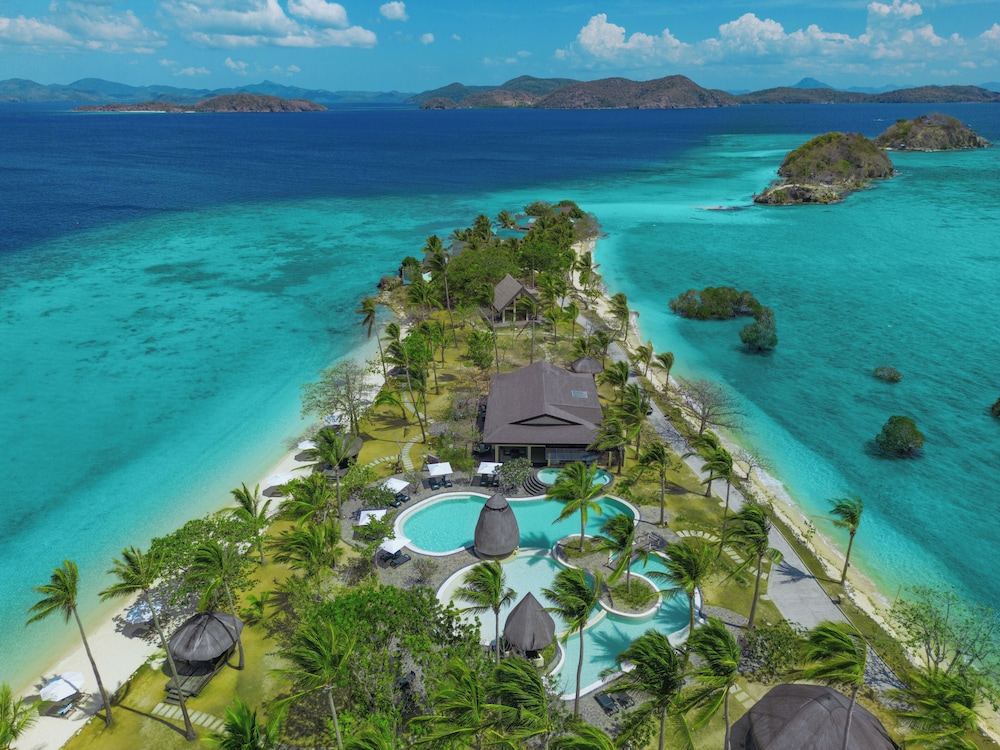
Bulalacao Island, Coron
Beach cottages with access to Kayangan Lake
Explore HotelBy Happi · Last updated September 2026
A little local perspective
$$$ to $$$$ — roughly $350-2,000 a night, peaking November to May
The Bacuit archipelago off El Nido is around 45 limestone islands rising vertically out of shallow water. The rock is karst — Permian limestone eroded into cliffs, caves and hidden lagoons reached through gaps you swim or paddle through at the right state of tide. Several of the lagoons are only enterable at low water through openings a metre or two high.
That geology is why Palawan looks the way it does, and it is why the good resorts here are on islands rather than on a road.
El Nido town sits on the mainland at the northern tip of Palawan, reached by a short flight from Manila to Lio airport or a five-hour drive from Puerto Princesa. The town is busy, backpacker-heavy and the departure point for the island tours.
The island resorts in the bay are reached by boat from the town or from Lio, take between fifteen and forty-five minutes, and are self-contained. Once you are on one, you are on it.
Coron, further north in the Calamian group, is a separate flight or a ferry. It has the best wreck diving in Asia — a Japanese fleet sunk in 1944 sits in shallow enough water for recreational divers — and Kayangan Lake, which is usually described as the cleanest lake in the Philippines.
Amanpulo is on Pamalican, a private island in the Cuyo group, reached only by the resort's own aircraft from Manila.
Palawan sits outside the main typhoon belt more often than the rest of the Philippines, though not reliably. The dry season runs roughly November to May.
The eight below are grouped by group.
Island resorts in the bay, reached by boat.
Pangulasian Island Resort occupies a beach on Pangulasian island with villas up a forested slope, a long stretch of sand and the best diving access in the bay. It is the most comfortable resort in the archipelago.
Lagen Island Resort sits in a sheltered cove on Lagen island with the forest behind and water villas over the shallows, backed by a limestone cliff.
Miniloc Island Resort occupies a cove on Miniloc island with cottages on stilts over the water and the closest position to the Big and Small Lagoons.
Cauayan Island Resort & Spa sits on its own island near El Nido with villas over the water, a pool and a smaller room count than the others.
On the coast near the airport.
Seda Lio occupies a beachfront position at Lio, a low-density development five minutes from the airstrip, with a pool and a design-led interior. It is the practical base for day trips into the bay.
North, a separate flight. Wrecks and lakes.
Club Paradise Palawan occupies a private island near Coron with villas along a beach, a house reef and dive facilities for the wrecks.
Two Seasons Coron Island Resort & Spa sits on a beach on Coron island with cottages, a pool and access to Kayangan Lake and the wreck sites.
Amanpulo occupies the whole of Pamalican island, a coral-fringed strip reached only by the resort's own aircraft, with casitas along the beach, a house reef around the entire island and around forty rooms. It is one of the most private resorts in the world.
The guest houses and dive lodges in El Nido town and Coron town are excluded, and they are how the great majority of visitors do Palawan. They are guest houses rather than hotels.
Do the island-hopping tours, which are lettered A to D at El Nido and cover different combinations of lagoons, beaches and snorkelling. Tour A takes in the Big and Small Lagoons and is the one everyone does; going with a private boat rather than a group changes it substantially.
Time the lagoons. The entrances are tide-dependent and the difference between arriving at nine and arriving at one is the difference between quiet water and a queue of kayaks.
Dive the wrecks at Coron. Twelve Japanese ships sunk in September 1944 sit between 10 and 40 metres, and several are penetrable with the right qualification.
Snorkel the house reefs. The resorts on this coast mostly have coral directly offshore, which is unusual and worth using.
Go to the Puerto Princesa underground river if you are passing through, which is a navigable cave system and a UNESCO site requiring a permit.
Manila connects to El Nido's Lio airport, Puerto Princesa and Busuanga for Coron. Domestic schedules change and delays are common; build slack.
November to May is the dry season, with March to May the hottest. June to October is wetter. Palawan is less typhoon-exposed than much of the Philippines but not immune.
Boat transfers are weather-dependent and can be cancelled. Cash matters; card acceptance outside resorts is limited.
Prices shown are sample rates from upcoming dates — not quotes for specific dates. Open a hotel and choose your own dates and guests to see the exact price.
El Nido for the lagoons and the limestone, Coron for wreck diving and lakes. A flight or a ferry apart.
Yes, deliberately. Once you are on one, meals and boats are with them. That suits some people and not others.
Early, and at the right tide. The entrances are low and the timing decides it.
Seven. Four at El Nido and three at Coron, or a week on one island.