Rice fields, edge of town
Phum Baitang, Zannier Hotels
A lap pool among working rice paddies
Explore Hotel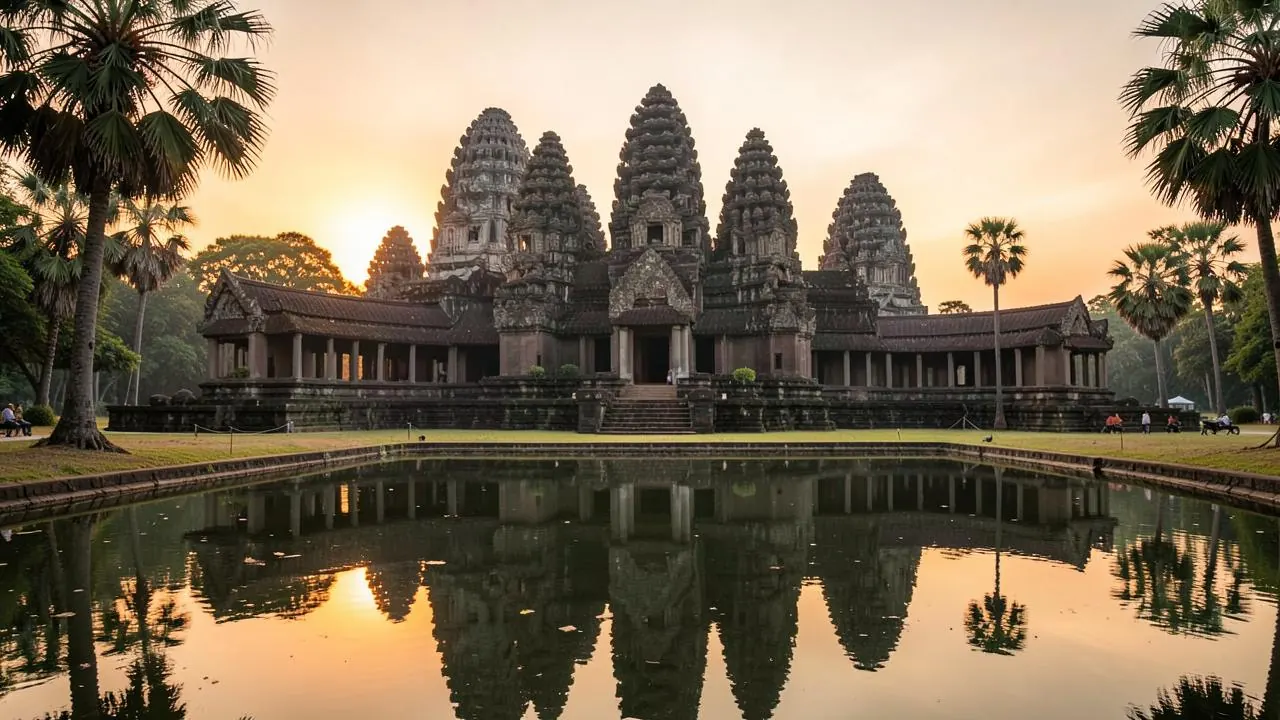

Siem Reap, Cambodia
Angkor Wat faces west, so the sun rises behind it. Four hundred square kilometres of temples and everyone is at the same reflecting pool.
The places to stay
Rice fields, edge of town
A lap pool among working rice paddies
Explore Hotel
Toward the Angkor gate
Closest of the grand hotels to the park entrance
Explore Hotel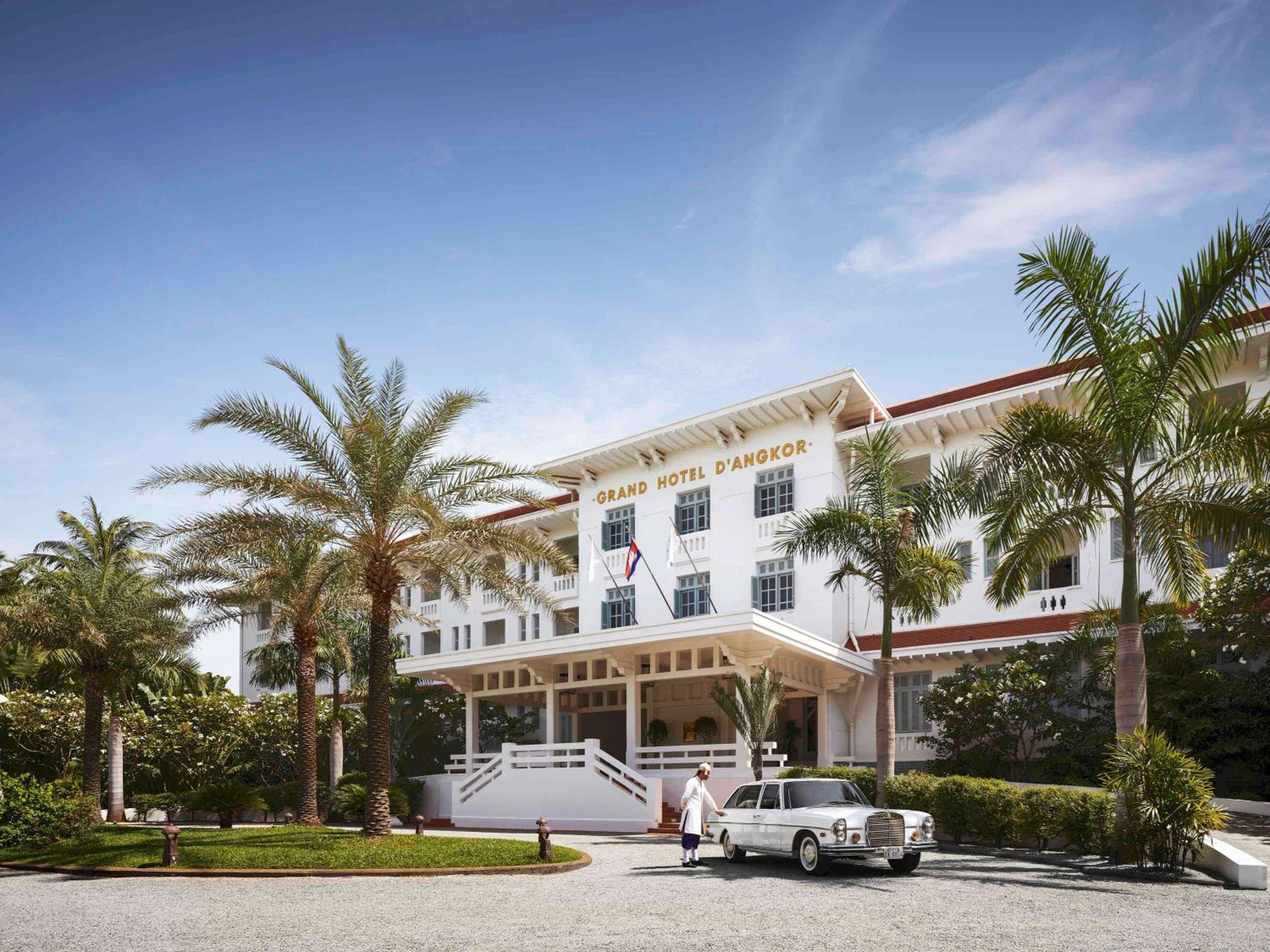
Royal Gardens
The 1932 grand hotel with its original cage lift
Explore Hotel
Siem Reap riverside
Mature gardens and unexpected quiet by the river
Explore Hotel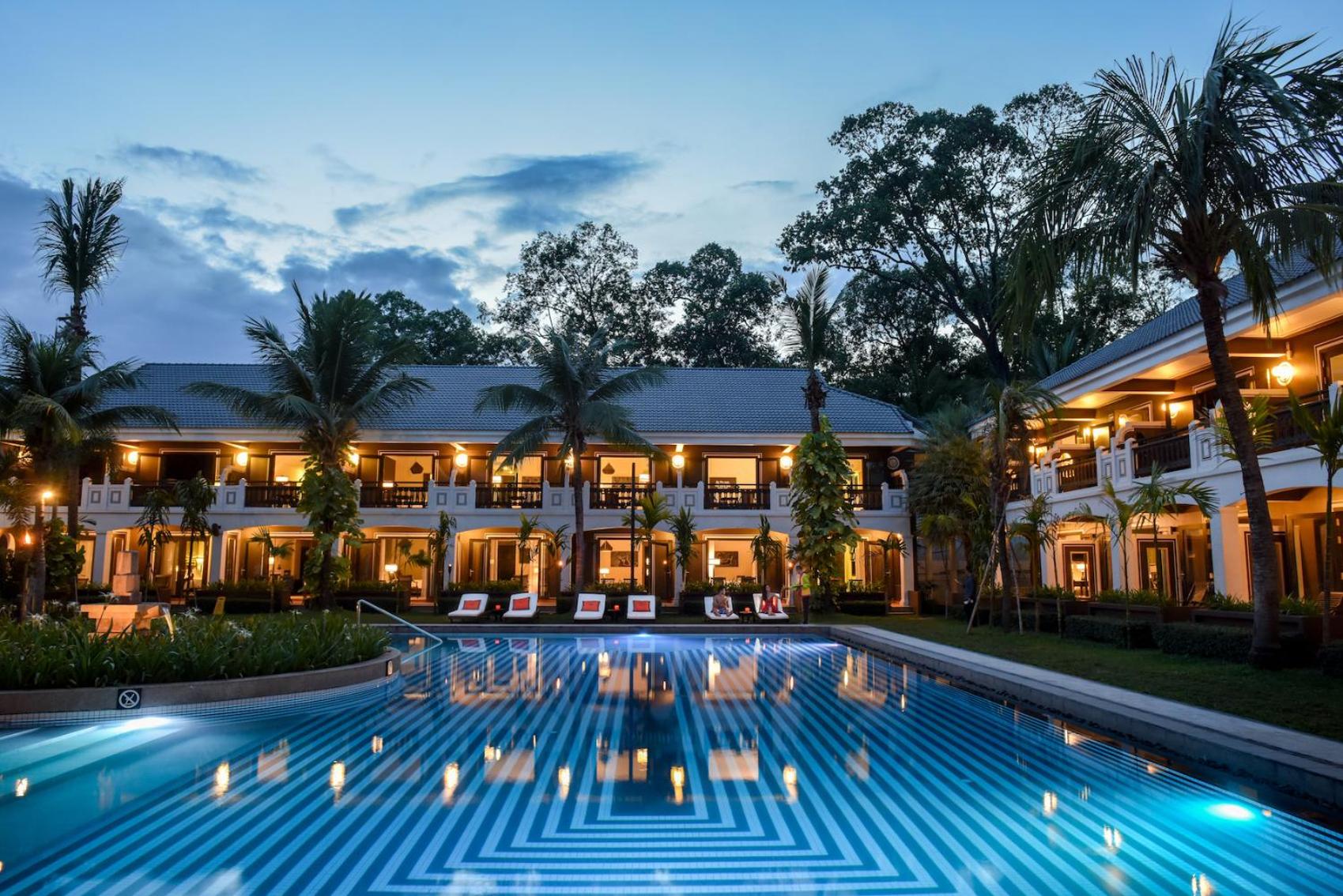

Siem Reap riverside
Small, no plastic, and among the best-run hotels in Asia
Explore Hotel
French Quarter
A 1960s conversion with the most contemporary rooms in town
Explore Hotel
North of town
Golf course and full family facilities on a large site
Explore Hotel
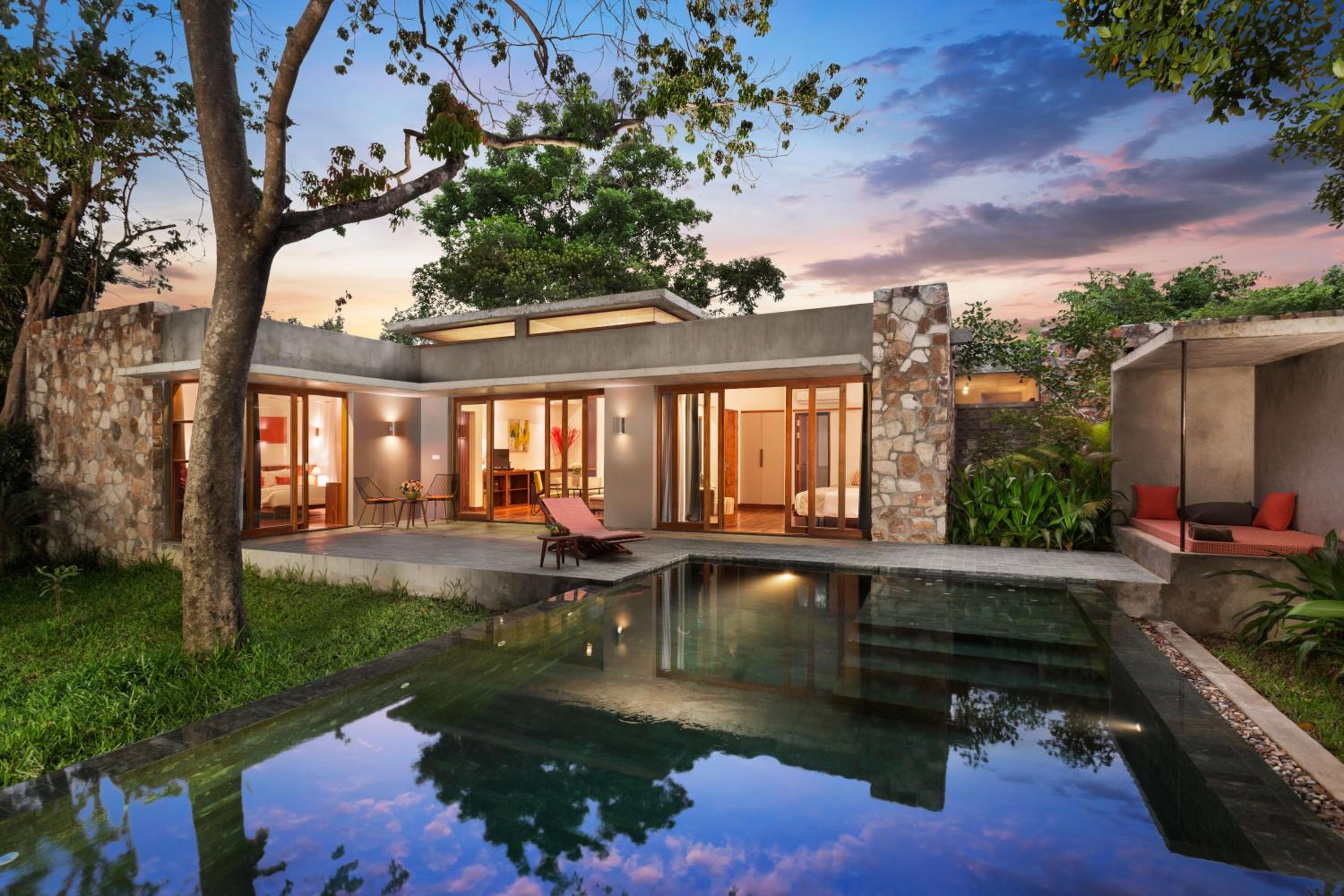
Near the Angkor road
Private pool villas among trees below luxury rates
Explore HotelBy Happi · Last updated September 2026
A little local perspective
$$ to $$$$ — roughly $150-1,500 a night, peaking November to February
Angkor Wat faces west, which is unusual for a Khmer temple and means the sun rises behind it. From about half past five in the morning, several thousand people stand at the reflecting pool in front of the western entrance waiting for the silhouette. It is the most photographed sunrise in Asia and it is genuinely crowded.
The Angkor Archaeological Park is 400 square kilometres and contains the remains of a city that at its twelfth-century peak may have been the largest in the world. Angkor Wat is one temple in it. The gates open around five for the sunrise and the outlying temples stay quiet all day.
Siem Reap town sits about six kilometres from the Angkor Wat gate. A hotel in town means a fifteen-minute tuk-tuk in the dark to be at the pool by five fifteen, which is entirely doable and which most visitors manage exactly once.
The properties closer to the gate, or with their own guides and vehicles arranged for a five o'clock start, make the difference between doing that once and doing it as a matter of course — including going to the outlying temples at hours when nobody else is there.
The town itself has changed considerably. Pub Street is the backpacker strip and it is loud until late; the riverside and the French Quarter a few streets away are quiet, and the good hotels are there.
The eleven below are grouped by where they sit.
North of town, on or near the road to the gate.
Amansara occupies a 1960s modernist building that was the royal guesthouse, with 24 suites around a pool, no signage on the road and a private guide arrangement that takes guests into the temples before opening. It is the finest hotel in Cambodia.
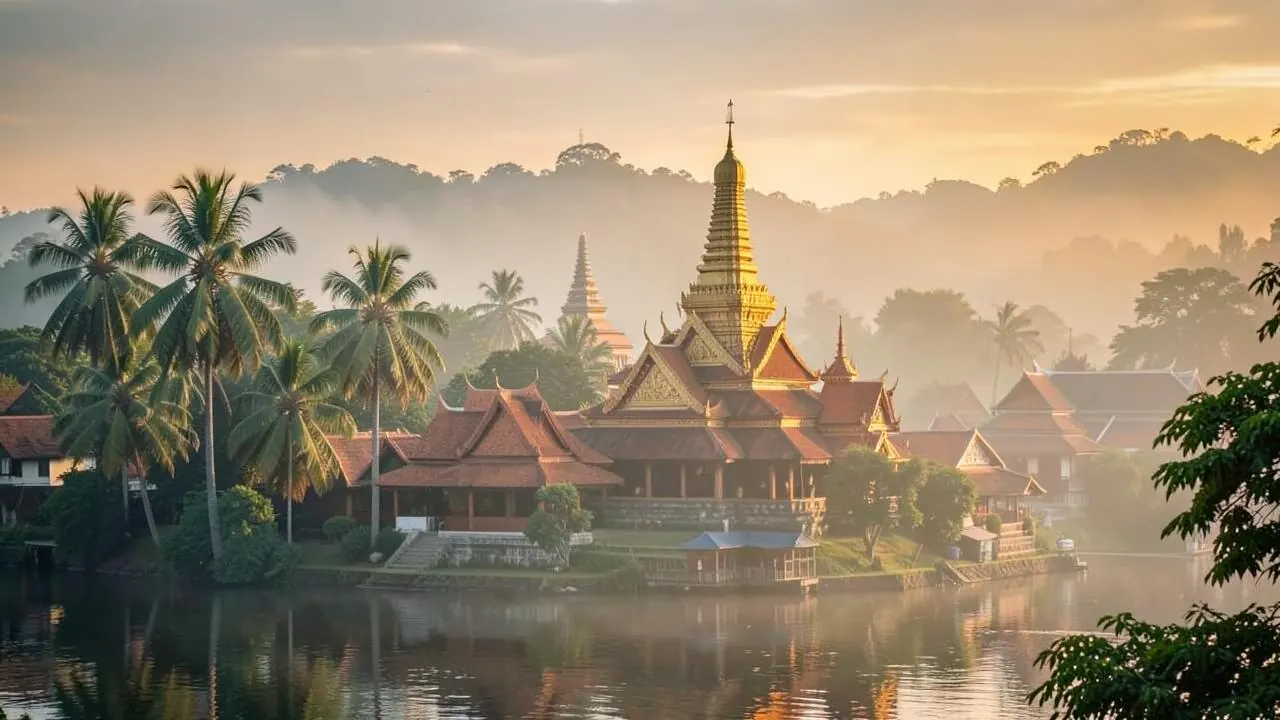
Phum Baitang, Zannier Hotels sits on eight hectares of rice paddy on the edge of town with a wooden farmhouse, a lap pool among the fields and a working rice field between the villas. It is the most peaceful property here.
Park Hyatt Siem Reap occupies a colonial-style building on the road toward the park with a large pool, a spa and the closest position of the town's grand hotels to the Angkor gate.
The old colonial centre, minutes from Pub Street and quiet at night.
Raffles Grand Hotel d'Angkor is the 1932 grand hotel of Cambodia, with an original cage lift, a very large pool and a garden, facing the royal residence. It is the most historic building in Siem Reap.
Belmond La Residence d'Angkor occupies a low building set in mature gardens along the river with a pool, a spa and a level of quiet that its position does not suggest.
Shinta Mani Angkor sits on the river with a strong design programme, a good spa and a foundation supporting local projects that is more than decorative.
Jaya House River Park occupies a riverside site with a small room count, a pool and a strict no-plastic policy that predates the fashion for it.
FCC Angkor by Avani sits in the French Quarter in a converted 1960s building with a rooftop pool and the most contemporary rooms in town.
Quieter, with more grounds, and a drive to everything.
Sofitel Angkor Phokeethra Golf & Spa Resort occupies a large site with a golf course, several pools and full family facilities. It is the practical choice with children.
Anantara Angkor Resort sits in gardens west of the centre with a spa, a pool and a Khmer-inflected interior.
Templation Siem Reap occupies a site among trees with private pool villas, a design-led interior and rates below the town's luxury properties.
The guest houses across Siem Reap are excluded, and the town has a very large number of them at every price. They are guest houses rather than hotels.
Buy the temple pass for the right number of days: one, three or seven. Three is the correct answer for most people and the three days need not be consecutive.
Do sunrise at Angkor Wat once, then spend the rest of the trip somewhere else at that hour. Ta Prohm with the tree roots, the Bayon faces at Angkor Thom, and Banteay Srei's pink sandstone carving an hour out are all better when empty.
Go further. Beng Mealea and Koh Ker are one to two hours away and receive a fraction of the visitors.
Take a boat on the Tonlé Sap to the floating villages, choosing an operator carefully, since some of the tours around the lake have a poor reputation for how the communities are treated.
Eat properly. Cambodian food is distinct from Thai and Vietnamese, and Siem Reap's restaurant scene has improved sharply.
Siem Reap's new airport opened some distance from the town and the transfer is longer than it used to be, around 45 minutes to an hour. Confirm the current arrangement with your hotel.
November to February is the dry, cooler season and the peak. March to May is very hot. The rainy season from June to October fills the moats and greens the site, and the light is better.
Dress modestly at the temples: shoulders and knees covered, enforced at Angkor Wat's upper level.
Prices shown are sample rates from upcoming dates — not quotes for specific dates. Open a hotel and choose your own dates and guests to see the exact price.
Three, and the pass allows non-consecutive days. One is a rush and seven is for the seriously interested.
Once. It is crowded and it is still remarkable. Do the other temples at that hour on the other mornings.
The riverside and French Quarter are quiet and central. Pub Street is loud. Further out gives you grounds and a drive.
The green season, June to October, when the moats are full and the crowds are thinner, at the cost of afternoon rain.