




A little local perspective
Worth knowing.
Worth going.
- Destination
- Luang Prabang, Laos
- The selection
- 7 hotels
- Your kind of trip
- culture · couples · slow travel · photography
$$ to $$$$ — roughly $120-900 a night, peaking November to February
Every morning at around half past five, before the light, several hundred monks walk in single file through Luang Prabang collecting alms. Residents kneel on the pavement and place sticky rice into the bowls as they pass. It is called tak bat, it is a daily religious obligation rather than a performance, and it has been happening here for centuries.
It has also become a problem. Visitor numbers turned it into a spectacle, with people standing in the road, using flash photography at close range, and buying rice from vendors to participate without understanding what they are doing. The town and the monastic community have asked repeatedly for restraint.
How to be there properly
If you want to watch, the guidance is straightforward and it is worth following: stay on the opposite side of the street, remain seated or standing well back, do not use flash, do not block the route, dress with shoulders and knees covered, and keep silent. If you are not participating, do not buy rice.
Better still, watch from a distance from your own terrace if the route passes it, or simply do not go. The procession does not require an audience.
Which is one reason the location of a hotel matters here: several sit on or near the route, and being able to see it from a garden rather than a pavement is a genuinely better arrangement for everyone.
The peninsula
Luang Prabang sits on a finger of land where the Nam Khan river joins the Mekong. The old town occupies that peninsula and it is a UNESCO site — French colonial shophouses, more than thirty working monasteries, and Mount Phousi rising in the middle of it.
The whole peninsula is about two kilometres long and everything is walkable. There is a night market along the main street and the town is quiet by eleven.
The seven below are grouped by position.
The peninsula
Inside the old town, on the alms route.
Amantaka occupies a converted French colonial hospital in a walled compound on the peninsula, with 24 suites, a pool in the garden and a level of restraint that suits the town. It is the finest hotel in Laos.
Sofitel Luang Prabang sits in a 1904 colonial building on the Mekong side with a pool, a garden and rooms in restored heritage structures.
Satri House occupies a set of buildings in the old town with a courtyard pool, mature planting and a personal operation.
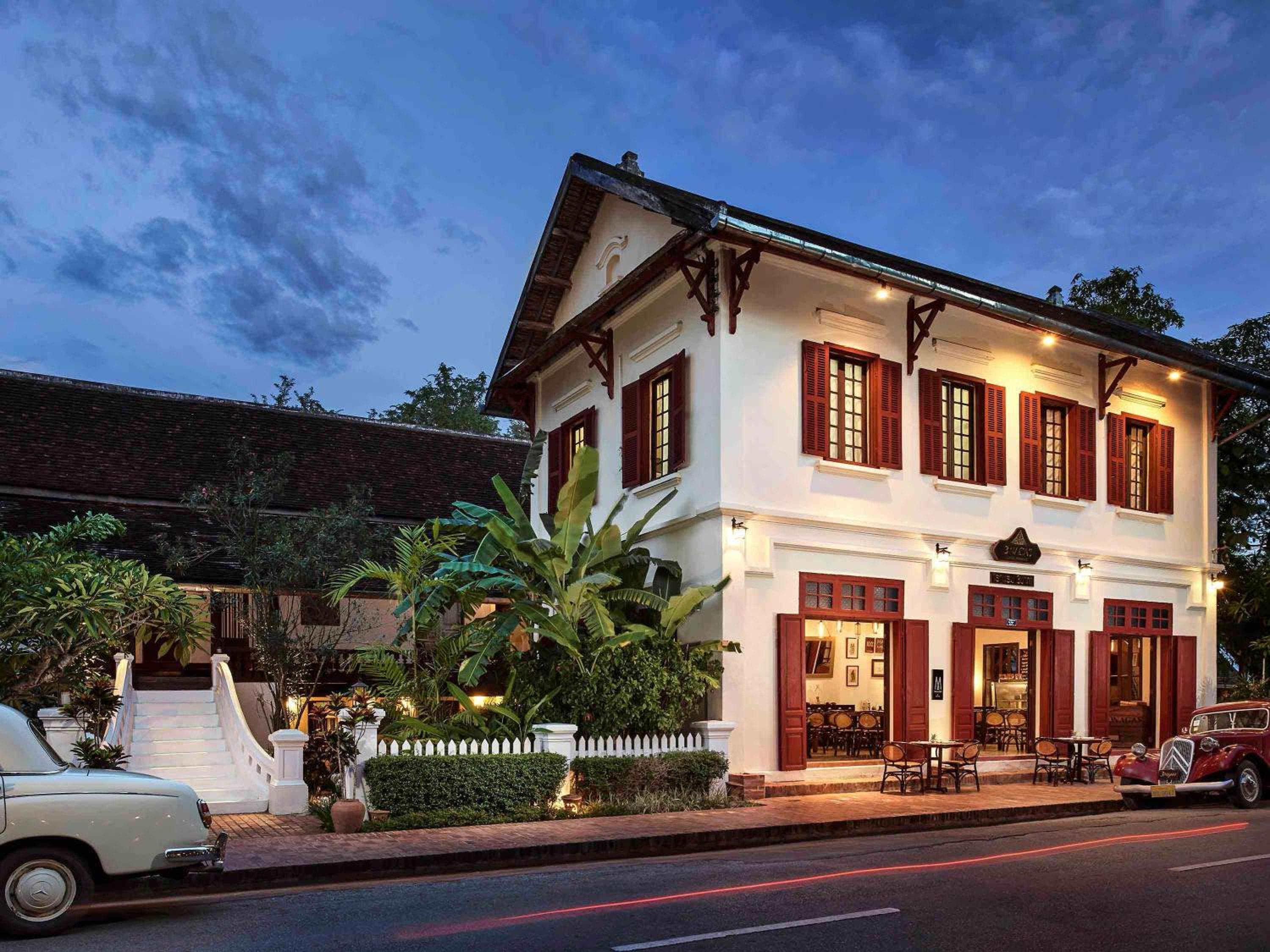
3 Nagas Luang Prabang, MGallery sits on the main street in a restored shophouse with a small room count and the shortest walk to everything.
Above and outside the town
The hills and the river, with more space.
Belmond La Residence Phou Vao occupies a hillside above Luang Prabang with a pool, a spa and views over the town to the mountains. It is the quietest property and it is ten minutes from the peninsula.
Rosewood Luang Prabang sits in a forested valley outside town beside a waterfall, with a pool, a spa and a reserve around it.
Avani+ Luang Prabang occupies a riverside position on the Nam Khan with a pool, contemporary rooms and rates below the heritage properties.
What we have left off
The guest houses across the peninsula are excluded, and Luang Prabang has a great many of them in restored shophouses at very low prices. They are guest houses rather than hotels.
What to do
Climb Mount Phousi for sunset, which is the standard thing and consequently crowded. Going at sunrise instead gives you the same view and almost nobody.
Go to Kuang Si waterfall, 30 kilometres south, which is a series of turquoise limestone pools you can swim in, with a bear rescue centre at the entrance. Go early.
Take a slow boat up the Mekong to the Pak Ou caves, which hold thousands of Buddha images left by pilgrims over centuries.
Visit the Royal Palace Museum and the Traditional Arts and Ethnology Centre, which explains the country's ethnic groups properly.
Eat at the night market food alley, and try laap, or khao soi, which in Laos is a different dish from the Thai one.
Practical notes
Luang Prabang has an international airport with connections through Bangkok, Hanoi, Chiang Mai and Vientiane. A railway now links the town to Vientiane and the Chinese border, which has substantially changed access.
November to February is the dry, cool season and the best window. March and April are hot and the burning season brings significant haze from agricultural fires, which affects both air quality and views. The rains run May to October.
The town is walkable and bicycles are the sensible transport.
Explore 4 & 5 Star Luang Prabang Hotels
Prices shown are sample rates from upcoming dates — not quotes for specific dates. Open a hotel and choose your own dates and guests to see the exact price.
Questions people actually ask
Should you watch the alms procession?
If you do, follow the guidance: opposite side of the street, no flash, well back, silent, and do not buy rice to join in. It is a religious obligation, not an event.
When is the haze?
March and April, from agricultural burning. It can be significant and it affects the views and the air.
Is the town very touristy?
The peninsula is busy in season and the town is small and quiet by eleven at night. It has held its character better than most UNESCO towns.
How many nights?
Three. Two for the town and a third for Kuang Si and the caves.