Cathedral Quarter, Belfast
The Merchant Hotel
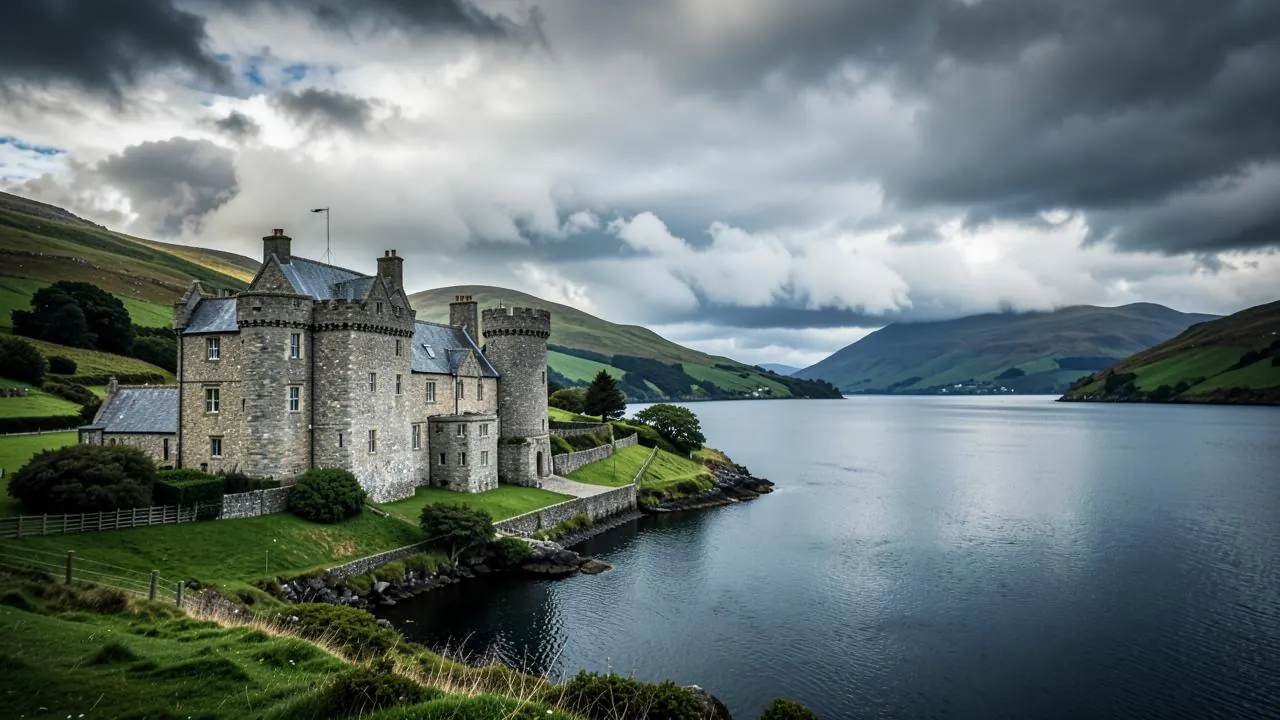
An 1860 bank with a rooftop pool and a vast banking hall
Explore Hotel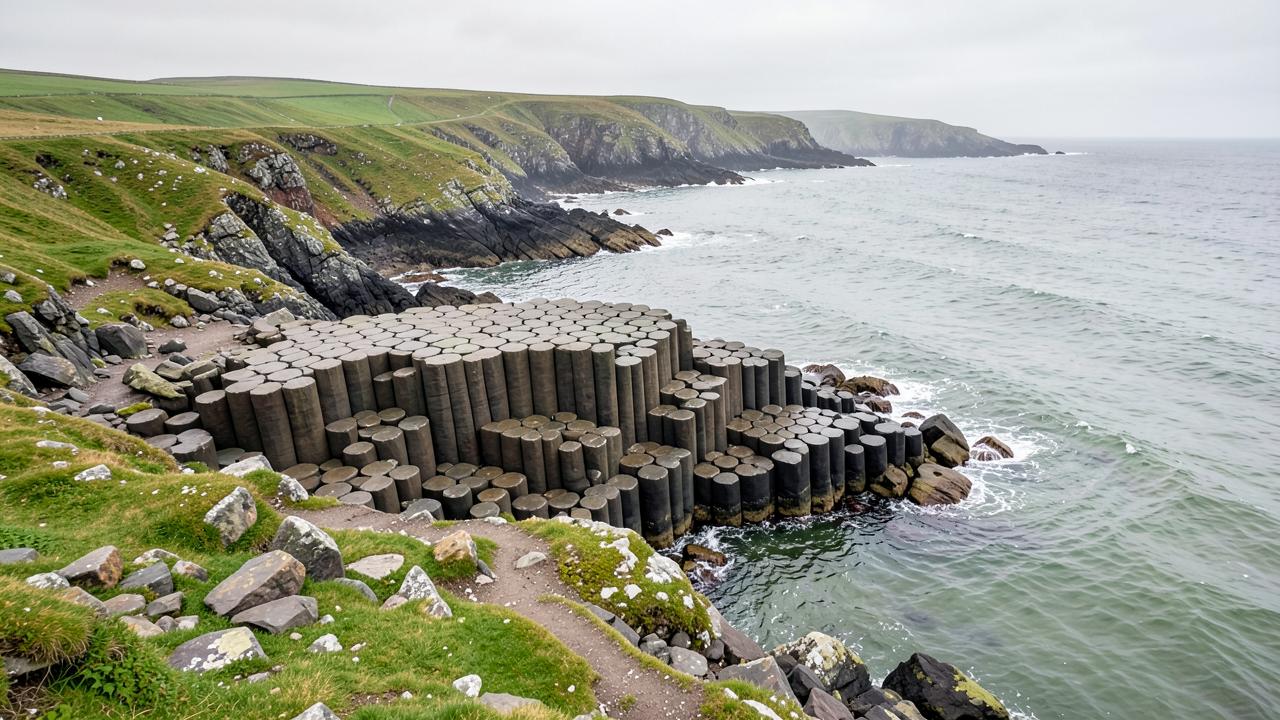

Belfast and the Causeway Coast
Solid rock cracking vertically over decades as it cooled, into joints so regular they look manufactured. The legend is simpler.
The places to stay
Cathedral Quarter, Belfast
An 1860 bank with a rooftop pool and a vast banking hall
Explore Hotel

Belfast city centre
A twenty-third floor bar and the widest view in the city
Explore Hotel

Holywood, Belfast Lough
A nineteenth-century mansion in twelve acres above the lough
Explore Hotel

By Happi · Last updated September 2026
A little local perspective
$$ to $$$ — roughly 180-500 pounds a night, peaking in summer
The Giant's Causeway is about forty thousand basalt columns, most of them hexagonal, packed together in a honeycomb that steps down into the sea. They formed roughly sixty million years ago when a thick lava flow cooled slowly and contracted, cracking vertically in the same way drying mud cracks — but through solid rock, over decades, producing joints so regular they look manufactured.
The legend is that Finn McCool built it as a road to Scotland. The geology is more interesting and the two accounts sit side by side in the visitor centre without much friction.
Belfast built ships. Harland and Wolff employed around thirty-five thousand people at its peak and the Titanic was designed, built and launched here between 1909 and 1912. The two yellow gantry cranes still stand over the yard and the slipways where the Olympic-class liners were laid down are marked out at full size on the ground.
The city has also spent the past three decades rebuilding itself after the Troubles, and that history is present rather than packaged. The murals on the Falls and Shankill roads are still there, black taxi tours are run by people who lived through it, and the peace walls remain standing with gates that still close at night in places. It is worth engaging with honestly rather than avoiding.
Belfast has the Titanic Quarter, the Victorian city centre, St George's Market and the Cathedral Quarter for food and music.
The Causeway Coastal Route runs about 190 kilometres from Belfast to Derry, along the Antrim glens, past Carrickfergus, Ballintoy and the Carrick-a-Rede rope bridge to the Causeway itself.
Bushmills, a mile inland from the coast, holds a distillery licensed in 1608 and claiming to be the oldest in the world.
The Glens of Antrim and Rathlin Island are the quiet interior and the seabird colony offshore.
The seven below are grouped that way.
The city and the shipyard.
The Merchant Hotel occupies the former Ulster Bank headquarters of 1860 in the Cathedral Quarter, with a rooftop pool and a banking hall converted into a dining room of considerable height. It is the best hotel in Northern Ireland.
Titanic Hotel Belfast sits inside the original Harland and Wolff headquarters and drawing offices, the rooms where the Titanic was designed, with the drawing halls left intact as public spaces. Sleeping in the building where the ship was drawn is not a small thing.
Grand Central Hotel occupies a tower on the city centre with a bar on the twenty-third floor and the widest view in Belfast.
The Fitzwilliam Belfast sits in the centre with contemporary rooms, a good ground floor and the best value in the city.
Culloden Estate & Spa occupies a nineteenth-century mansion at Holywood above Belfast Lough, in twelve acres with a spa and a formal dining room.
Along the Causeway route.
Bushmills Inn occupies a set of buildings at Bushmills with turf fires, a round tower library and the distillery a short walk away.
Galgorm Resort & Spa sits on a 163-acre estate at Ballymena with a thermal village, river-fed hot tubs and a spa that is the largest in Ireland.
The guest houses and B&Bs along the Antrim coast are excluded, and on this route they are the traditional and inexpensive way to stay. They are guest houses rather than hotels.
Go to the Causeway early or late. The visitor centre car park fills by mid-morning and the stones are far better without three coaches on them. Access to the stones themselves is free; the centre and the parking are not.
Do the Titanic Belfast museum, built beside the slipways, and then walk out to where the ship was launched and see the size of it marked on the ground.
Take a black taxi tour of the Falls and Shankill with a local driver. It is the most direct way to understand what happened here and the drivers are frank.
Cross the Carrick-a-Rede rope bridge if you have a head for it, twenty metres over a chasm to a fishing island, and book the timed slot ahead.
Drive the coastal route rather than the motorway, and stop at Ballintoy harbour and the Dark Hedges.
Belfast has two airports, the city one closer in, plus good links from Dublin two hours south. The Causeway is about an hour and a half from Belfast on the coast road.
May, June and September are the best months. Summer is busiest at the Causeway. Winter is wet, windy and the coast is dramatic.
Northern Ireland uses sterling; the Republic uses the euro. If you are driving down from Dublin, both are needed.
A thick lava flow cooled slowly and contracted, cracking vertically into joints that are close to regular hexagons. It took decades.
The stones are. The visitor centre and the car park are not, and there are alternative parking options nearby.
If you want to understand Belfast, yes, and with a local driver. The history is recent and the accounts are direct.
Three. Two in Belfast and one on the coast.