Laem Yai, northwest
Four Seasons Resort Koh Samui
Pool villas dropping through trees to a private bay
Explore Hotel

Koh Samui, Thailand
One island is in the Andaman Sea and the other is in the Gulf, and their monsoons run opposite. That decides which month suits which.
The places to stay
Laem Yai, northwest
Pool villas dropping through trees to a private bay
Explore Hotel


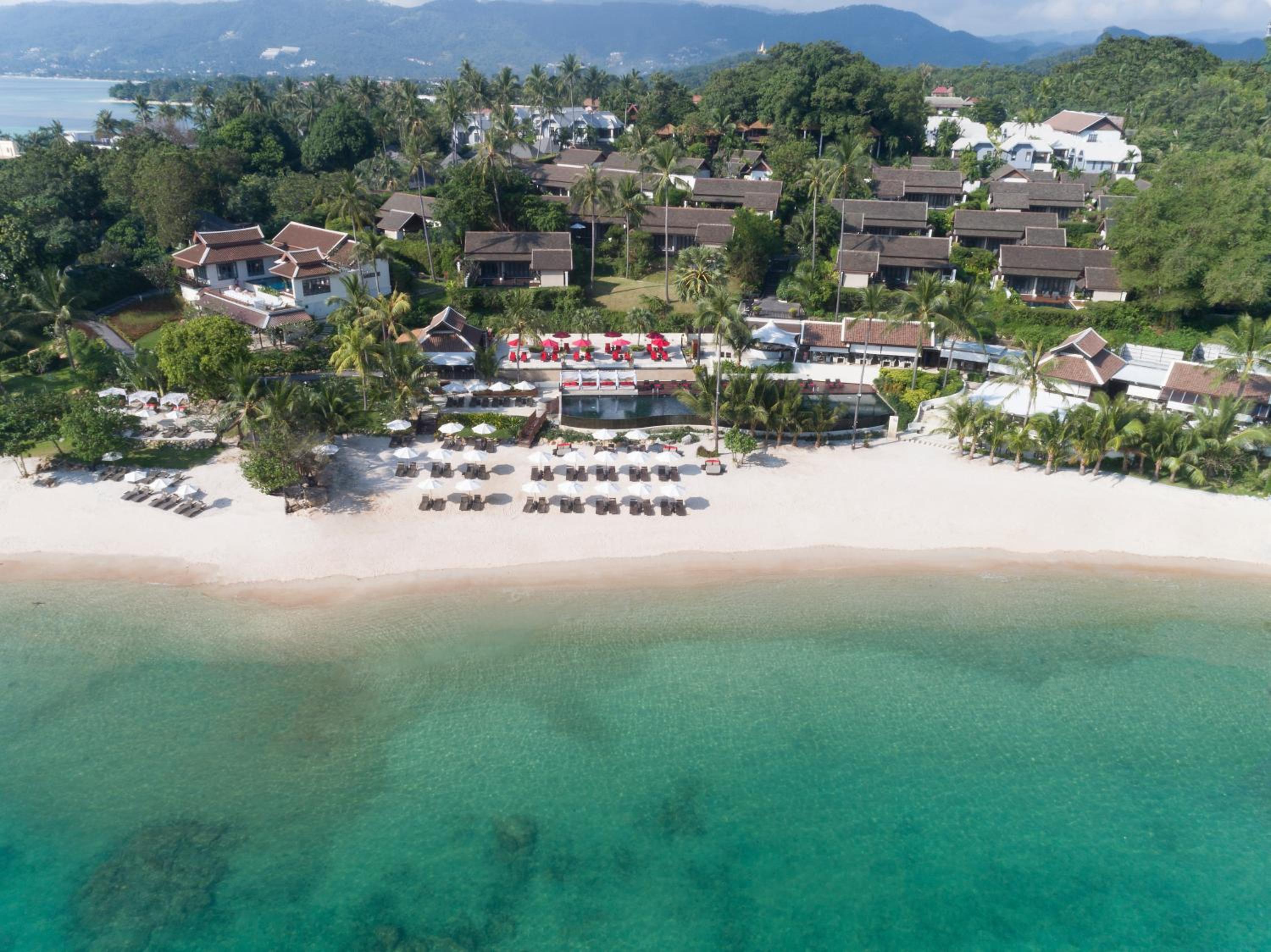

Chaweng Noi
Hillside pool villas in forest above the beach
Explore Hotel
Chaweng
Beachfront pools with the bars and restaurants outside
Explore Hotel

Taling Ngam, southwest
A hillside pool over the islands on the empty coast
Explore Hotel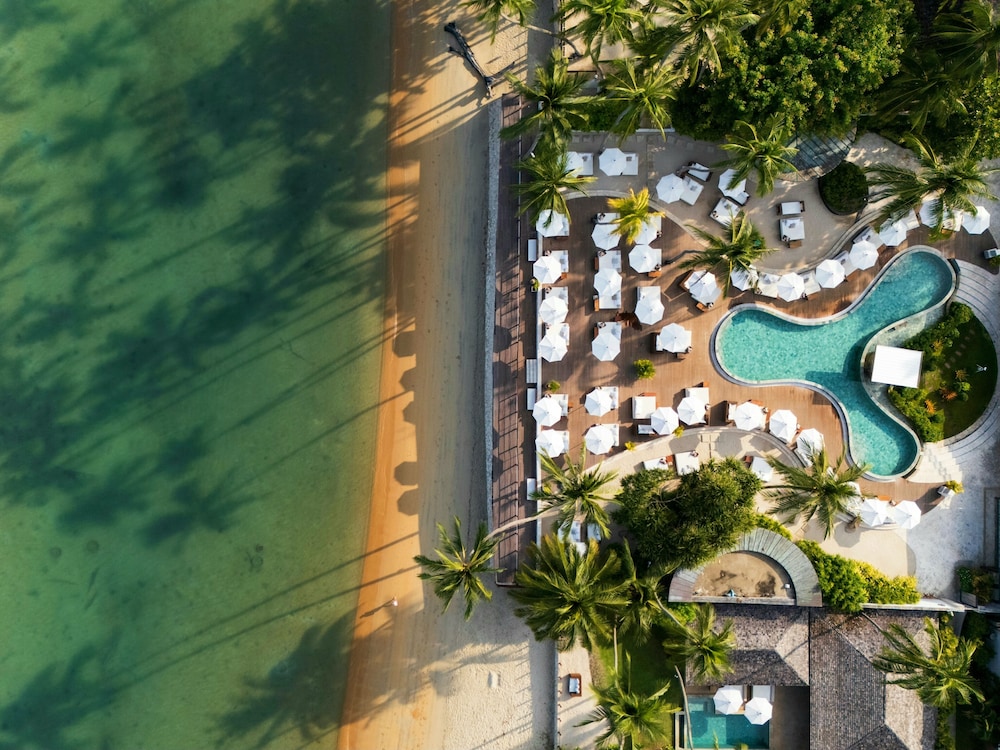
By Happi · Last updated September 2026
A little local perspective
$$$ to $$$$ — roughly $250-1,500 a night, peaking January to April
Koh Samui is in the Gulf of Thailand and Phuket is in the Andaman Sea, and their rainy seasons are almost exactly opposite.
Phuket and the west coast get the southwest monsoon from roughly May to October. Samui and the Gulf islands stay comparatively dry through those months and take their heaviest rain from October to December, driven by the northeast monsoon.
The practical consequence is that Samui is the answer when you want Thailand in July or August. It is also why Samui in November is a gamble that Phuket is not.
Samui is roughly circular, about 25 kilometres across, with a ring road and mountains in the middle. Each coast is a different holiday.
Chaweng, on the east, is the main beach: long, white, busy, with the bars, the nightlife and most of the mid-range hotels.
Lamai, south of it, is the smaller and slightly calmer version.
Choeng Mon and the northeast, around the headland, has small coves and the quieter luxury properties.
Mae Nam and the north coast is flat, shallow and family-oriented, with a strip of resorts and a view across to Koh Phangan.
Taling Ngam and the southwest is the empty side: steep, forested, with sunsets and almost no development.
The island is also the jumping-off point for Koh Tao and Koh Phangan by ferry, and the Ang Thong marine park.
The twelve below are grouped by coast.
The quiet corner, with the sunsets.
Four Seasons Resort Koh Samui occupies a steep hillside above a private bay at the island's northwestern tip, with villas dropping through the trees to the water, each with a pool, and a beach club below. It is the best hotel on the island.
Napasai Samui Residence sits on the north coast at Mae Nam in a garden estate of cottages with a long beach, mature planting and a level of quiet the east coast lacks.
Santiburi Koh Samui occupies a beachfront position at Mae Nam with villas, a pool and a strong food programme.
W Koh Samui sits at Mae Nam with a beach club, several pools and a design-led interior on a headland.
Small coves, around the headland from Chaweng.
Six Senses Samui occupies a headland above Choeng Mon with villas each holding a private pool, a hilltop restaurant and views across to Koh Phangan.
Melati Beach Resort & Spa sits on a private bay at Choeng Mon with a large pool, a spa and a quiet stretch of sand.
The main beach, with the nightlife.
Anantara Lawana Koh Samui occupies a position at the quiet northern end of Chaweng with a spa, a pool and mature gardens between the hotel and the noise.
Vana Belle, a Luxury Collection Resort sits on Chaweng Noi in a hillside property with pool villas, a spa and a forested setting above the beach.
SALA Samui Chaweng Beach Resort occupies a beachfront site on Chaweng with several pools, contemporary rooms and the restaurants and bars outside.
Calmer than Chaweng.
Banyan Tree Samui occupies a hillside above Lamai with villas in tropical planting, a spa and a beach below, at the quieter southern end.
The empty side.
Conrad Koh Samui sits on a steep forested hillside on the southwest coast with a pool that appears to run off the slope, villas among the trees and sunsets over the islands. It is the most secluded resort here.
Nikki Beach Resort & Spa occupies a beachfront position at Lipa Noi on the west coast with a beach club, a pool and a lively tone at a lower rate.
The villa rentals across the northern and eastern coasts are excluded, and Samui has a very large market in them for families and groups. They are houses rather than hotels.
Take a boat to Ang Thong marine park, an archipelago of 42 limestone islands west of Samui with a hidden saltwater lake inside one of them.
Go to Koh Tao for the diving, which is where a very large share of the world's open-water certifications are issued, or Koh Phangan for the beaches and the full moon party if that appeals.
See the Big Buddha and Wat Plai Laem in the northeast, and the Na Muang waterfalls inland.
Eat at Fisherman's Village in Bophut on a Friday, when the street closes for a night market, and southern Thai curries, which are hotter than the central versions.
Drive the ring road, which takes about two hours without stops and shows you how different each coast is.
Samui has its own airport, privately owned and unusually pleasant, with connections through Bangkok, Singapore and Hong Kong. Flights are expensive; the ferry from Surat Thani is the cheap alternative.
The dry season runs roughly January to September, with the heaviest rain from October to December. That is the inverse of Phuket, which is the whole point of the island.
Sea conditions on the east coast can be shallow at low tide, particularly at Mae Nam and Bophut.
Prices shown are sample rates from upcoming dates — not quotes for specific dates. Open a hotel and choose your own dates and guests to see the exact price.
Samui in the northern summer, Phuket in the northern winter. Their rainy seasons are almost opposite.
October to December, driven by the northeast monsoon.
Chaweng for life and nightlife, Choeng Mon and Mae Nam for quiet, the southwest for seclusion and sunsets.
Seven. Five on one coast with a day to Ang Thong or Koh Tao.