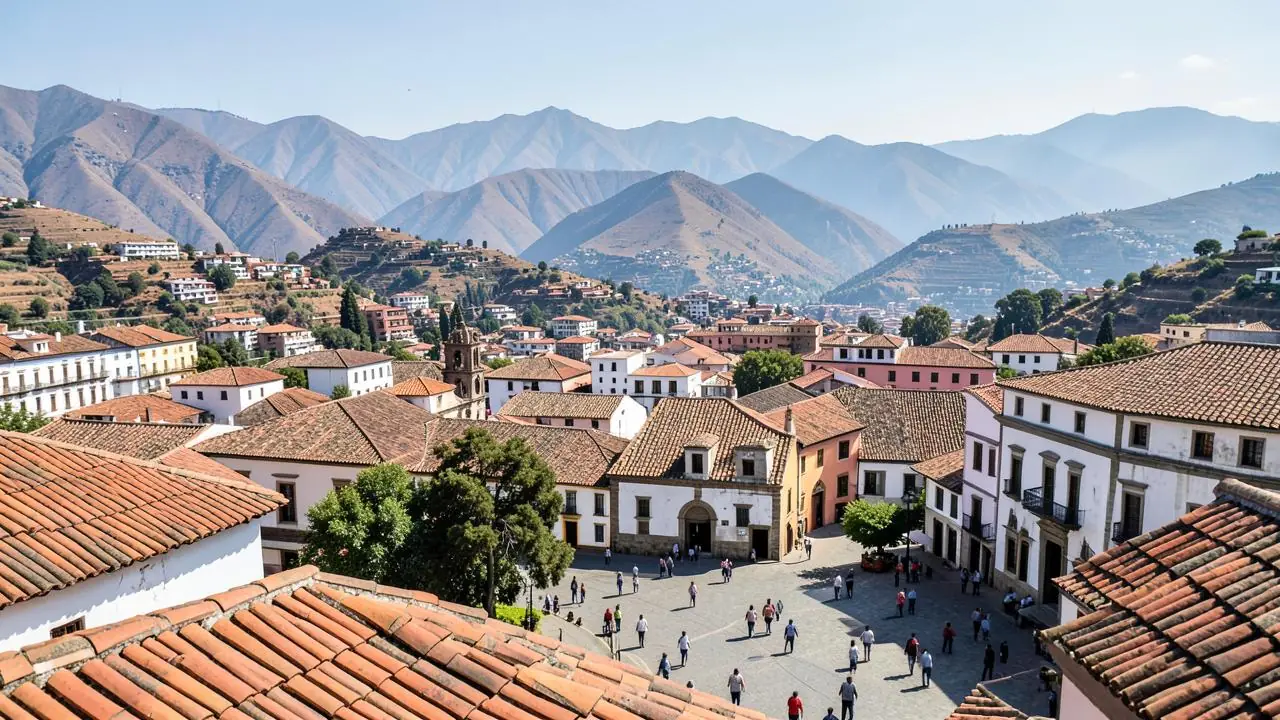
Plaza San Francisco
Casa Gangotena
A 1920s mansion facing the monastery across the square
Explore Hotel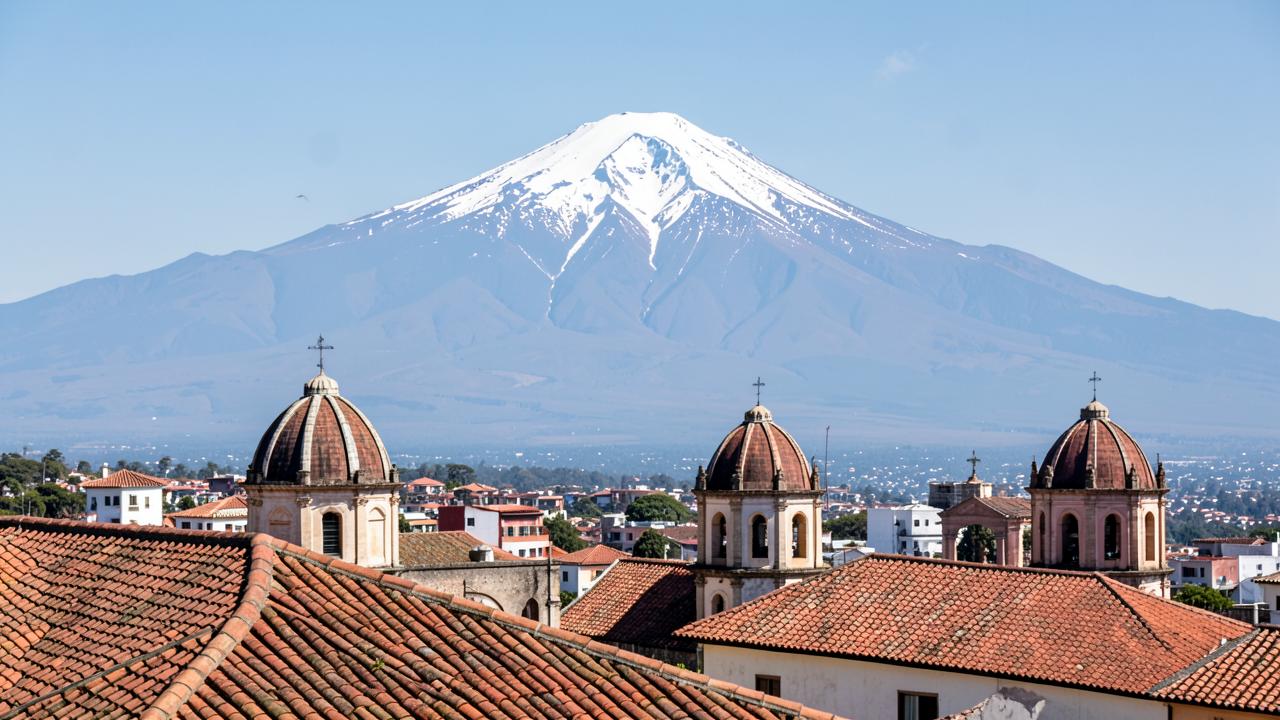

Quito and the Andes, Ecuador
Twelve sites were listed in 1978 and this was one of them. It survived because nobody had the money to knock it down and rebuild.
The places to stay
Plaza San Francisco
A 1920s mansion facing the monastery across the square
Explore Hotel
San Marcos, old town
A rooftop over the old town with the volcanoes beyond
Explore Hotel


By Happi · Last updated September 2026
A little local perspective
$$ to $$$$ — roughly $150-500 a night, steady year round
When UNESCO drew up the very first World Heritage List in 1978 it contained twelve sites. Quito's old town was one of them, alongside the Galápagos, Kraków and the rock-hewn churches of Lalibela. It is among the earliest inscriptions ever made and it was chosen because the centre is the largest, least altered historic quarter in the Americas.
It survived partly through poverty. Quito was never rich in the way Lima or Mexico City were, so there was no money to knock things down and rebuild in fashion, and a series of earthquakes that flattened rivals largely spared it. Around 130 hectares of sixteenth to eighteenth century streets remain, still lived in.
The set piece is La Compañía de Jesús, a Jesuit church begun in 1605 and finished 160 years later, whose interior is covered in gold leaf across every surface of the nave, the dome and the altars. Estimates of the quantity vary wildly and all of them are large.
The Mitad del Mundo monument north of the city was built in the 1970s on a line surveyed by a French geodesic mission in 1736. GPS later established that the actual equator runs about 240 metres away.
The monument stayed where it was. A separate museum now operates on what it claims is the true line, running the usual demonstrations with water draining in different directions — which do not actually work the way they are presented — and the two sites coexist a few hundred metres apart, both charging admission.
Go for the absurdity rather than the science.
Quito sits at about 2,850 metres in a narrow valley, which makes it the second highest capital in the world after La Paz. Take the first day gently.
Cotopaxi, an hour and a half south, is an almost perfectly symmetrical glaciated cone at 5,897 metres and one of the highest active volcanoes on earth. Otavalo, two hours north, has the largest indigenous market in South America, run by the Otavaleño people who have traded textiles for centuries. Papallacta, ninety minutes east, has hot springs on the edge of the cloud forest.
The seven below are grouped that way.
Inside the historic centre.
Casa Gangotena occupies a restored 1920s mansion on Plaza San Francisco, facing the monastery across the square, with a glass-roofed courtyard and a small room count. It is the best hotel in Ecuador.
Illa Experience Hotel sits in the San Marcos quarter in a restored colonial house with a rooftop over the old town and the volcanoes beyond it.
Hotel Plaza Grande occupies a nineteenth-century building on the Plaza Grande, the main square, opposite the presidential palace.
Carlota Hotel sits in a converted house in the old town with a courtyard, a small room count and the churches on foot.
Where the business district is.
JW Marriott Quito occupies a tower in the north with a spa, a pool and the fullest facilities in the city.
The haciendas.
Hacienda Rumiloma occupies a hacienda on the slopes of Pichincha above the city, with fireplaces in every room, horses and Quito laid out below.
Hacienda Zuleta sits two hours north on a working dairy farm that has been in one family since the 1800s, with an embroidery workshop, a cheese dairy and Andean condors overhead.
The haciendas across the Andean valleys that operate with four or five rooms are excluded, and several are centuries old and remarkable. They are guest houses rather than hotels.
Go into La Compañía, and then San Francisco next door, which is the oldest church in the city and sits on an Inca site.
Climb or ride the TelefériQo to 3,945 metres on Pichincha for the view, and walk a little from the top if the altitude allows.
Go to Otavalo on a Saturday for the market, and to the animal market at dawn if you have a strong stomach and an interest in how it actually works.
See Cotopaxi. The park is accessible by road and you can walk to the refuge at 4,800 metres, which is hard work at that height.
Eat locro de papa, ceviche made with shrimp and tomato rather than lime alone, and the chocolate, which Ecuador makes from some of the best cacao in the world.
Quito's airport is about forty-five minutes east of the city at a lower altitude than the centre. Guayaquil is the alternative gateway and the usual Galápagos departure point.
June to September is the drier season; October to May is wetter, usually with afternoon rain. The city is temperate year round at around 19 degrees by day and cold at night.
Take altitude seriously on arrival and again before attempting Cotopaxi.
It has the largest and least altered historic centre in the Americas, preserved partly by poverty and partly by earthquakes flattening its rivals instead.
No. GPS showed the actual line lies about 240 metres away. Both sites now operate and charge admission.
About 2,850 metres, second only to La Paz among capitals. Take the first day gently.
Four. Two in the old town and two for Cotopaxi or Otavalo.