Outer Alster
The Fontenay
A curved white building with a spiral atrium and a lakeside lawn
Explore Hotel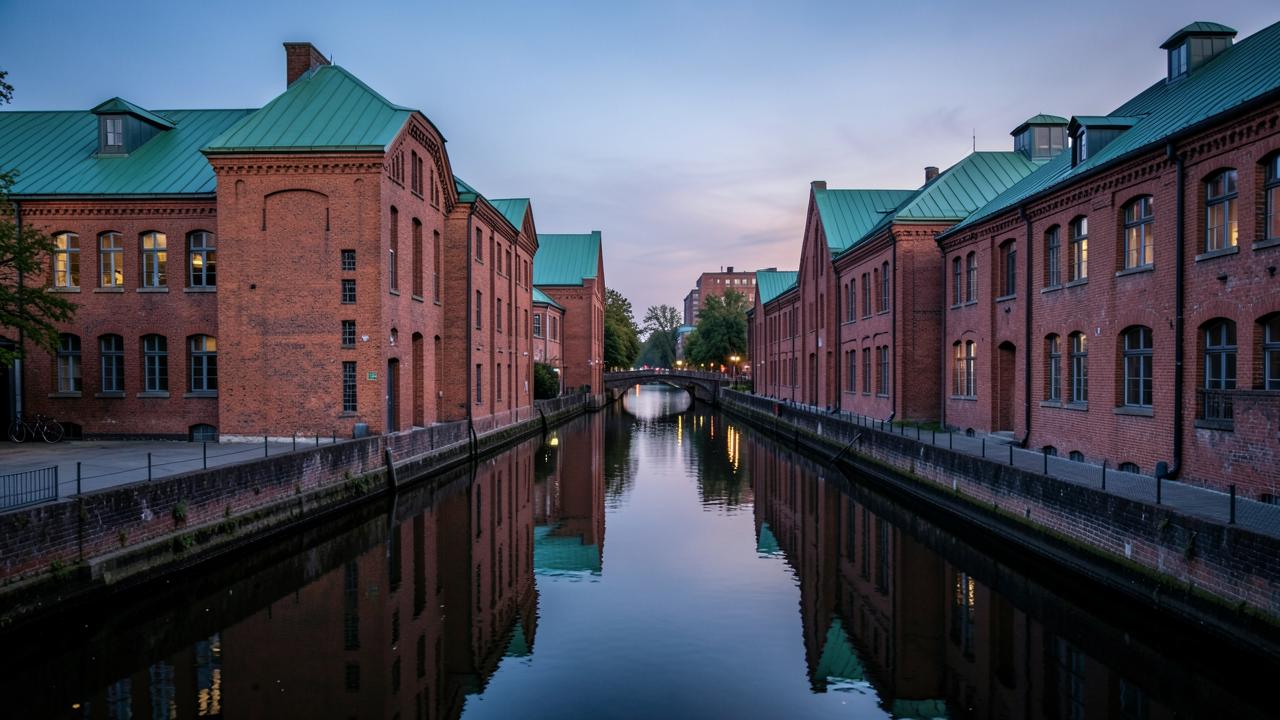

Hamburg, Germany
Red brick on oak piles with canals between the blocks so barges could winch cargo into the upper floors. A hundred kilometres from the sea.
The places to stay
Outer Alster
A curved white building with a spiral atrium and a lakeside lawn
Explore Hotel
Inner Alster
An 1897 house with a tea room that is an institution
Explore Hotel
Outer Alster
A white 1909 landmark with a bar of some reputation
Explore Hotel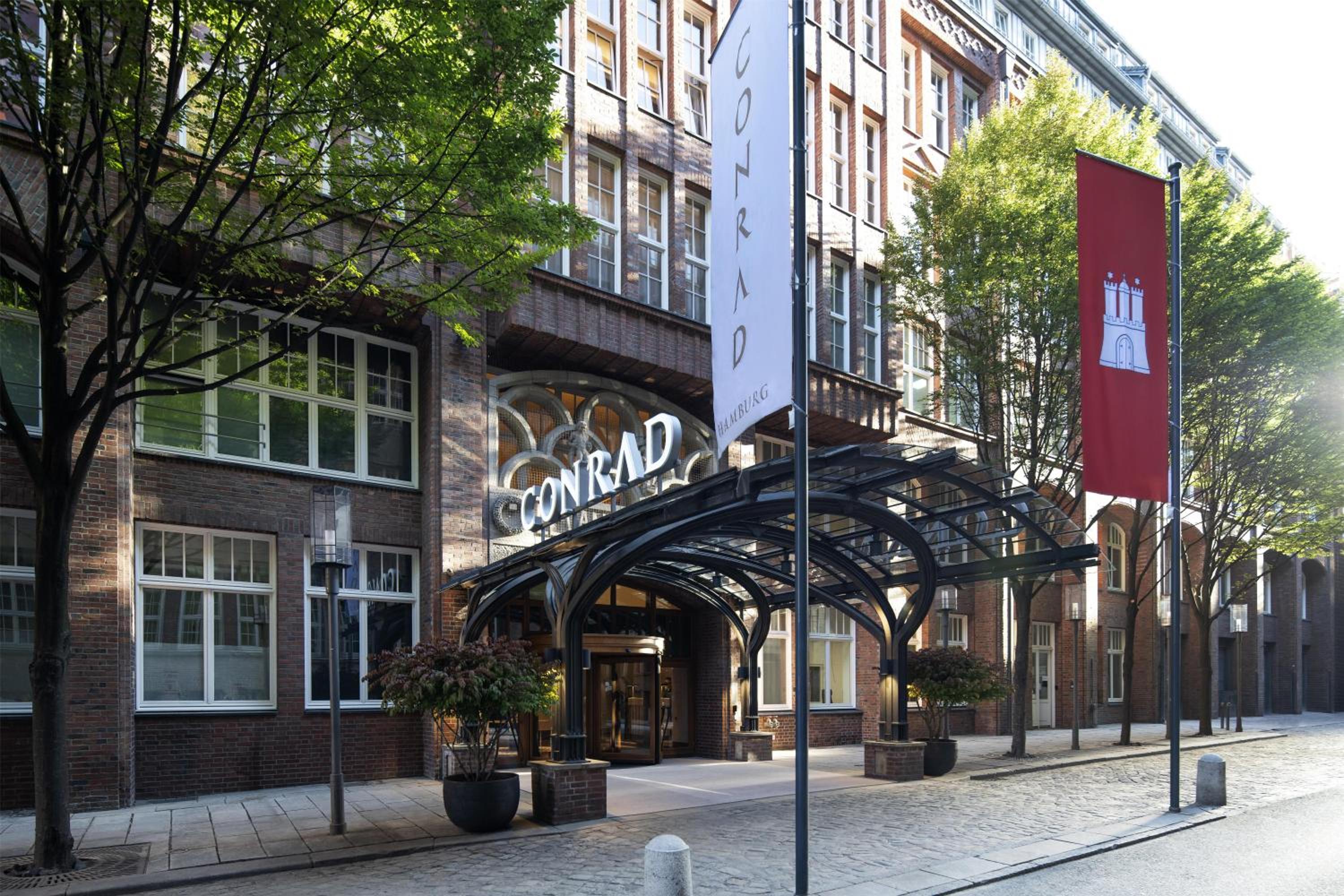
Near the Inner Alster
A new chapter for the former Park Hyatt, opened September 2025
Explore Hotel
Elbphilharmonie, HafenCity
Rooms inside the concert hall building above the old warehouse
Explore Hotel

Elbchaussee
A lime tree terrace over the Elbe that Liebermann painted
Explore Hotel

By Happi · Last updated September 2026
A little local perspective
$$ to $$$$ — roughly 200-700 euros a night, peaking in summer
Hamburg has more bridges than Venice, Amsterdam and London put together — something over 2,500, depending on how you count the small ones over the canals and the Alster. It is not a fact the city makes much of, and it points at what Hamburg actually is: a port built where the Elbe meets a network of waterways, a hundred kilometres inland from the sea and still Germany's largest harbour.
The Speicherstadt is the clearest expression of it. Built from 1883 on thousands of oak piles driven into the marsh, it is the largest unified warehouse district in the world — red brick, gabled, seven storeys, with canals running between the blocks so barges could load directly into the upper floors by winch. It was a free port zone where goods could be stored without duty, and coffee, tea, spices and carpets were traded here for a century. UNESCO listed it in 2015.
At the western end of the warehouse district, a 1963 cocoa warehouse was kept and a glass structure shaped like a wave was built on top of it. The Elbphilharmonie opened in 2017, years late and enormously over budget, and it is now the building the city is identified by.
The public plaza between the brick base and the glass is free to anyone and open daily — an escalator curves up through the old warehouse and puts you on a viewing terrace 37 metres up, all the way round. You do not need a concert ticket and most visitors do not realise it.
HafenCity, around the warehouses, is the redeveloped port quarter and where the Elbphilharmonie is.
The Alster, two artificial lakes in the middle of the city formed by damming a tributary in the thirteenth century, is where the money lives. The Inner Alster is ringed by the grand hotels; the Outer Alster has the sailing and the parks.
St Pauli and the Reeperbahn are the nightlife quarter, where the Beatles played residencies in 1960 and 1962 before anyone knew who they were.
Altona and Övelgönne, west along the river, have the beach on the Elbe, the fish market on Sunday mornings and the villas along the Elbchaussee.
The nine below are grouped that way.
The lakes, and the grand hotels.
The Fontenay occupies a curved white building on the Outer Alster with a spiral atrium rising through the centre, a rooftop restaurant and a lakeside lawn. It is the best hotel in the city.
Fairmont Hotel Vier Jahreszeiten sits on the Inner Alster in an 1897 building run by the same family for generations, with a tea room that is a Hamburg institution and a level of formality that has not moved.
Hotel Atlantic Kempinski occupies a white 1909 landmark on the Outer Alster, the ocean-liner counterpart to the one opposite, with a spa and a bar of considerable reputation.
Conrad Hamburg opened in September 2025 in the former Park Hyatt Hamburg, bringing a new chapter to this city-centre address near the Inner Alster and the shopping streets.
The port quarter.
The Westin Hamburg occupies floors inside the Elbphilharmonie itself, above the brick warehouse base and below the concert halls, with rooms looking down the Elbe.
25hours Hotel HafenCity sits in HafenCity in a converted maritime building with a nautical interior, a sauna and the warehouses outside.
West along the river.
Hotel Louis C. Jacob occupies a house on the Elbchaussee with a lime tree terrace above the river that Max Liebermann painted, and a restaurant that has held stars for years.
Hotel Hafen Hamburg sits above the harbour in a former seamen's home with a maritime interior and views over the docks at a fair rate.
The nightlife quarter.
SIDE Design Hotel occupies a design-led building near the Reeperbahn with a courtyard and the music venues on the doorstep.
The serviced apartments across HafenCity are excluded, and the district has a substantial supply serving longer stays. They are apartments rather than hotels.
Go up the Elbphilharmonie plaza, which is free and open daily, and book a concert if the programme suits — the acoustics in the main hall are the reason it cost what it did.
Walk the Speicherstadt at night when the brick is lit and reflected in the canals, and go into the Miniatur Wunderland, the largest model railway in the world, which is far better than that description makes it sound.
Get on the water. The harbour ferries are part of the public transport system, and the number 62 from Landungsbrücken to Finkenwerder is a harbour tour at the price of a bus ticket.
Go to the Fischmarkt on a Sunday morning, which runs from five and finishes by nine thirty, and where the auctioneers are the entertainment.
Walk the Elbe beach at Övelgönne, where container ships pass a few hundred metres offshore and there are cafés on the sand.
Hamburg airport is twenty-five minutes from the centre by S-Bahn. Berlin is under two hours by train.
May to September is the best weather, and the city is northern — expect wind and rain in any month. December has a good Christmas market circuit. Winter is grey and the harbour is atmospheric in it.
The public transport card covers the harbour ferries, which most visitors do not realise.
Prices shown are sample rates from upcoming dates — not quotes for specific dates. Open a hotel and choose your own dates and guests to see the exact price.
Yes. The plaza between the warehouse and the glass is free and open daily, 37 metres up with a view all round.
The largest unified warehouse district in the world, built from 1883 on oak piles, UNESCO-listed in 2015.
Alster for the grand hotels and the parks, HafenCity for the warehouses and the concert hall. Fifteen minutes apart.
Three. Enough for the harbour, the warehouses and a concert.